Tokens and costs: what does a long conversation use?
Separate subscriptions, usage limits and API charges. Learn to count input and output, then identify what you need to check in your own service.
About 14 min readingAs of Oct 2026
Lesson guide · goals & preparation
By the end of this guide
- Distinguish message, token and character counts.
- Calculate input and output costs with supplied rates.
- Decide what usage and budget limits to monitor as conversations grow.
Who this is for
- People wondering why a subscription still has usage limits.
- Anyone who wants to understand costs before using an API.
What you need
- Read the LLM lesson in this course.
- A calculator. No purchase or live API call is needed.
This lesson’s terms, in plain language
Read the short meanings here. Open a term for a fuller explanation and example.
- token
- The basic unit of text an AI model processes — often smaller than a word.
- context window
- How much information an AI model can read and keep in view at once.
This reading lesson explains how to use external AI tools. Read from theory to the workflow, examples and explanations, or use the contents to jump to a section.
1 / 4
Theory
Understand what to ask AI to do, how to ask, and the ideas behind the workflow.
Why can a subscription still ask you to wait?
Imagine a usage-limit notice appears after several revisions. That does not, by itself, mean you have incurred an extra charge. Read whether it is a temporary limit or an offer to buy access. Price and permitted usage are separate conditions.
A subscription provides access under a plan. An API lets software send requests and often bills by usage. Even with one provider, the app subscription and API billing may be separate.
App limits can depend on the model, messages, attachments, features and other conditions. Do not assume they are simply a token allowance. Check your own plan and reset notice. The arithmetic below covers only text input and output in an API.
Characters and tokens are different units
Tokens are pieces used to process text. A word may be one piece or several, and spacing and punctuation matter too. There is no universal one-character-to-one-token conversion.
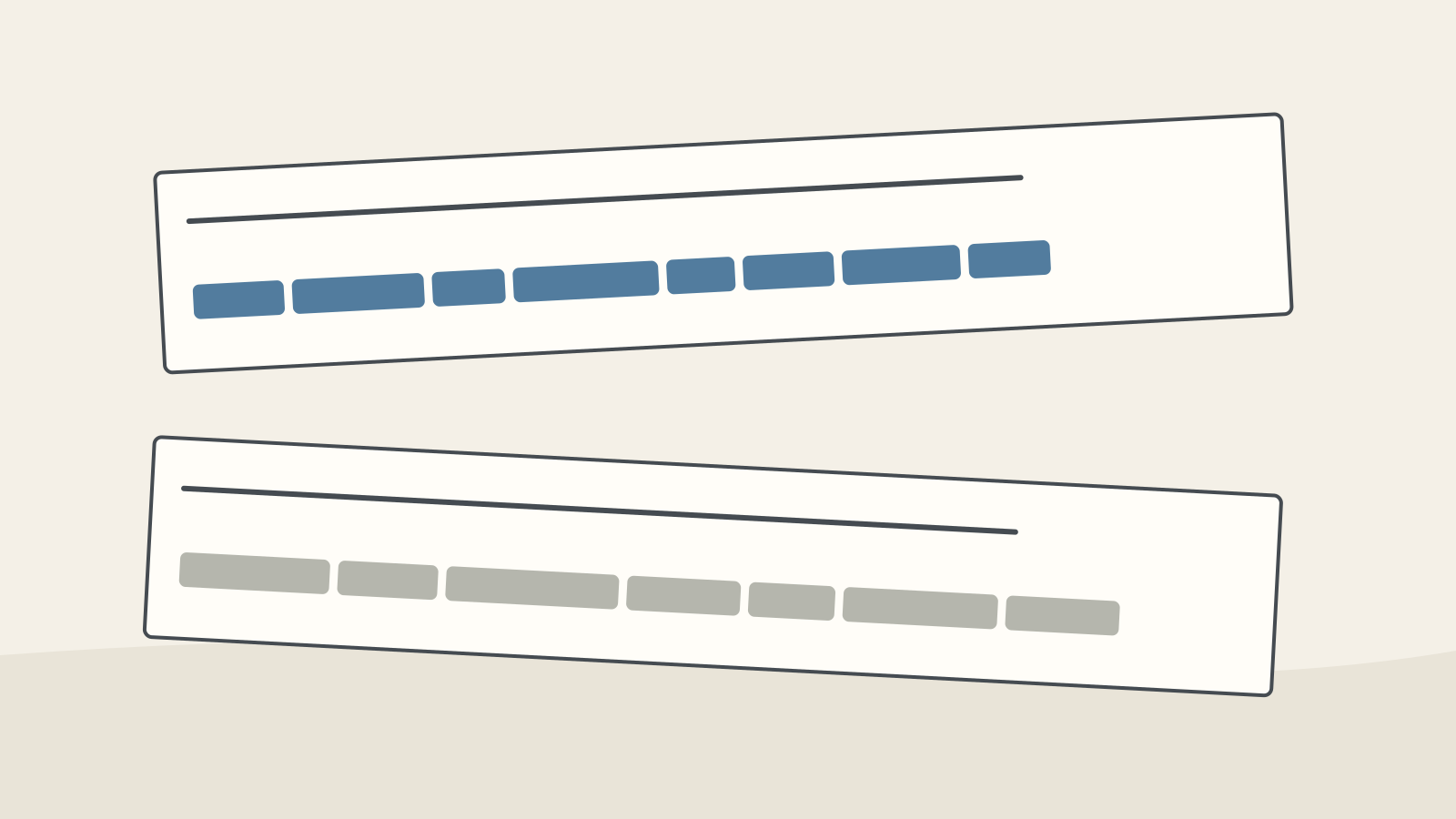
Figure: counts depend on the text and how it is divided · AI Ping The tokenizer determines the split. Counts and differences between languages depend on the text and model. A result from one Korean sentence is not a rule for every Korean document.
Use a short, non-sensitive sample and the intended provider's counting tool. Another provider's count is only an estimate. Recorded API usage can also include instructions and conversation history, so keep estimates separate from measured usage.
2 / 4
Step-by-step use
Learn what to prepare, how to request help and how to revise the result through examples and explanations.
Calculate input and output separately
Input is what you send; output is what the model returns. Rates are often different. A short answer to a long report can still use substantial input, while a short question can produce a costly long answer.
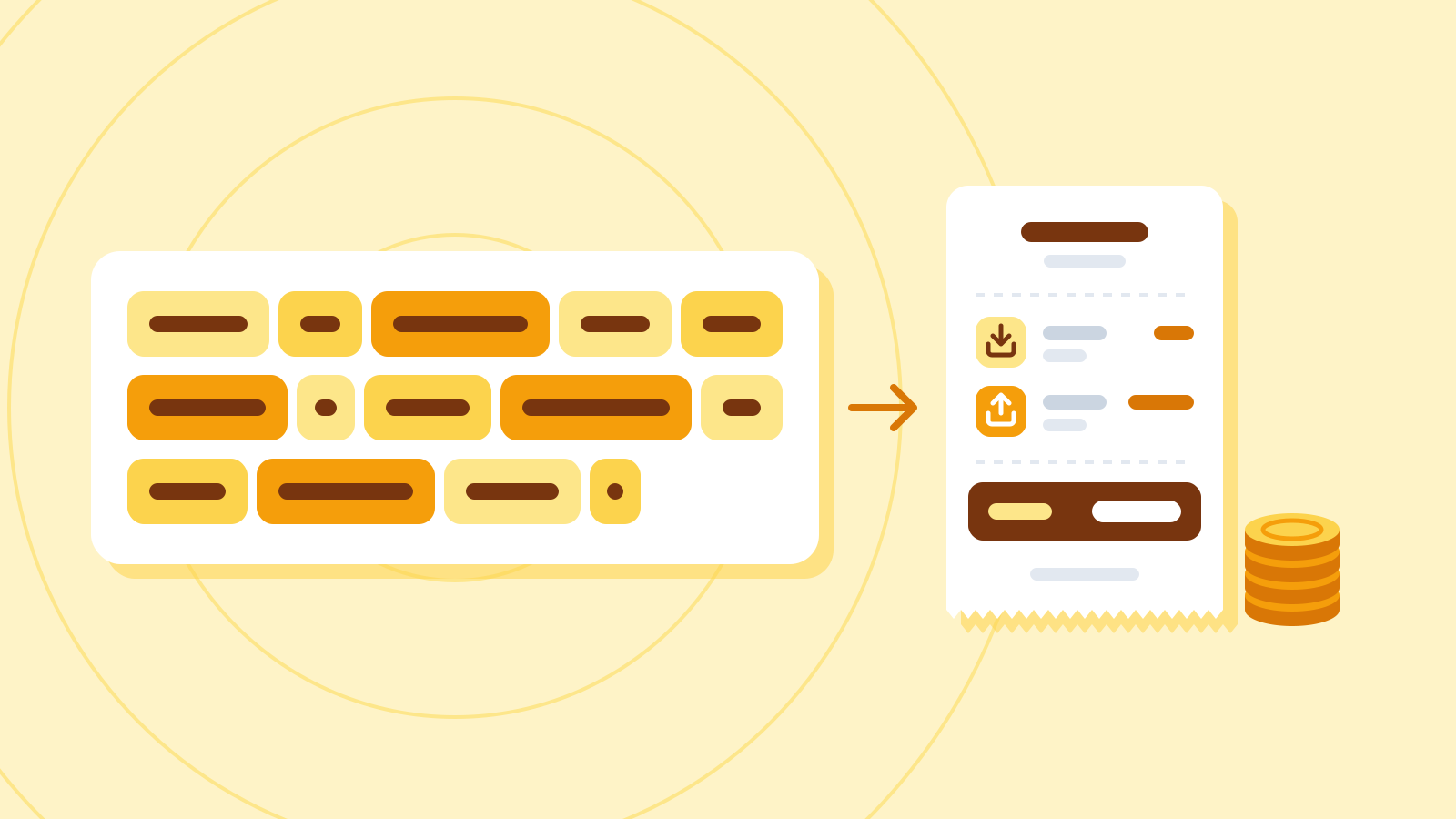
For practice only, assume $2 per million input tokens and $10 per million output tokens. These are invented exercise rates, not a provider quote. With 2,000 input tokens and 300 output tokens, calculate each side separately.
Do not omit the million-token denominator. The $0.007 total applies to this single hypothetical request. It excludes tax, currency conversion, tools, caching and discounts; check those separately for a real estimate.
One request at invented exercise rates Item Calculation Cost Input 2,000 ÷ 1,000,000 × $2 $0.004 Output 300 ÷ 1,000,000 × $10 $0.003 Total $0.004 + $0.003 $0.007 A short follow-up can carry a long history
A two-word follow-up may still include earlier messages and answers if the application sends that history with it. Developers can inspect the actual request and usage records.
If the second request contains 3,000 input tokens including history and returns 200 output tokens, our exercise rates give $0.006 plus $0.002: $0.008. The two requests together cost $0.015.
Applications manage history differently, and caches may change API billing. This example teaches why request count and context size both matter; it is not a billing formula for every chat app.
Fitting in context does not guarantee a good answer
The context window is the information a model can work with in one request. A larger desk holds more pages, but does not guarantee every line gets equal attention. Capacity is different from quality.
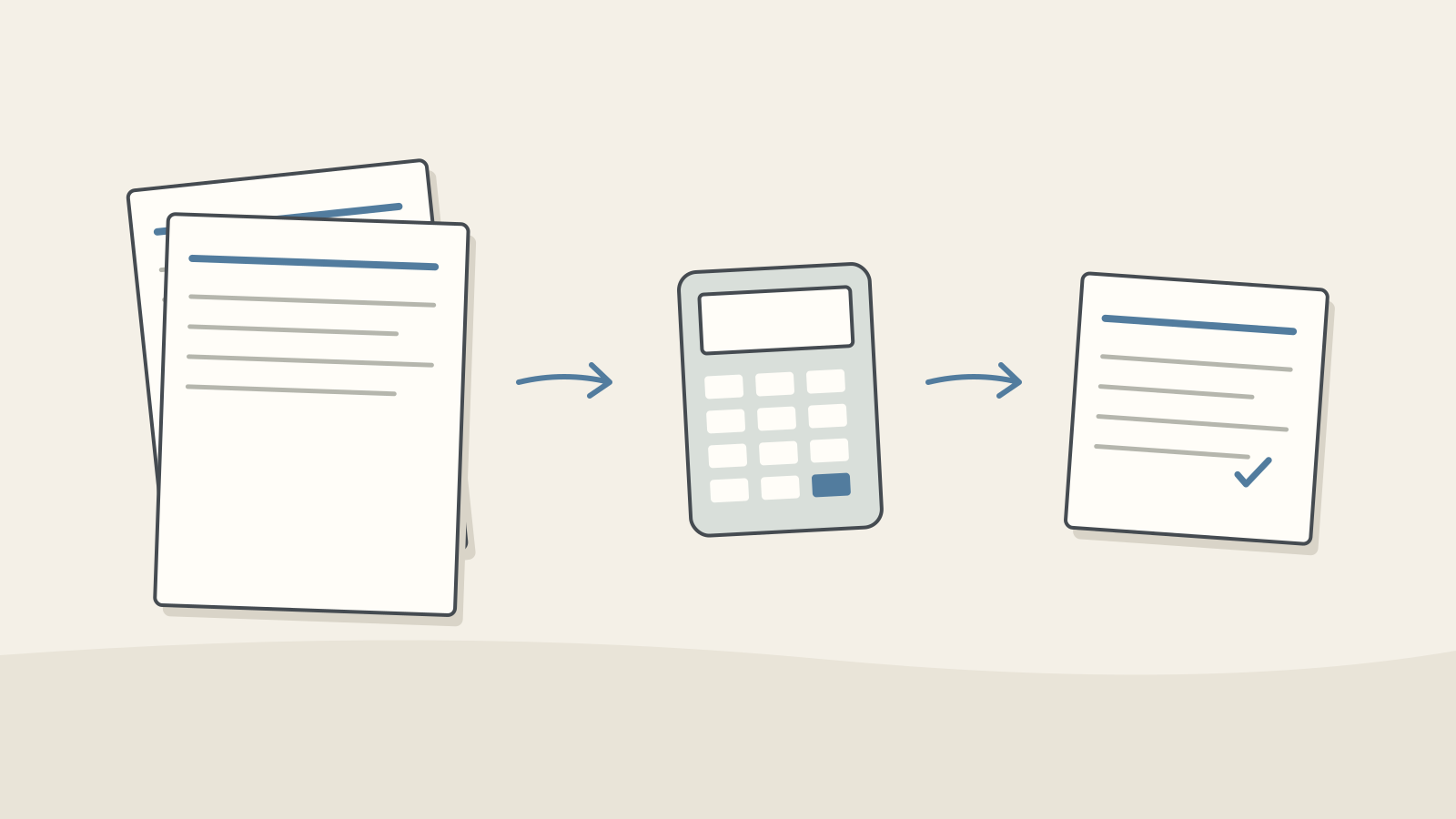
Figure: consider the input material and the reply length separately · AI Ping Select material relevant to the task, but preserve important exceptions and conditions. Keep titles, dates and page references so you can trace the answer back to its source.
If a conversation loses track of earlier constraints, make a checked summary of established facts and open questions before moving to a new conversation. Do not assume the new one knows the old context.
3 / 4
Check & explain
Think about what you would ask AI, then read the explanation. Written submissions and external AI use are optional.
This is a learning check, not a test you must pass. Use the explanations to understand the ideas.
Q1At the exercise rates, keep 2,000 input tokens and increase output to 600. What is the cost?
Write your thoughts (optional)
Your writing is not sent anywhere. It disappears when you leave or reload this page, so copy anything you want to keep.
Read the answer and explanation
$0.004 input plus $0.006 output equals $0.010. It is not twice the original $0.007 because input did not grow. These are invented exercise rates.
This is your own review, not an automatic score.
Q2An app asks you to try again later. Can you calculate an extra charge from your message count?
Write your thoughts (optional)
Your writing is not sent anywhere. It disappears when you leave or reload this page, so copy anything you want to keep.
Read the answer and explanation
No. The notice alone does not establish any extra charge. Check the app's usage and billing terms rather than applying our hypothetical API rates.
This is your own review, not an automatic score.
Q3After a long document, you ask for a one-line summary but see high input usage. What would you check?
Write your thoughts (optional)
Your writing is not sent anywhere. It disappears when you leave or reload this page, so copy anything you want to keep.
Read the answer and explanation
Check whether the document and earlier messages were sent again. The latest user message is not necessarily the whole input. Inspect measured usage before concluding the service is wrong.
This is your own review, not an automatic score.
Common mistakes
- Treating an app subscription as API credit.
- Applying one tokenizer's language ratio to every text and model.
- Counting only the final answer and omitting history, retries or tools.
Your learning record
Completion is optional. Mark this lesson when you feel ready, or move to the next lesson without marking it.
Completion is saved in this browser.
4 / 4
Apply to your work
Consider how new material changes the workflow and checking criteria. Trying an external AI tool is optional.
Your turn: a budget without making a purchase
Assume 20 requests per day for 30 days, all the same size as the first example. The daily cost is $0.14 and the monthly total $4.20. That is exercise arithmetic, not a forecast of your bill. Record the rate units and assumed request count beside the total so a later revision can distinguish volume changes from price changes.
Double only the output and calculate again. Input stays fixed, so the total does not double. This helps you see the effect of requesting only the detail you need without removing explanations necessary to understand the result.
Before real API use, record the model, rates and effective date, then inspect usage for a small request. Distinguish a budget alert from an enforced spending stop: an alert may not stop calls. API implementation belongs in the developer course.
Write a note (optional)
Use this only if you want to record a prompt or your understanding. This is a notebook, not a connected AI assistant.
Your writing is not sent anywhere. It disappears when you leave or reload this page, so copy anything you want to keep.
References
- Glossary: context window and tokens — Anthropic
- Pricing — Anthropic