How to write a prompt: why the same model gives completely different answers
Practice a clear first request, a focused revision and a final check using one reading-group notice. Useful context matters more than a long prompt.
About 16 min readingAs of Oct 2026
Lesson guide · goals & preparation
By the end of this guide
- Specify the reader, source material and intended result.
- Separate formatting preferences from facts that must stay unchanged.
- Use examples without letting them invent missing facts.
- Compare revisions and make a final checklist.

Who this is for
- Anyone who asked an assistant something and got a reply that left them none the wiser
- People who copy the reply and then spend ages fixing it
What you need
- Bring the first lesson’s notes and your checked draft, or start with the practice material below.
This lesson’s terms, in plain language
Read the short meanings here. Open a term for a fuller explanation and example.
- prompt
- The instructions you give an AI.
This reading lesson explains how to use external AI tools. Read from theory to the workflow, examples and explanations, or use the contents to jump to a section.
1 / 4
Theory
Understand what to ask AI to do, how to ask, and the ideas behind the workflow.
One step beyond “make it good”
When a draft is too long or sounds wrong, “make it better” still leaves the desired change unspecified. Decide what the reader should be able to do after reading it.
Our goal is for a first-time participant to find the reading group’s time, location and materials. We are not writing an advertisement or a review. A single purpose makes missing details easier to notice.
A prompt is the request and material you send to the assistant. Treat it as a work brief. An elaborate role description cannot supply a schedule that exists only in your head.
All event details and sentences here are editorial practice material, not an actual event or reported model test. Try the requests in an available assistant, or write and review them on paper. Matching a sample word for word is not the goal.
2 / 4
Step-by-step use
Learn what to prepare, how to request help and how to revise the result through examples and explanations.
Separate source, audience and task
Start with the notes: 7 November at 2 p.m., second floor of the local library, bring one book. Admission and registration details are unknown. Do not fill those gaps from assumptions about similar groups.
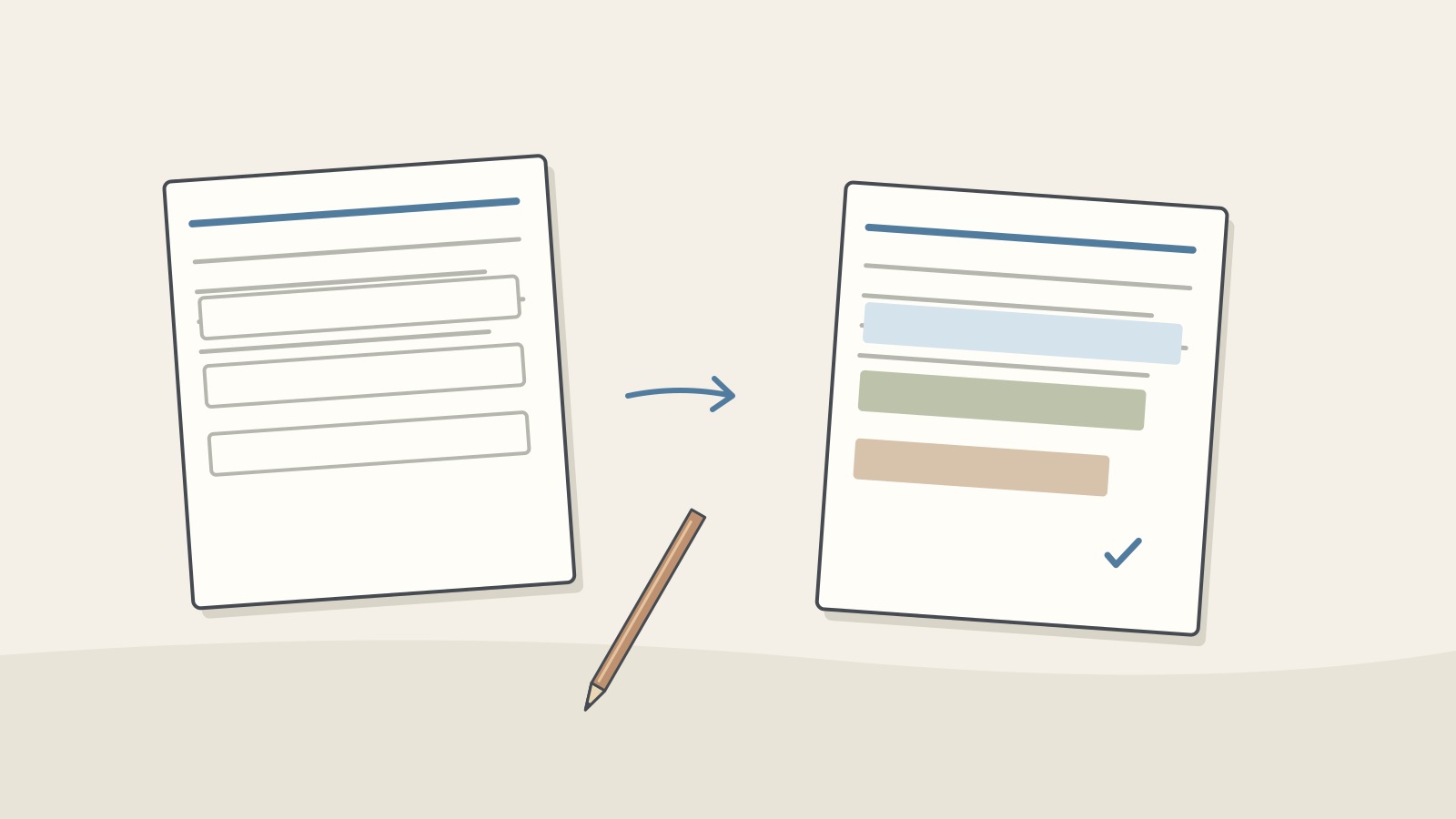
Figure: write in what the model would ask back, and the blanks disappear · AI Ping Then name the audience: someone attending this group for the first time. This identifies what the reader does not know more precisely than a broad label such as “beginner.”
Specify the result: one subject line, three body sentences, the supplied event details and a separate list of items to confirm. Keep only requirements that matter for the intended use.
The request below separates instructions from source material. That helps inspection but does not guarantee accuracy. Compare the result with the three supplied facts.
Example prompt Task: draft a reading-group notice for a first-time attendee. Source: 7 November, 2 p.m. / second floor of the local library / bring one book. Format: one subject line and three body sentences, calm and friendly. Checks: preserve all supplied details. Do not invent admission or registration arrangements. List missing details separately below the notice.
Five fields to check
Write five headings on paper: situation, goal, material, format and acceptance checks. This is a diagnostic tool for a weak result, not a rule requiring every request to have five paragraphs.
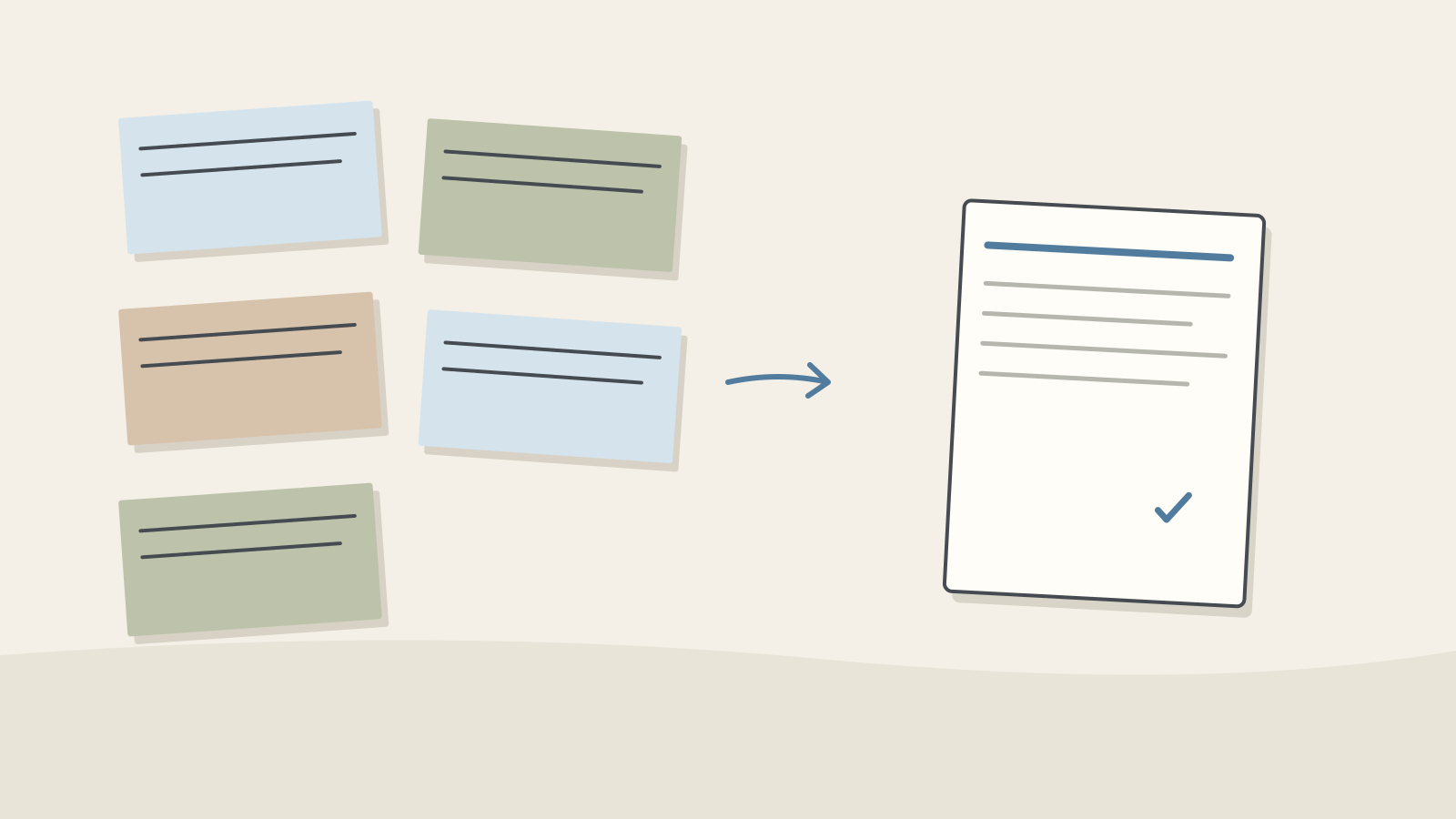
Figure: review the situation, goal, material, format and acceptance checks · AI Ping “Use three sentences” sets a format. “Do not invent admission or registration details; list them for confirmation” sets an evidence boundary. Both serve a different purpose.
Resolve conflicting requirements. If one sentence cannot comfortably preserve all essential details, prioritize the details and relax the sentence limit. Shorter does not automatically mean successful.
Five fields in this request Field What to supply Situation Notice for a first-time attendee Goal Communicate time, venue and materials Material Only established facts in the practice notes Format One subject line and three sentences Checks Compare with source; separate unknown details What an example can and cannot supply
If tone is hard to describe, include one short example: “Bring a book and make yourself comfortable.” Mark it as a style example, and state that factual details must come from the source notes.
A sample mentioning “the first ten participants” does not establish a ten-person limit for this event. Borrow tone and structure, then check that unrelated sample facts did not migrate into the draft.
A role such as an experienced editor may guide perspective or organization. It does not confer real credentials or establish facts. Compare results against your criteria rather than assuming a role phrase always helps.
There is no universally correct number of examples. Begin with one for this small task and add contrasting examples if needed. Check that old dates or instructions do not slip in with them.
Name the change and what must stay
If only the subject line is too stiff, request a subject-line change and keep the body. Inspect the actual revision rather than accepting a statement that the body was preserved.
For practice, move the event from the second floor to the first. State that the final venue replaces the old one, while time and materials remain unchanged. Check both the requested change and the untouched facts.
If revisions become hard to track, gather the final requirements and request a fresh draft. There is no rule that a new conversation is needed after exactly three attempts. In a new chat, supply the required material again.
3 / 4
Check & explain
Think about what you would ask AI, then read the explanation. Written submissions and external AI use are optional.
This is a learning check, not a test you must pass. Use the explanations to understand the ideas.
Q1Rewrite “write a good group notice” using the notes. Admission is unknown. Include a format and an evidence check.
Write your thoughts (optional)
Your writing is not sent anywhere. It disappears when you leave or reload this page, so copy anything you want to keep.
Read the answer and explanation
Example: “Write a subject and three-sentence notice for a first-time attendee. Include 7 November at 2 p.m., the library’s second floor and one book. Do not invent an admission price; list it for confirmation.” These are invented practice details. The request specifies both form and an evidence boundary.
This is your own review, not an automatic score.
Q2The draft has three sentences but omits the venue. Correct the claim that the sentence count makes it successful.
Write your thoughts (optional)
Your writing is not sent anywhere. It disappears when you leave or reload this page, so copy anything you want to keep.
Read the answer and explanation
The venue is an essential requirement, so the draft is not ready. Request its inclusion while preserving other facts, then compare against the notes. Relax the length requirement if it obstructs essential information.
This is your own review, not an automatic score.
Q3For practice, the venue changes from the second floor to the first. Write one revision request and two checks.
Write your thoughts (optional)
Your writing is not sent anywhere. It disappears when you leave or reload this page, so copy anything you want to keep.
Read the answer and explanation
Request: “Change only the venue to the library’s first floor; preserve date, time and materials. The first floor is final.” Check that the old floor is gone and the other details remain correct. The floor change is an invented exercise condition.
This is your own review, not an automatic score.
Common mistakes
- Repeating “better” without identifying a shortcoming.
- Importing dates or prices from a style sample.
- Accepting the model’s self-check as the final review.
- Confusing a drafting request with permission to send or publish.
Your learning record
Completion is optional. Mark this lesson when you feel ready, or move to the next lesson without marking it.
Completion is saved in this browser.
4 / 4
Apply to your work
Consider how new material changes the workflow and checking criteria. Trying an external AI tool is optional.
Try it: make a pre-publication checklist
Beside the final draft, list time, venue, materials, missing facts and reader suitability. Mark each checked, needs revision or not yet confirmed. Do not mark something checked merely because the text looks complete.
Admission and registration remain unknown in our practice material. If publication requires them, someone must obtain the real details. Sending or publishing is a separate action; this lesson stops at drafting and review.
Finish with one sentence: “Who will read what, based on which material, in which form?” Being able to answer it means the task is clearer. The next lesson examines errors that still slip into a fluent response.
Write a note (optional)
Use this only if you want to record a prompt or your understanding. This is a notebook, not a connected AI assistant.
Your writing is not sent anywhere. It disappears when you leave or reload this page, so copy anything you want to keep.
References
- Reduce hallucinations — Anthropic
- Prompting best practices — Claude Platform Docs (Anthropic)