MiniMax opens M3.1 Flash weights with commercial-use conditions
3-line summary
- Weights enable self-hosted deployment.
- Commercial use has notice and attribution terms.
- Serving configurations differ in context and inputs.
MiniMax has published M3.1 Flash weights, opening a path to run the model on infrastructure outside its hosted products. The official Hugging Face repository records its initial commit on October 23. MiniMax’s October 19 launch had offered the API, M Plan and MiniMax Code, while leaving weights for a later release.
The files carry the MiniMax Community License. Non-commercial use is free. Commercial products and services must display “Built with MiniMax M3.1-Flash.” Those generating more than $20 million in yearly revenue require prior written authorization from MiniMax; otherwise, a one-time notice is required. Copies must also preserve copyright and permission notices.
Commercial use includes commercially deployed fine-tuned or otherwise modified derivatives. The license’s prohibited-use appendix also bars military uses, alongside harmful uses such as exploiting minors.
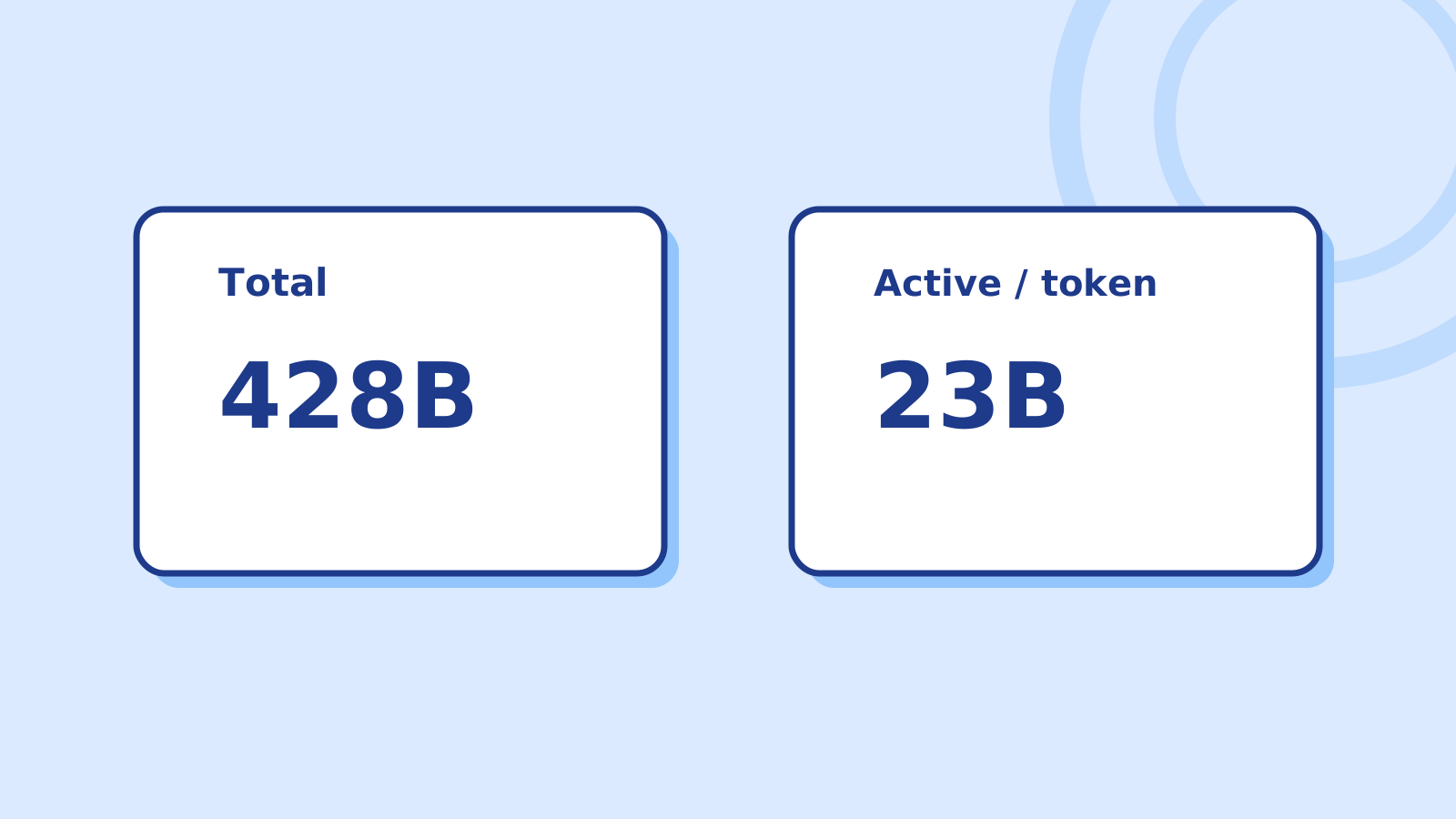
The model card describes approximately 428 billion total parameters, with 23 billion activated per token through its mixture-of-experts architecture. It accepts text, images and video and returns text, with a context window of up to one million tokens. Usable context and throughput depend on GPU memory and serving configuration.
Compared with M3, the first three full-attention layers now use sparse attention. Quantization-aware training targets memory and serving efficiency, and an included DSpark module proposes upcoming tokens to speed decoding.
The official repository lists about 252GB of files. Main weights are split across 48 Safetensors shards, alongside a separate DSpark directory. Download size and activated parameter count describe different things: selecting fewer parameters for each token does not shrink the downloadable checkpoint in the same proportion.
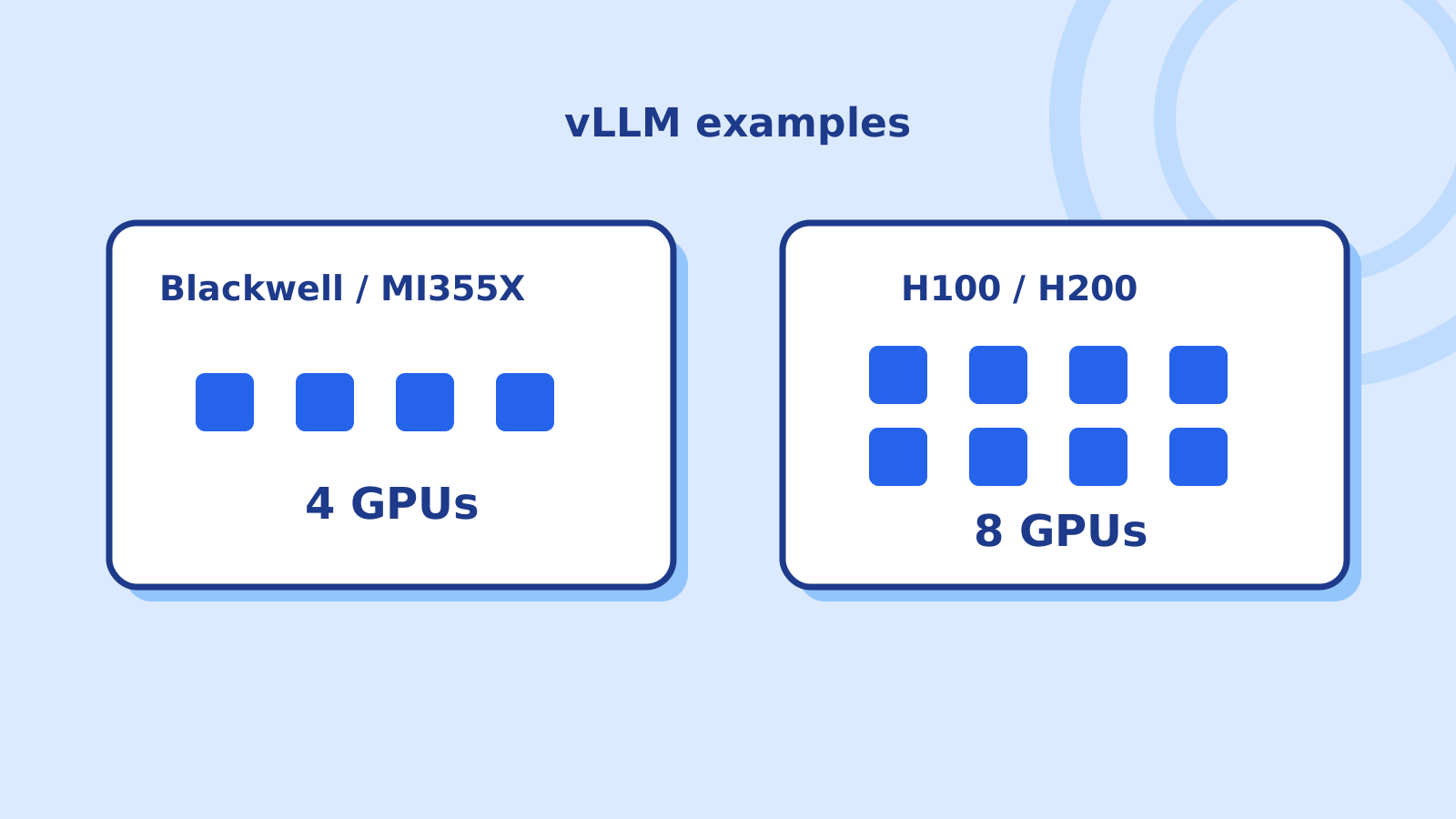
The official vLLM recipe distributes the model across four NVIDIA Blackwell GPUs or four AMD MI355X GPUs. Its H100/H200 example uses eight GPUs and sets context to 262,144 tokens. That Hopper configuration accepts images, with video input and DSpark disabled. Model-level maximum specifications do not apply unchanged to every serving example.
NVIDIA’s Dynamo development documentation provides B200 and GB300 profiles using four GPUs in one worker, requesting 16 CPUs and 128GiB of host memory. It labels these initial profiles as not performance-tuned and leaves the bundled DSpark disabled. These are documented deployment configurations, rather than universal minimum requirements or independently reproduced performance measurements.
Hosted API access remains available. The current official price table lists M3.1 Flash at $0.15 per million input tokens, $0.60 per million output tokens and $0.015 per million cached-input tokens. Those charges cover MiniMax’s hosted inference service; they do not price the hardware and operation of a self-hosted deployment.
Sources
- MiniMax-M3.1-Flash — model card — MiniMax / Hugging Face
- MiniMax-M3.1-Flash — weights and October 23 initial commit — MiniMax / Hugging Face
- MiniMax M3.1 Flash: Redefining Agent Performance and Cost — October 19 launch — MiniMax
- MiniMaxAI/MiniMax-M3.1-Flash — serving recipe — vLLM
- MiniMax M3.1 — development recipe — NVIDIA Dynamo
- MiniMax Community License — MiniMax / Hugging Face
- Pricing Overview — LLM rates — MiniMax API Docs
- Commit History — October 23, 2026 — MiniMax / Hugging Face