Use AI to build a sales proposal: from customer notes to a revised quote
Give AI customer notes, product terms and pricing, then check its example replies and complete a proposal. Revise evidence and calculations when access needs and the budget change.
About 35 min readingAs of Oct 2026
Lesson guide · goals & preparation
By the end of this guide
- Package customer notes, capabilities, prices and authority into a clear AI request.
- Check account capacity and total cost separately instead of accepting a recommendation.
- Use a follow-up turn to revise access, pricing and exclusions.
- Recheck an earlier proposal against a new budget without inventing a discount.
Who this is for
- Readers who know basic AI chat and want to turn work material into a checked result
- Non-specialists who prefer to learn through a complete recorded exchange
What you need
- All people, products, interviews and numbers are fictional practice material authored for this lesson. No real customer data is required.
- Read the sources, recorded replies and explanations without an AI account or payment. Running the prompts in an assistant you already have is optional.
- The recorded run used Korean prompts requesting bilingual replies. English prompts provide equivalent instructions for optional practice; they were not separate English runs.
This lesson’s terms, in plain language
Read the short meanings here. Open a term for a fuller explanation and example.
This reading lesson explains how to use external AI tools. Read from theory to the workflow, examples and explanations, or use the contents to jump to a section.
1 / 4
Theory
Understand what to ask AI to do, how to ask, and the ideas behind the workflow.
What AI misses when it receives only customer notes
A company with 12 support employees says compiling monthly enquiries is tedious. You paste the note into an assistant and ask for a proposal. A fluent document arrives, but two questions remain separate: how many people need direct product access, and how much the customer can spend in the first year. This lesson uses the fictional Moa Enquiries product to make AI expose those gaps, then revise a proposal after the customer clarifies them.
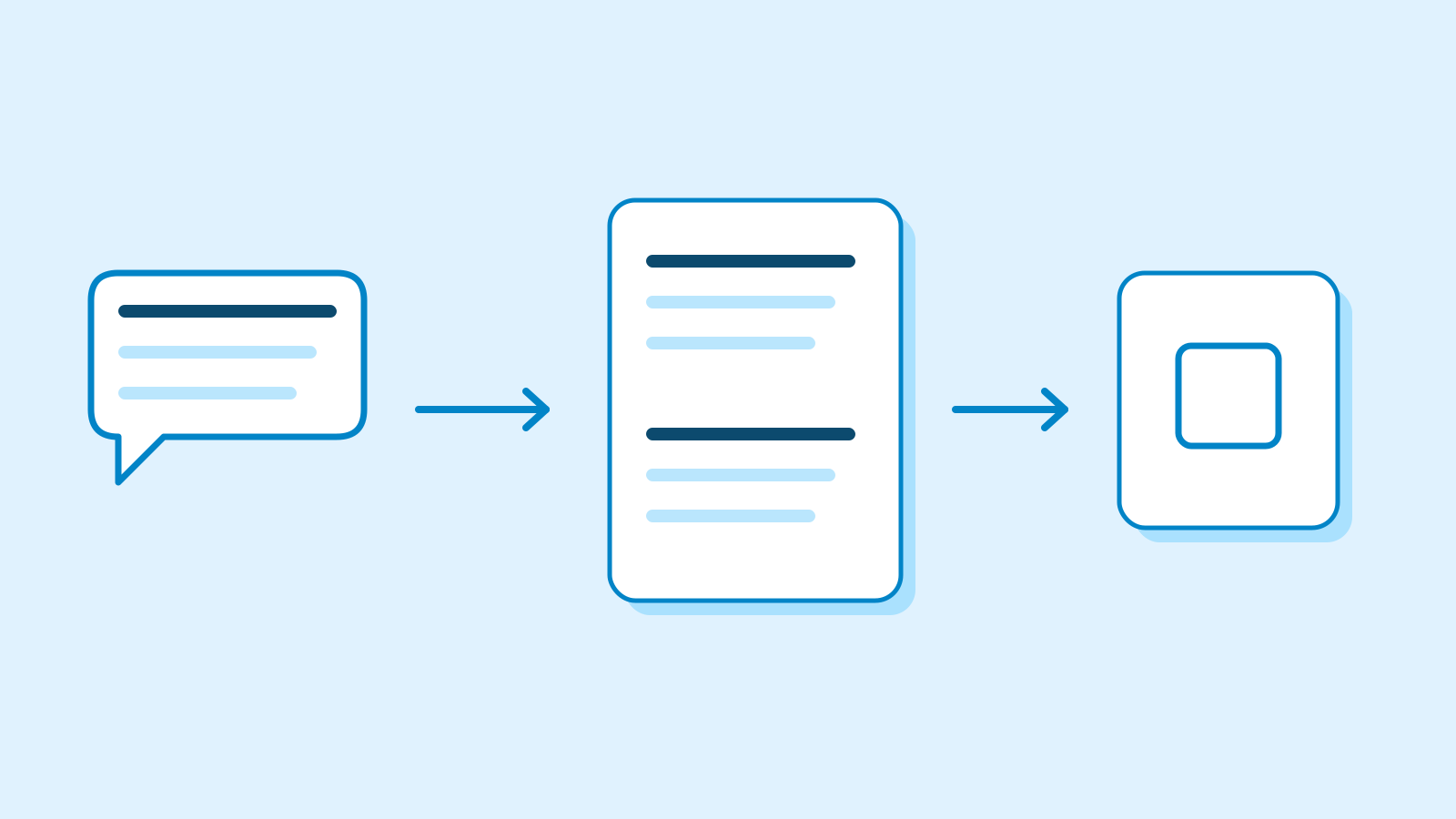
The workflow to understand is: Gather customer notes, product terms and prices → separate facts from unknowns → request a proposal draft with evidence → check costs, features and commitments → revise for changed access needs and budget. First learn why each input and constraint matters, then study the requests, finished examples and explanations. This is a reading lesson about external AI tools; no account or runtime is required.
The assistant has three jobs: extract relevant facts from separate sources, compare customer requirements with product conditions, and turn that comparison into readable writing. Finding “12 employees” is extraction. Comparing it with “Basic permits ten accounts” is a different operation. Jumping directly to “recommend Pro” can miss the budget. Request the intermediate review before the polished proposal so you can locate where a conclusion changes.
Evidence IDs work like return addresses. C identifies customer statements, P capabilities, R prices and A authority. “Eight direct users, C5; ten-account capacity, P1” is easier to check than an unexplained recommendation. The ID itself proves nothing: a sentence about automatic classification still fails if P1 describes only manual tags. Open the cited source and inspect the relationship, not just the presence of a citation.
The three-turn conversation was actually run with Claude Sonnet 5.5 on 28 October 2026. Its first review, clarification and budget-change replies are reproduced unchanged. All commercial facts and the practice tax rule are invented. You are learning how to supply evidence, check calculations and revise AI-generated commitments, rather than learning to sell an actual product. The complete exchange can be studied without opening an AI tool.
Prepare four source groups before asking for prose
The initial pack contains C1–C4, P1–P4, R1–R3 and A1. C1 establishes 12 employees, not 12 required accounts. C2 says the CRM can export CSV and the customer will consider manual tagging. CSV is a plain-text way to represent table rows. These details let AI describe a possible import-and-tag workflow without assuming automatic integration.
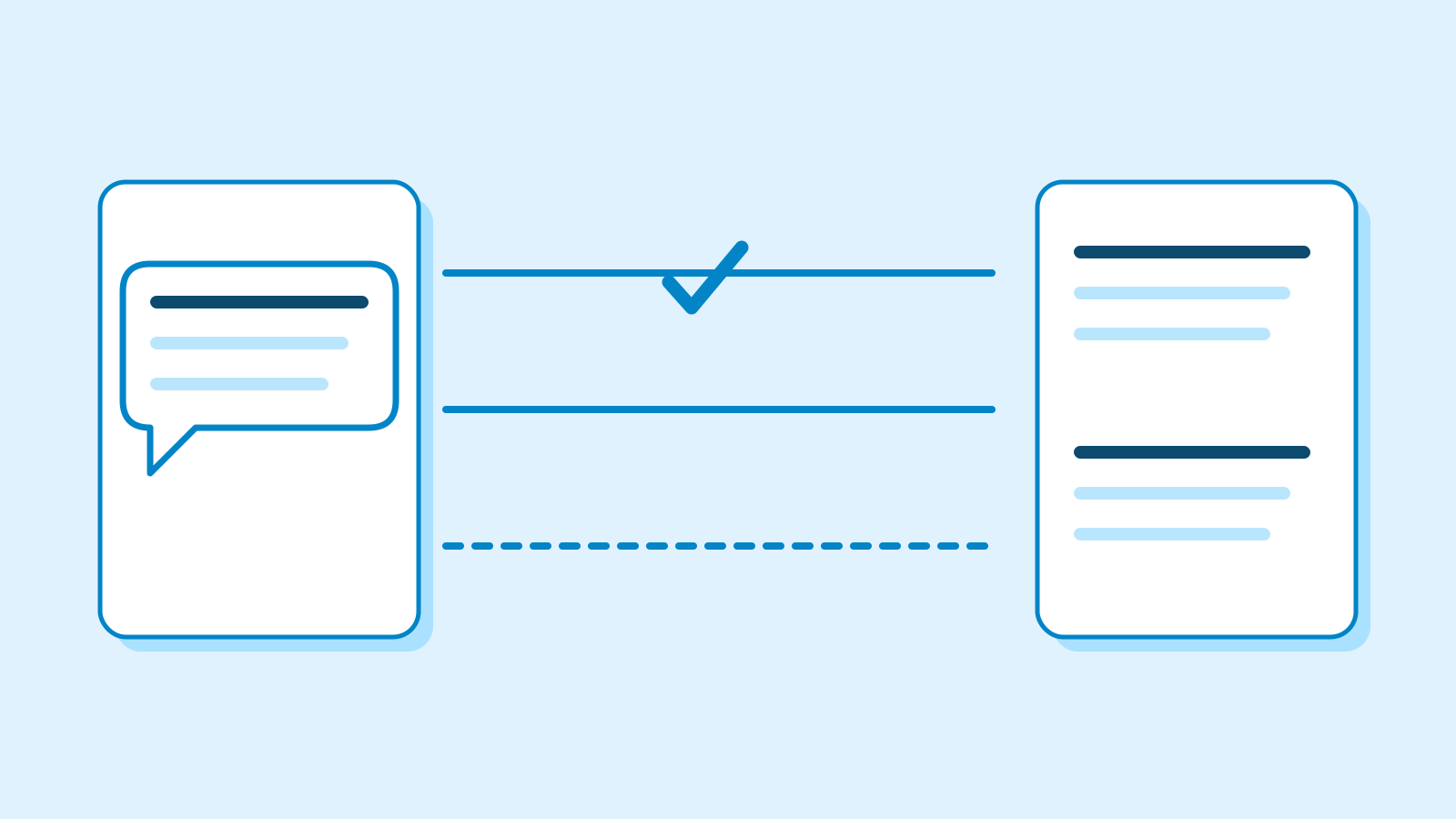
Figure: Customer, product and pricing evidence is linked to the corresponding proposal claims. · AI Ping The product source deliberately narrows the alternatives. Basic permits ten accounts and Pro twenty; every other supplied capability is identical. Both support manual tags, filtering, CSV import and PDF export. Neither performs automatic classification or CRM integration. P4 permits distributing exported PDFs within the customer’s company. Including “no other difference is assumed” prevents the assistant from borrowing premium-plan features from unrelated products it has encountered.
For pricing, define the calculation before comparing amounts. Basic is KRW 190,000 per month, Pro KRW 290,000, with one first-year setup fee of KRW 300,000. The fictional 10% tax applies to subscription plus setup. First-year cost is therefore twelve monthly payments plus one setup fee, multiplied by 1.1. Taxing only the subscription or charging setup twelve times produces the wrong scope. Asking for a formula exposes that kind of mistake.
A1 gives the salesperson authority to explain the price list, not to discount it. A customer requesting a concession is not evidence that a concession is available. If authority is omitted, conversational smoothing can turn the request into an invented offer. The table below indexes the source groups; the downloadable file and next section’s copyable prompt contain all twelve records. You do not need real customer records or missing commercial information to follow the example.
Where the twelve input records belong Group Content Check to request C1–C4 12 employees; first-year ceiling KRW 4m Required accounts and purchase approval unknown P1–P4 Basic 10 accounts; Pro 20 PDF readers versus direct users R1–R3 Monthly rates, setup, practice tax Twelve-month first-year total A1 No discount authority or approval A request is not approval
2 / 4
Step-by-step use
Learn what to prepare, how to request help and how to revise the result through examples and explanations.
First request: ask for evidence and arithmetic first
The first request asks for decision material before persuasive prose: separate four kinds of information, calculate both plans and assess capacity independently from affordability. That sequence prevents two shortcuts—recommending Basic merely because it is cheaper, or Pro merely because the company has twelve employees. The useful instruction is the explicit comparison and treatment of unknowns, rather than an elaborate “expert salesperson” persona.
Claude calculated Basic at KRW 2,838,000 and Pro at KRW 4,158,000. The editor independently checked both formulas. Against the KRW 4m ceiling, Basic leaves KRW 1,162,000 and Pro exceeds it by KRW 158,000. Yet the reply leaves Basic’s account suitability pending. Direct-user requirements are still unknown. Correct arithmetic does not by itself justify a purchase recommendation.
Check three concrete claims against the input: ten accounts in P1, setup included in C3’s ceiling, and internal PDF distribution in P4. The recorded reply asks how many people need direct access and whether manual tagging with CSV import would meet the workflow. Those questions turn missing evidence into a bounded next conversation. The assistant’s contribution is to expose the decision-changing gaps, not fill them with invented customer answers.
The full reply follows unchanged. Its U1–U6 labels were invented as working labels for unknowns, rather than source IDs. The subsequent supplied clarification also includes a U1 note, so the next response renames its unknowns M1–M6. This is a real bookkeeping issue visible in the run. In your own workflow, reserve different prefixes for source records and AI-generated working labels before a long conversation makes references ambiguous.
Example prompt This is a fictional teaching case. Analyze only this text, without outside sources, files or tools. Using only the supplied material, prepare an AI sales review: (1) separate customer facts, product facts, unknowns and authority with IDs; (2) calculate each plan's tax-inclusive first-year cost for 12 months, showing formulas; (3) assess account capacity and budget separately; (4) ask two clarifying questions; (5) draft a short review note. Do not recommend a purchase yet. A plan passing the budget test may still fail the account test. Fictional practice material. The company, product, prices, tax rule and records are invented; these are not real prices or tax advice. All amounts are KRW. C1 | Hangeul Services has 12 support employees who compile monthly enquiries. Whether all 12 need individual product accounts is unknown. C2 | The customer can export CSV from its CRM and is willing to consider manual tagging. Automatic integration has not been stated as mandatory. C3 | The first-year spending ceiling is 4,000,000 including practice VAT and setup. No savings have been measured. C4 | Customer: 'Do we need Pro? It seems expensive. Can you discount it?' No purchase approval or meeting date exists. P1 | Fictional Moa Enquiries Basic: up to 10 individual accounts, manual tags, tag filtering, CSV import and PDF export. P2 | Pro: up to 20 accounts with the same functions as Basic. Do not assume any difference besides account capacity. P3 | Neither plan includes automatic CRM integration or automatic classification. No customer-specific savings evidence is available. P4 | Exported PDFs may be distributed to colleagues in the same company. Every person directly accessing the product needs an individual account. Account sharing is prohibited. R1 | Basic 190,000/month; Pro 290,000/month, excluding practice VAT. Each rate remains unchanged for all 12 months. R2 | Both plans have one first-year setup fee of 300,000. Apply the fictional 10% VAT to the entire annual subscription plus setup. R3 | No discount, free period or prorating rule is supplied. Compare 12 full months plus setup. A1 | The salesperson may explain the published price list, but has no authority or approval for discounts, new capabilities or delivery commitments.
Worked example & explanation This is recorded response 1 from Claude Sonnet 5.5 on 28 October 2026. The Korean prompt requested both languages; this is the English portion of that same response, reproduced without editing. The surrounding explanation and checked deliverable are editorial writing.
Example responseA teaching example of a workflow in an external AI tool. Results vary with the request and context.
1. Fact separation
Customer facts
- C1: 12 support staff organize inquiries at month-end.
- C2: CSV can be downloaded from the CRM. Manual human tagging is under consideration; automatic integration was not called mandatory.
- C3: First-year total spend cap is 4,000,000 KRW including VAT and setup.
- C4: Asked whether Pro is needed and whether a discount exists. No purchase approval; no meeting scheduled.
Product facts
- P1: Basic: up to 10 individual accounts, manual tags with list filtering, CSV import, PDF export.
- P2: Pro: up to 20 accounts; no other differences assumed.
- P3: Neither plan has CRM auto-integration or auto-classification. No verified time-savings data.
- P4: Distributing exported PDFs internally is allowed. Anyone logging in directly needs their own account; sharing is not allowed.
- R1-R3: Basic 190,000/month, Pro 290,000/month (excl. VAT), setup 300,000, VAT 10%.
Unconfirmed
- U1: Whether all 12 need their own accounts (C1).
- U2: How many could just receive PDFs (P4).
- U3: Whether manual tagging plus CSV meets the need (C2 says only "considering").
- U4: Cost-saving effect (C3, P3).
- U5: Any discount or free period (R3).
- U6: Approval and timing (C4).
Authority
- A1: May quote the existing price list only. No discounts, new features, or delivery commitments.
2. First-year 12-month totals (incl. 10% VAT)
- Basic: (190,000×12 + 300,000)×1.1 = 2,580,000×1.1 = 2,838,000 KRW
- Pro: (290,000×12 + 300,000)×1.1 = 3,780,000×1.1 = 4,158,000 KRW
- Against the 4,000,000 cap: Basic has 1,162,000 headroom; Pro exceeds by 158,000.
3. Verdicts
Option Accounts Budget Basic Hold Pass Pro Pass Fail - Basic accounts: Hold. If 11 or more people need direct access it exceeds the 10-account limit (P1) and fails; at 10 or fewer it passes. U1 and U2 are unconfirmed.
- Passing the budget does not mean the account condition is met.
- Pro accounts: Pass, since 20 covers all 12. Budget: Fail at list price. Whether a discount exists is unconfirmed (U5) and cannot be offered under A1.
4. Two questions to ask first
- At month-end, how many staff must log in directly to tag or view lists, and can the rest work from received PDFs?
- Does manual tagging with CSV import (no auto-integration or auto-classification) satisfy your requirements?
5. Memo ready to send
Hello, and thank you for your inquiry. Using our current price list, first-year 12-month totals including the 300,000 KRW setup fee and 10% VAT are 2,838,000 KRW for Basic and 4,158,000 KRW for Pro. Against your 4,000,000 KRW cap, Basic is within it and Pro exceeds it by 158,000 KRW. However, Basic allows at most 10 direct-login accounts, so we need to know how many of your 12 staff actually need to log in before judging fit. Neither plan offers CRM auto-integration or auto-classification, and I am not able to offer discounts. If you can tell us how many people need direct access and whether manual tagging plus CSV import is sufficient, we will outline next steps.
Clarify access: eight accounts and four PDF readers
C5 does not reduce the company’s headcount. There are still twelve employees, but eight need direct entry and search, while four only need a monthly PDF. That distinction changes Basic’s capacity result from pending to passing. Product capabilities and prices remain unchanged. Supply the new information in the same conversation and explicitly retain earlier conditions so the revision has a traceable cause.
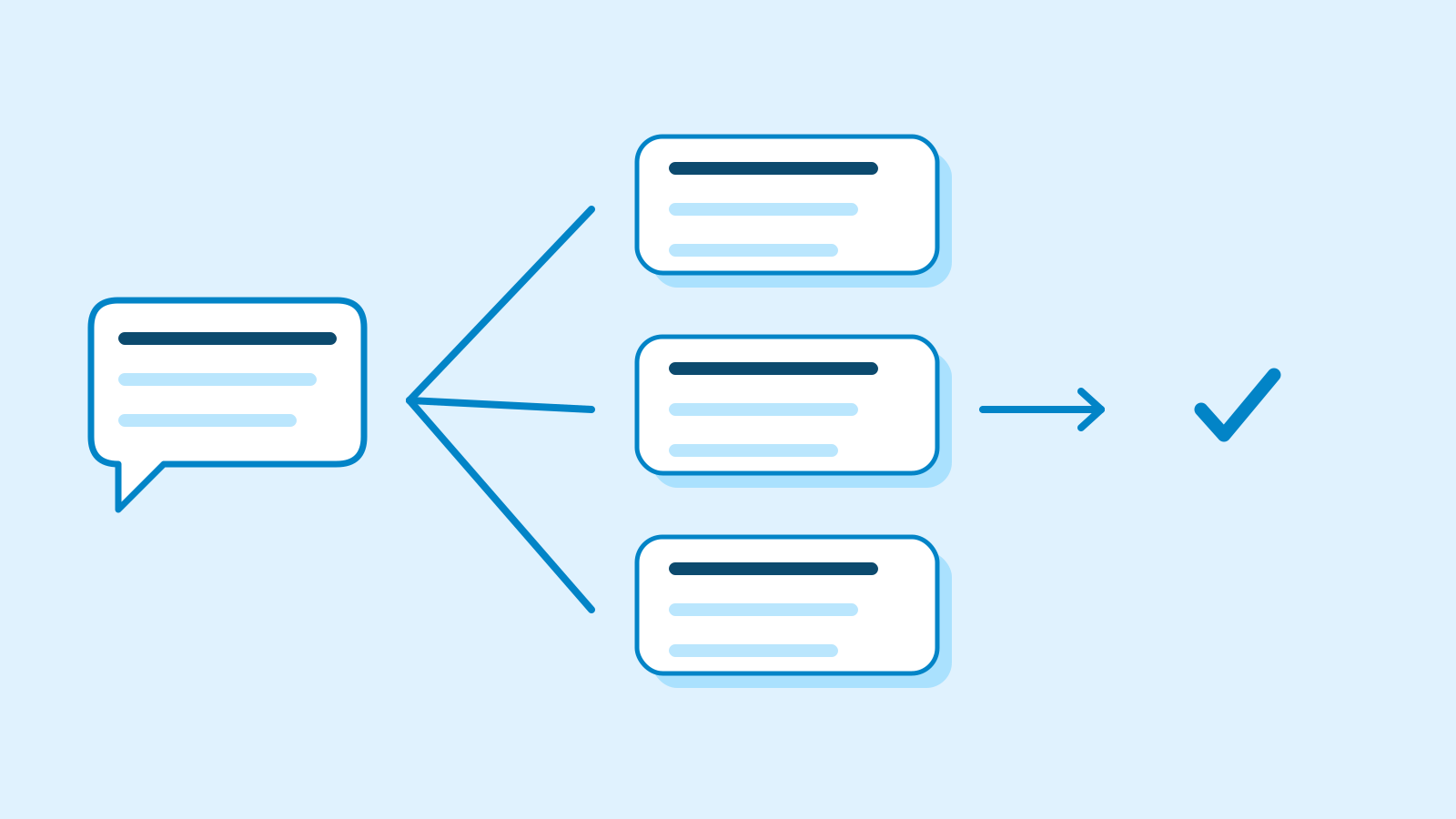
Figure: Twelve employees are separated into eight direct users and four PDF readers before checking the plan. · AI Ping The second request names the required proposal sections: workflow, capabilities, access, cost, exclusions, response to the discount request and next checks. “Make it more persuasive” does not define what must change. “Distinguish direct users from PDF readers” gives you a concrete test: the draft must not imply twelve people can log into a ten-account plan. Establish the document’s decision structure before polishing its tone.
The recorded revision assigns eight individual accounts and four internal PDF readers, retains the KRW 2,838,000 total and declines to include the unapproved 10% discount. C5 accepts a workflow option for consideration; it does not approve purchasing. Accordingly, the next action remains confirming the access arrangement and manual workflow. No intentionally bad first answer was manufactured. The example shows an actual follow-up in which new evidence changes a recommendation’s conditions.
One instruction in the reply’s final checklist is too broad: it says to ensure discount wording and 10% amounts appear nowhere. The practice tax rate and an explanation that a requested discount was not applied are legitimate information. The editor’s checked version instead asks whether any wording promises or applies an unapproved discount. AI-generated review checklists also require review; otherwise they can remove the very facts a reader needs.
Example prompt Apply the clarification below to the same case. Provide changed conclusions with IDs; Basic's first-year cost, ceiling and difference; and a customer-facing proposal draft covering workflow, functions, access, cost, exclusions, the discount request and next checks. End with a sender checklist. Do not promise an unapproved discount or savings. Distinguish PDF readers from direct users. C5 | Customer clarification: eight people need direct entry and search; four can read a monthly PDF. The customer accepts this as an option to review, not a purchase approval. C6 | Customer: 'Please revise the quote for Basic. A promised 10% discount would help internal approval.' No discount approval exists; the first-year ceiling remains 4,000,000. U1 | Basic can now be considered. Produce a draft only; do not send, contract or confirm a meeting.
Worked example & explanation This is recorded response 2 from Claude Sonnet 5.5 on 28 October 2026. The Korean prompt requested both languages; this is the English portion of that same response, reproduced without editing. The surrounding explanation and checked deliverable are editorial writing.
Example responseA teaching example of a workflow in an external AI tool. Results vary with the request and context.
1. What changed and why
- Earlier unconfirmed items U1-U6 collide with the new U1, so they are called M1-M6 here.
- Basic account count: Hold becomes Pass. Basis: C5 (8 direct users), P1 (max 10), P4 (the other 4 receive PDFs; account sharing not allowed). M1 and M2 are resolved. Two spare accounts remain.
- Basic budget stays Pass (C3, R1-R3).
- Pro stays Fail on budget. With 8 direct users, the materials show nothing extra that Pro would solve (P2).
- Discount: no change. C6 asks for one, but A1 gives no authority and there is no approval. The budget passes without any discount.
- Still unconfirmed: M3 (whether manual tagging plus CSV is enough), M4 (cost savings), purchase approval and timing. C5 accepts the review draft only; it is not approval.
2. Basic first-year total
(190,000×12 + 300,000)×1.1 = 2,580,000×1.1 = 2,838,000 KRW
- Monthly fees 2,280,000 + setup 300,000 + VAT 258,000
- Against the 4,000,000 cap: 1,162,000 KRW headroom
3. Proposal draft (customer-facing, not sent)
Current work: 12 support staff organize inquiries at month-end. 8 enter and search directly; the other 4 read a month-end PDF (C1, C5).
Features: Moa Inquiry Basic provides manually applied tags, list filtering by tag, CSV import, and PDF export.
How it would be used
- Direct access: the 8 people who enter and search each use their own account (max 10). Account sharing is not allowed.
- PDF recipients: the other 4 receive exported PDFs inside the company. No login account is needed.
- The CSV downloaded from your CRM is imported, and people apply the tags.
Cost (first 12 months, incl. 10% VAT)
Item Amount 190,000×12 2,280,000 KRW One-time setup 300,000 KRW VAT 258,000 KRW Total 2,838,000 KRW This is within your 4,000,000 KRW first-year cap.
Not included: CRM auto-integration, auto-classification, any guarantee of cost or time savings, delivery dates or new-feature commitments, and discounts.
Reply on the discount request: No approved discount exists for the 10% you asked about, so this quote does not include one. Amounts above use the current price list.
Next confirmations: (1) Is the count of 8 direct users final? (2) Is human tagging with CSV import sufficient? More than 10 direct users would exceed the Basic limit.
4. Pre-send review (sales rep)
- Confirm no discount wording or 10% figure appears anywhere (A1, C6).
- Recalculate 2,838,000 KRW and confirm VAT and setup are stated as included.
- Confirm 8 direct users and 4 PDF recipients are kept distinct, no "all 12 use it" wording appears, and the no-sharing rule is stated.
- Confirm nothing implies savings, results, or automation (P3, C3).
- Confirm no approval, contract, delivery date, or meeting is implied and the draft is labeled as such (U1).
- Routing the discount request is outside the rep's authority; check with the approver.
Build a checked deliverable with explicit boundaries
Turn the assistant’s reply into a one-page document you have checked. Its opening can describe a Basic option for monthly enquiries with eight direct users and four PDF readers. That sentence connects the customer’s workflow with the actual access conditions. It does not imply all twelve employees can log in or that the workflow is fully automated. The table and downloadable deliverable below are editorially checked writing, distinct from the unchanged model transcript.
Keep the cost components visible: KRW 2,280,000 for twelve monthly payments, KRW 300,000 setup, KRW 258,000 practice tax and KRW 2,838,000 total. A single total obscures omitted charges. Do not add free setup, a shorter paid period or an eight-person per-seat calculation: none is a supplied pricing rule. Showing the components makes those otherwise plausible model shortcuts easier to detect.
The workflow says a person exports CRM data, imports the CSV and applies tags. The four PDF readers are not sharing a login. List automatic integration, automatic classification, guaranteed savings and a committed schedule among the exclusions. Clear capability statements can coexist with unmeasured benefits reserved for evaluation. The proposal does not need to erase supported functions merely to sound cautious.
Keep a compact verification record with the document: prices recalculated from R1/R2, eight accounts checked against C5/P1, internal PDF distribution checked against P4, and no unapproved concession. Then await workflow confirmation and the customer’s purchase process. Completion here means a draft plus its review record. Nothing has been sent or contracted, and no actual product import or business improvement has been demonstrated.
Key parts of the editor-checked proposal Item Customer-facing content Access Eight individual accounts; four internal PDF readers Capabilities Manual tags, filters, CSV import and PDF export First year (190,000×12+300,000)×1.1 = KRW 2,838,000 Budget KRW 1,162,000 below the KRW 4m ceiling Excluded Automatic integration/classification, discounts, guaranteed results Next checks Confirm access and manual workflow; purchase approval is separate Recheck the earlier proposal when the budget changes
After completing the proposal, open holdout H1: finance has lowered the first-year ceiling to KRW 2,700,000. H2 asks to retain the earlier “within budget” wording. This condition was not used to build the proposal. It tests whether a conversation that remembers its prior conclusion can still abandon that conclusion when its premise changes.
The third request asks for more than a rewrite. Identify wording to withdraw, calculate the new overrun and separate permitted responses from concessions needing approval. The recorded answer retracts the KRW 4m budget statement and the KRW 1,162,000 headroom. Basic still costs KRW 2,838,000 and now exceeds the ceiling by KRW 138,000. The price did not change; the comparison condition did.
A useful follow-up allows an unwanted answer. No supplied plan meets the new ceiling. Asking whether the customer can adjust the budget, or pausing the purchase review, is supported. Insisting that AI close the deal invites invented fee waivers, discounts or per-person pricing. The goal is a proposal whose status matches the latest evidence, not preservation of the earlier recommendation.
Compare the old and new versions. Eight direct users, four readers, capabilities and total cost remain valid. Budget status and the next question change. The reply calls continued inclusion of setup a C3-based assumption, but H1 explicitly retains the other conditions; in this case C3 remains an input condition. Editorial checking can correct unnecessary uncertainty as well as overconfident claims. The source, rather than the model’s tone, determines what is established.
A new condition after the proposal Source Change H1 First-year ceiling KRW 2.7m; other conditions unchanged H2 Customer asks to retain the earlier affordability claim Download the complete material
Example prompt Apply this holdout as a change in conditions. Identify the earlier wording that must be withdrawn and explain why. Recalculate cost, ceiling and overrun. Separate responses permitted by the price list from those requiring approval, then draft a revised customer response. Do not invent a discount to defend the previous conclusion. H1 | New holdout material: the customer finance contact lowers the first-year tax-inclusive ceiling to 2,700,000. C5's access needs and all prices and discount authority remain unchanged. H2 | The customer asks you to retain the earlier 'within budget' wording. Recheck that statement against the new ceiling.
Worked example & explanation This is recorded response 3 from Claude Sonnet 5.5 on 28 October 2026. The Korean prompt requested both languages; this is the English portion of that same response, reproduced without editing. The surrounding explanation and checked deliverable are editorial writing.
Example responseA teaching example of a workflow in an external AI tool. Results vary with the request and context.
1. Sentences to discard
Original wording Why "It is within your 4,000,000 KRW first-year cap." (proposal, cost) Under the new 2,700,000 cap (H1), Basic is over. "1,162,000 KRW headroom" Based on the old cap. Now it is 138,000 over, not headroom. "The budget passes without any discount" Its premise is gone. "Basic is within it and Pro exceeds it by 158,000" Both are over. The H2 phrase "Basic is within budget" cannot stay. It was true only under the 4,000,000 cap, and rechecking against the latest budget makes it false. Kept: the 2,838,000 total, the 8-direct/4-PDF split, features, exclusions, and the no-discount wording.
2. Recalculation (price list, 10% VAT, setup unchanged)
- Basic: (190,000×12 + 300,000)×1.1 = 2,838,000 KRW vs cap 2,700,000: 138,000 over
- Pro: (290,000×12 + 300,000)×1.1 = 4,158,000 KRW vs cap 2,700,000: 1,458,000 over
- Assumption: setup stays inside the cap, per C3.
- Accounts still pass (C5: 8 direct users ≤ 10). Budget fails for both plans.
3. Responses
Available on the confirmed price list
- Ask whether the customer can raise the cap to at least 2,838,000 KRW (the customer's decision).
- If the cap stays, no plan fits this price list, so pause the purchase review.
- Pro is further over, and nothing shows 8 users need it (P2).
Not usable without approval (A1, R3)
- Any discount, setup-fee change, free period, or prorated/shorter-term pricing
- Cutting accounts to lower the price (R1 gives plan-level monthly fees; there is no per-account pricing)
- New features, delivery dates, or savings guarantees
4. Revised reply for the customer
Hello, and thank you. We recalculated against your updated first-year cap of 2,700,000 KRW including VAT. On the current price list, Basic for the first 12 months, including the 300,000 KRW setup fee and VAT, totals 2,838,000 KRW, which is 138,000 KRW over your cap. Our earlier line saying it was within a 4,000,000 KRW cap applied only to the previous cap, so we cannot keep it. Pro totals 4,158,000 KRW, 1,458,000 KRW over.
Having 8 people use their own accounts and 4 read the month-end PDF still fits Basic's 10-account limit. But no plan fits the new cap.
No discount has been approved, so we cannot include one, and we cannot offer other setup or term conditions. Please tell us whether the cap can be raised to at least 2,838,000 KRW, or whether to pause this review at the current cap.
5. Pre-send check
- Confirm "4,000,000", "1,162,000 headroom", and "within budget" are all gone.
- Recompute the totals and overages (138,000 and 1,458,000).
- Confirm no discount amount or target rate is suggested.
3 / 4
Check & explain
Think about what you would ask AI, then read the explanation. Written submissions and external AI use are optional.
This is a learning check, not a test you must pass. Use the explanations to understand the ideas.
Q1AI recommends Pro solely because C1 lists twelve employees. Which two conditions need separate checks?
Write your thoughts (optional)
Your writing is not sent anywhere. It disappears when you leave or reload this page, so copy anything you want to keep.
Read the answer and explanation
Ask separately about required direct-user accounts and first-year affordability. C1 gives headcount, not confirmed account demand. With the invented practice prices, Pro costs KRW 4,158,000 and exceeds the KRW 4m ceiling by KRW 158,000.
This is your own review, not an automatic score.
Q2After C5, AI writes that all twelve staff can share one Basic login. How should this change?
Write your thoughts (optional)
Your writing is not sent anywhere. It disappears when you leave or reload this page, so copy anything you want to keep.
Read the answer and explanation
Assign eight individual accounts and distribute a PDF to the other four. P4 prohibits shared logins while permitting internal PDF distribution. These are fictional practice counts, and purchase approval remains separate.
This is your own review, not an automatic score.
Q3The review says to delete every mention of 10%. Should the tax rate and discount response also disappear?
Write your thoughts (optional)
Your writing is not sent anywhere. It disappears when you leave or reload this page, so copy anything you want to keep.
Read the answer and explanation
No. The fictional 10% tax rate is a calculation condition, and explaining that the requested discount was not applied is useful. Remove unauthorized promises or applied concessions, not every occurrence of the same number.
This is your own review, not an automatic score.
Q4With a new KRW 2.7m ceiling, AI removes setup to make the proposal fit. What should the revision request say?
Write your thoughts (optional)
Your writing is not sent anywhere. It disappears when you leave or reload this page, so copy anything you want to keep.
Read the answer and explanation
Require R2’s setup fee and recalculate KRW 2,838,000 total with a KRW 138,000 overrun. All values are invented for practice, and no fee waiver is approved. Supported options are checking a budget adjustment or pausing the review.
This is your own review, not an automatic score.
Common mistakes
- Treating headcount as confirmed account demand
- Omitting setup or practice tax from a monthly-price comparison
- Turning a discount request into approval or inventing premium capabilities
- Following an overbroad AI checklist that deletes necessary price explanations
Your learning record
Completion is optional. Mark this lesson when you feel ready, or move to the next lesson without marking it.
Completion is saved in this browser.
4 / 4
Apply to your work
Consider how new material changes the workflow and checking criteria. Trying an external AI tool is optional.
Try it: revise one proposal claim from new evidence
Start without a tool. Compare the KRW 2,838,000 total with the new KRW 2,700,000 ceiling, then replace one invalid proposal sentence. “Within budget” becomes “exceeds the ceiling by KRW 138,000,” supported by H1 and R1/R2. Next explain why eight direct users still stands, using C5. This small exercise isolates changed judgment from unchanged evidence without requiring a full blank-page proposal.
For optional tool practice, paste the complete first request into a fresh conversation. Inspect formulas and clarification questions before adding the second request to that conversation. Only then introduce the holdout. If all conditions arrive together, the model can simply analyze the final budget; you lose the opportunity to observe whether it revises a previous claim when new information arrives.
Different wording from the recorded reply is acceptable. Check what changed the recommendation, whether arithmetic uses the same cost scope, and whether any unauthorized commitment appeared. You may ask AI to review itself, but repetition is not independent confirmation. Recalculate the figures separately and locate the actual product and authority statements in the source file.
Save three lines: the AI draft, what you checked and what remains to ask. Here those might be the Basic option, eight accounts plus first-year cost, and whether the customer can address the KRW 138,000 overrun. No time saving or sales outcome has been measured. The result is a usable document format and a repeatable way to revise AI writing while preserving its evidence.
Write a note (optional)
Use this only if you want to record a prompt or your understanding. This is a notebook, not a connected AI assistant.
Your writing is not sent anywhere. It disappears when you leave or reload this page, so copy anything you want to keep.
References
- Prompting best practices — Anthropic
- Reduce hallucinations — Anthropic
- Initial fictional source pack — AI Ping
- Clarification for the second turn — AI Ping
- Holdout conditions — AI Ping
- Editor-checked final deliverable — AI Ping
- Recorded Claude response 1 — AI Ping
- Recorded Claude response 2 — AI Ping
- Recorded Claude response 3 — AI Ping