Sales basics: understand discovery notes
Separate interest, requests and commitments, then choose a useful next question.
About 15 min readingAs of Oct 2026
By the end of this guide
- Separate customer facts from sales assumptions.
- Write a useful handover.
- Ask non-leading questions.
Who this is for
- People learning to structure this work with AI
- People who want to check a draft against evidence
What you need
- All cases, records and numbers here are fictional teaching material, not recorded model replies or research findings.
- Paper and a pen are enough. To try a prompt, use an assistant you already have and only the fictional material.
This lesson’s terms, in plain language
Read the short meanings here. Open a term for a fuller explanation and example.
Key ideas
Interest is not a commitment
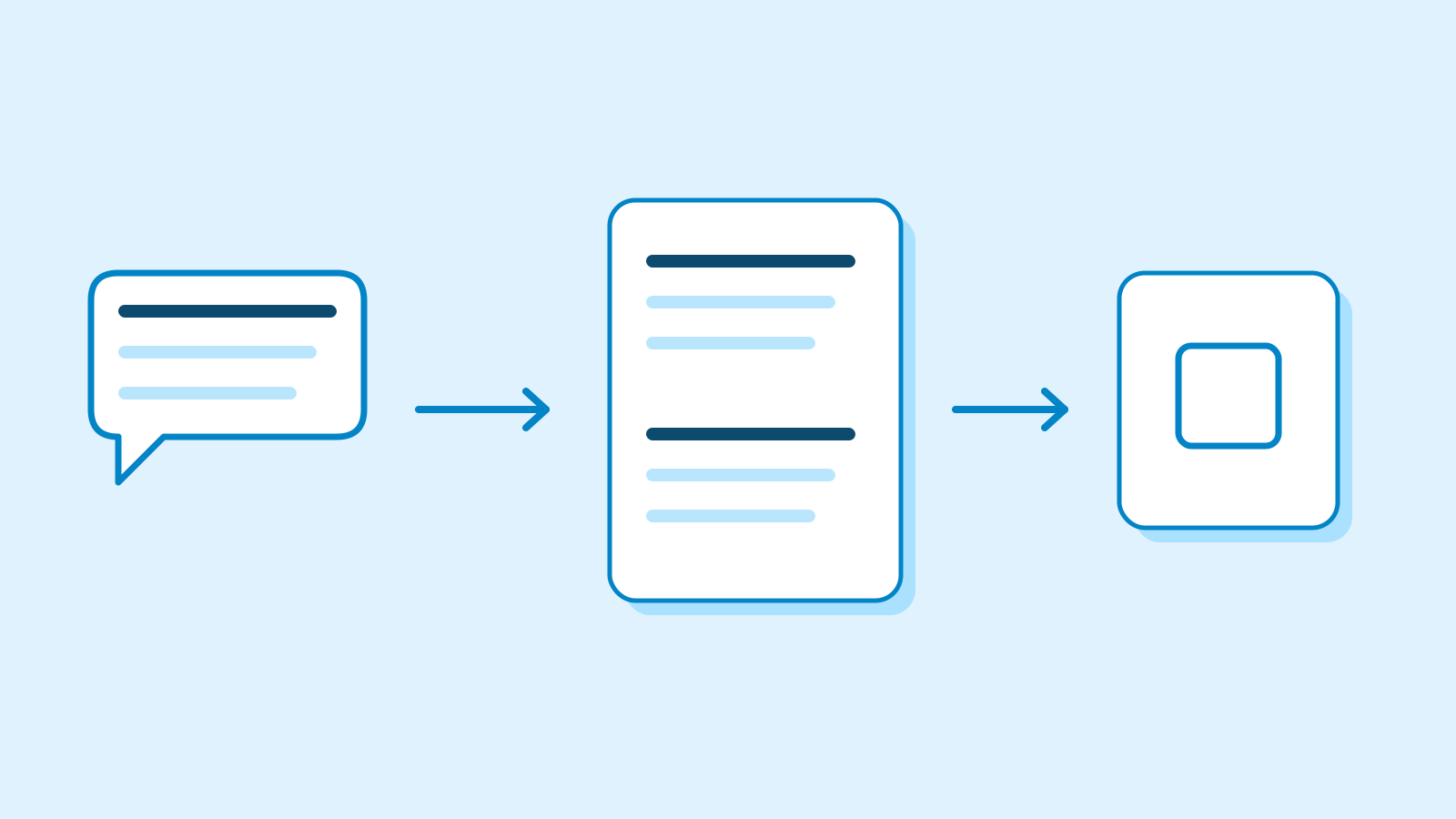
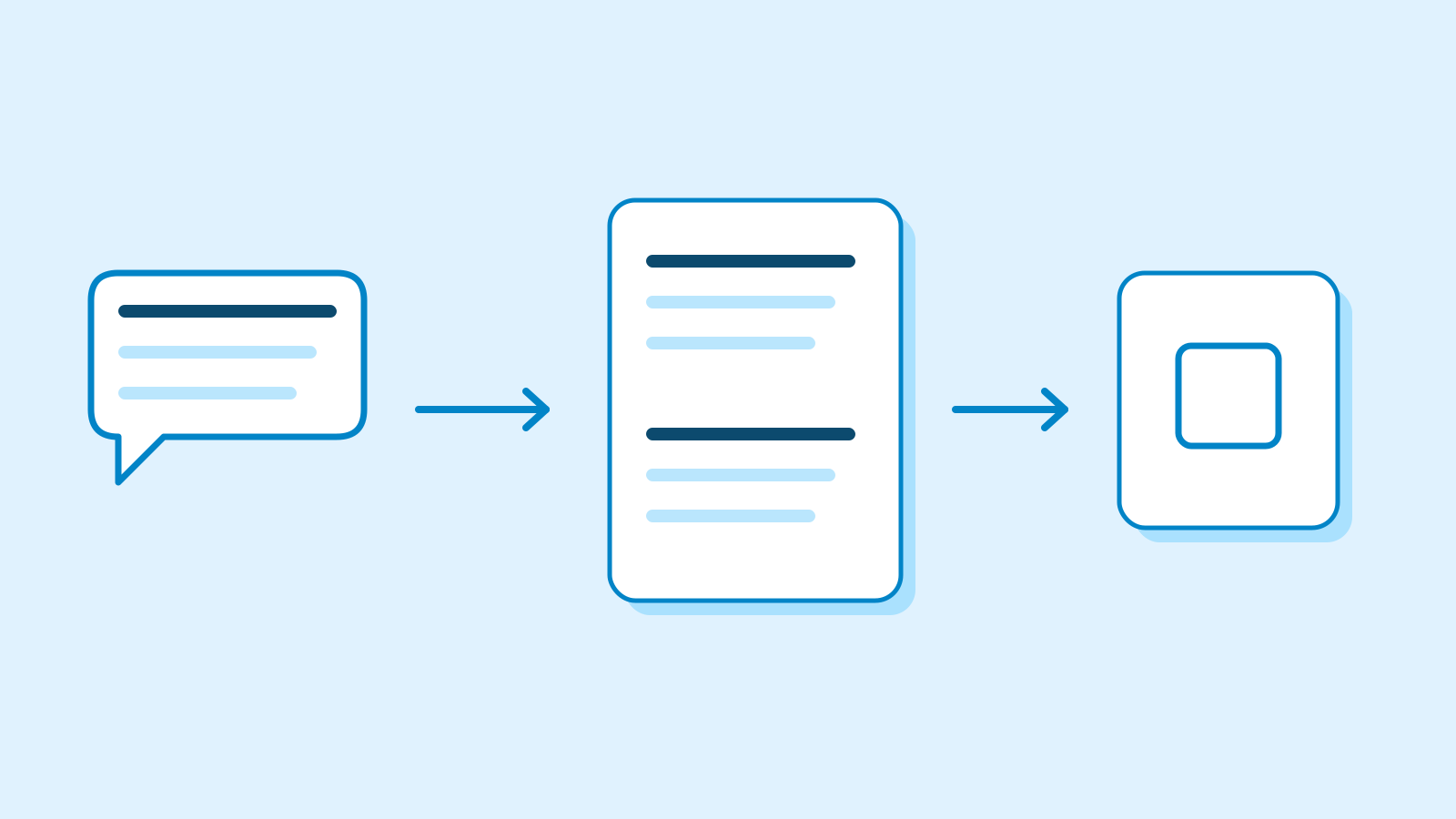
Figure: Customer statement → record → an empty box for the unagreed next action. · AI Ping “Send me some information” is a request for material, not a purchase commitment. The fictional notes also say monthly enquiry reporting is cumbersome, a team lead will review the material, and price has not been discussed.
The speech bubble is the customer’s statement, the notebook is the record, and the empty box is an unagreed next step. Summarising the conversation does not fill that box. “Interested in deployment” would overstate the source.
Separate the current workflow, difficulty, reviewer and agreed action. A reviewer is not necessarily the final approver. Undiscussed budget is not zero budget. Keep unknowns visible so the next question addresses a real gap.
Think of CRM as shared working memory
CRM is a system or tool for managing customer interactions, status and next actions. Think of a record that lets a colleague continue the conversation tomorrow. Use the fictional customer A here; removing a real name alone would not necessarily make real records appropriate to upload.
Record the current task, difficulty and explicit request separately from your sales opinion. If no date was agreed, write “date unconfirmed.” Do not let the assistant invent a meeting time.
When later conversations change your understanding, distinguish the new evidence from the old note. The objective is a traceable record and useful next questions, not a complete-looking customer profile.
Ask questions that leave room for the answer

Figure: Compare a direct product pitch with a path through discovery questions. · AI Ping “Our automation would help, wouldn’t it?” suggests the desired answer. “How did you assemble last month’s enquiry records?” leaves room to describe actual work. Use questions to understand the difficulty before connecting it to a feature.
The branching drawing shows a direct product pitch and a path through a question card. The latter helps identify the current task, difficult moment and evaluation criteria. It does not require withholding relevant product information.
Ask one thing at a time. If the reviewer’s needs are unknown, ask which information they want to assess. A role-played answer from AI does not establish the actual customer’s criteria.
Make the summary traceable
Label the fictional notes A–D and request four sections: current situation, explicit request, unknowns and next questions. Require a supporting note ID beside each fact, then check the mapping yourself.
“No budget (D)” is still wrong: D means price was not discussed. “Team lead approved (B)” is also wrong: review is not approval. Check words such as interest, request, review, approval and contract carefully.
The assistant organises material and suggests questions. A person decides sharing and follow-up. Nothing is sent in this exercise. Keep the practice record separate from real CRM entries.
Example prompt Practice notes A: monthly enquiry reporting is cumbersome. B: a team lead will review. C: information requested. D: price not discussed. Organise situation, explicit request, unknowns and next questions. Cite note IDs; do not infer approval, budget or dates.
Try it: leave a usable handover
Hand the summary to an imagined colleague. Can they tell that no purchase was promised, material was requested but not necessarily sent, and evaluation criteria remain unknown?
Write two next questions: one about a concrete moment in the current workflow and one about the requested material. This limit is for practice, not a sales rule. Ask what works well too; the current process may already meet some needs.
Remove invented urgency or a predicted close date. Leave room for the customer to decline. A useful handover makes the next colleague start from the same facts. The intermediate lesson connects those facts to a bounded proposal.
Common mistakes
- Do not present fictional cases or AI guesses as customer evidence.
- Do not invent deadlines, results or commitments.
- Explain your decision before polishing its presentation.
Practice
Can “price not discussed” become “no budget”?
See a suggested answer
No. Absence of discussion does not establish absence of budget. Mark budget unknown.
Rewrite “You need automation, right?” as an open question.
See a suggested answer
Ask “How did you compile last month’s enquiries?” It investigates behaviour without assuming the customer needs automation.
What does “the team lead will review” establish?
See a suggested answer
A reviewer was named. Final purchasing authority, approval and a purchase date remain unconfirmed.
References
- What is a Discovery Call? — Salesforce
- Learn How to Discover Objections — Salesforce Trailhead