Use AI for shop notices and customer replies, then revise changed conditions
Turn fictional shop sources into notices, replies and review tables with real AI responses. Revise hours and availability, then correct an unsupported sales explanation.
About 55 min readingAs of Oct 2026
Lesson guide · goals & preparation
By the end of this guide
- Supply prices, hours and enquiries with a complete AI request.
- Check recorded notices and replies against evidence and revise them in the same chat.
- Reuse the workflow on a fresh week and correct causal explanations even when arithmetic is right.

Who this is for
- Shop and service operators learning to use AI for notices and replies.
- Readers who want to provide the right facts and check generated promises and figures.
What you need
- The first-conversation and evidence-reading foundations are helpful.
- Tool use is optional. All data are fictional; no real customer contact, advertising spend or paid account is required.
This lesson’s terms, in plain language
Read the short meanings here. Open a term for a fuller explanation and example.
This reading lesson explains how to use external AI tools. Read from theory to the workflow, examples and explanations, or use the contents to jump to a section.
1 / 4
Theory
Understand what to ask AI to do, how to ask, and the ideas behind the workflow.
Start with a real task: turn shop facts into usable drafts
A customer asks whether they can collect lunch at 11:30 on Wednesday. That happens to be a day with special opening hours. This lesson uses AI to turn confirmed shop facts into a notice and individual replies, then revise both when the owner changes the schedule. The useful result is a draft that will not send a customer to a closed shop.
The workflow to understand is: Prepare menu, prices and hours → define the audience and purpose → request notice and reply drafts → check facts and wording → incorporate stock and schedule changes. First learn why each input and constraint matters, then study the requests, finished examples and explanations. This is a reading lesson about external AI tools; no account or runtime is required.
Little Grove Sandwiches, its customers and every amount are fictional teaching material. The editor supplied these sources to Claude Sonnet 5.5 on October 28, 2026 and preserved the actual responses. November dates belong to the fictional schedule. Commentary and independent calculations are editorial work, clearly separate from model output.
A chat model cannot infer today’s inventory or confirm a phone reservation. Planned production of 20 chicken sandwiches does not establish that 20 remain available. Give it the distinction explicitly. We will request four separate outputs: a public notice, replies, an internal evidence table and a historical sales summary.
Tool use is optional. Read the supplied sources and recorded answers, or start a new chat and paste the full request below. If your service accepts files, CSV attachments are another option; otherwise paste the text. CSV means a table whose columns are separated by commas. Ask the model to list file names and row counts before working when you upload several files.
Keep customer contact details out of a public exercise. Enquiry IDs are enough here. The customer-facing notice must also stay separate from the internal review sheet and financial summary. No account purchase, live publication or message sending is required to learn this workflow.
Prepare one source pack for both the notice and the replies
The source table below contains the complete factual brief in plain language. G identifies general information, M identifies menus and P identifies this notice’s period. IDs let us trace a sentence back to its source. Keep regular hours G2 separate from the dated exception P2; otherwise an exception may leak into a later week.

Illustration: The prices and hours supplied to AI support the notice · AI Ping Egg sandwiches cost KRW 6,500 with planned daily production of 30. Chicken costs KRW 7,500 with planned production of 20. These counts are not stock. G3 requires staff to check availability and confirm any reservation. A customer’s question about 20 sandwiches supplies neither a confirmed order nor a confirmed quantity.
The three questions concern an 11:30 pickup on November 4, a reservation for 20 chicken sandwiches, and free coffee. Do not promote a question into a business fact. Coffee costs KRW 3,000; no free drink or bundle discount has been confirmed in week one. The second customer has not supplied a date or time.
The baseline file has five daily rows, October 26–30: receipts 20, 24, 22, 26, 28; gross sales KRW 130,000, 156,000, 143,000, 169,000, 182,000. Only October 29 has a refund, KRW 13,000. This historical information belongs in an internal summary, not a claim about the future November notice.
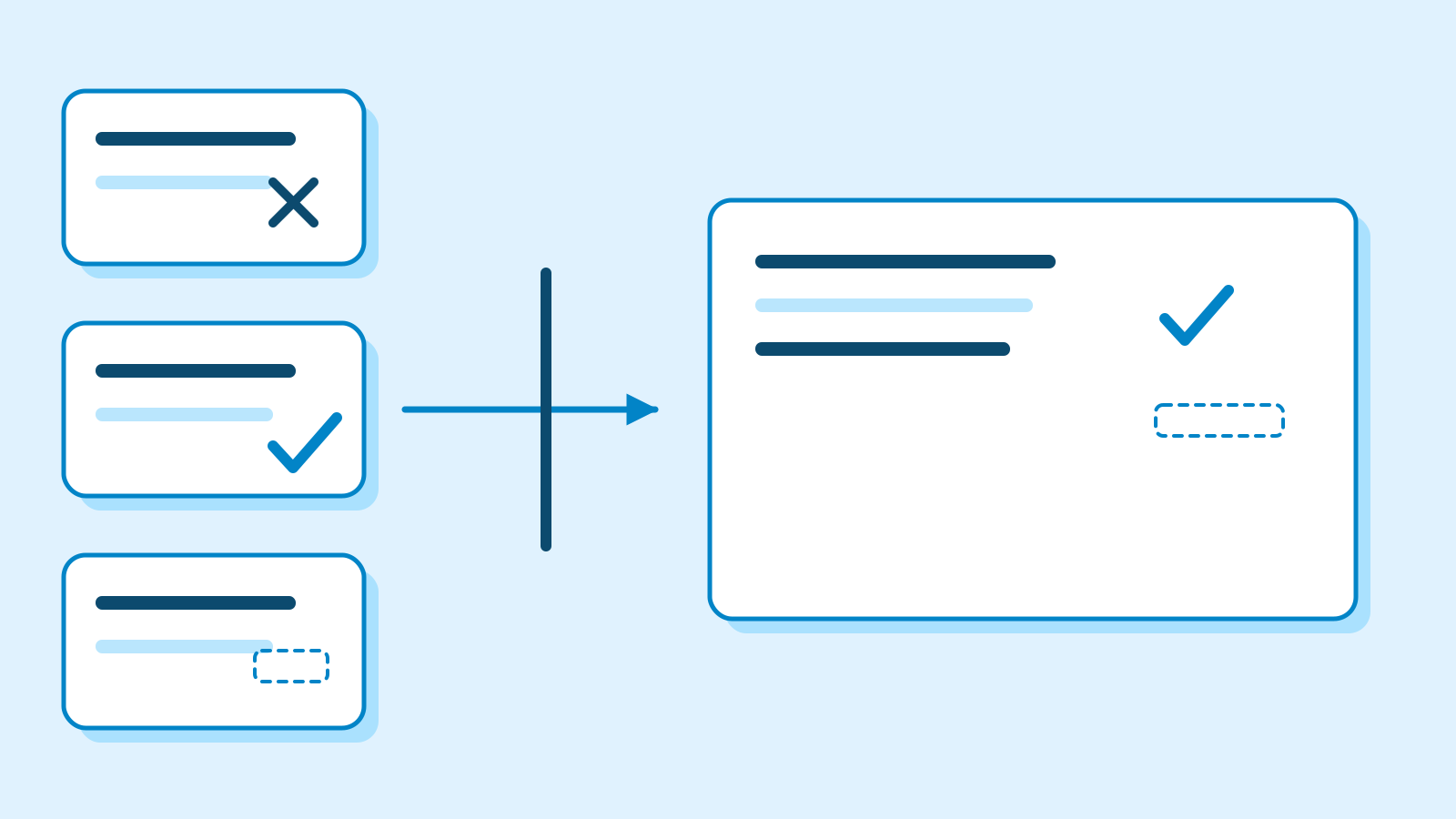
If attachments cannot be read, paste the CSV with its header and section labels. The downloadable pack contains the actual English source files. The Korean request uses those same data. The diagram links a price-and-hours ledger to a draft: changing the ledger can affect several outputs, including replies.
All eight initial business facts Evidence Fact G1 Little Grove Sandwiches G2 Mon–Fri 11–18, last order 17:30 / Sat 11–15, last order 14:30 / Sunday closed G3 Phone enquiry; staff stock check and confirmation required; delivery unknown M1 Egg KRW 6,500 / planned 30 per day, not remaining stock M2 Chicken KRW 7,500 / planned 20 per day, not remaining stock M3 Coffee KRW 3,000 / no confirmed free drink or bundle discount P1 Notice: November 2–6, 2026, ordinary prices P2 November 4 only: 12–18, last order 17:30
2 / 4
Step-by-step use
Learn what to prepare, how to request help and how to revise the result through examples and explanations.
Send a complete request and inspect the first response
The complete request below is the actual English input; the Korean version is an editorial translation with identical source data. It states what the files represent, blocks unsupported assumptions, specifies the deliverables and includes every row. Reuse the structure by replacing the source pack next week.
“Use only these sources” prevents general restaurant conventions from becoming claims about this shop. “Do not publish or send” keeps the output as a draft; the test ran with tools disabled. A separate evidence table makes the text inspectable without putting internal IDs into a customer notice.
The actual first answer used the noon opening on November 4, declined the 11:30 pickup and required a stock check for 20 chicken sandwiches. It kept coffee at KRW 3,000 without inventing a free-drink offer. Read the unedited response below and trace each statement to the source table.
Check facts before asking for a friendlier tone. “Just phone and we will have it ready” could accidentally remove staff confirmation. An optional editorial follow-up would be: “Make the language warmer, but preserve the stock-check and confirmation condition.” That is a suggested request, not another recorded model response.
Your wording need not match the recording. Check whether the closing time and last-order time remain distinct, the exception applies only to the named date, and enquiries remain unconfirmed. Reading these comparisons is sufficient; running the tool is optional.
Example prompt All business details, messages and amounts are fictional teaching data. Use only these sources, preserve evidence IDs in a separate review sheet, and do not publish or send anything. Do not treat daily production as stock or a customer question as a confirmed order. Separate ordinary hours from dated exceptions. Never invent discounts, reviews, delivery promises or measured promotional impact. TASK: Produce a complete customer-facing notice for November2-6, three concise customer replies, and a review table matching each promise to evidence IDs. Separately calculate baseline receipts, gross, refunds, net and net per open day. Return Korean then English. No tools. [facts] evidence_id,field,fact G1,name,Little Grove Sandwiches / 작은숲 샌드위치 G2,regular_hours,Mon-Fri 11:00-18:00; last order 17:30. Sat 11:00-15:00; last order 14:30. Sunday closed. G3,pickup,Phone enquiry; a reservation is confirmed only after staff checks stock and confirms. Delivery availability is unknown. M1,egg,Egg sandwich KRW6500; daily planned production30; this is not remaining stock. M2,chicken,Chicken sandwich KRW7500; daily planned production20; this is not remaining stock. M3,coffee,Coffee KRW3000; no free-drink or bundle discount confirmed. P1,notice_period,2026-11-02 through 2026-11-06; ordinary prices. P2,special_hours,2026-11-04 opens12:00 and closes18:00; last order17:30. [enquiries] enquiry_id,question Q1,Can I pick up at11:30 on November4? Q2,Can I reserve20 chicken sandwiches? Q3,Is coffee free with a sandwich? [baseline] source_id,date,receipts,gross_krw,refund_krw S1,2026-10-26,20,130000,0 S2,2026-10-27,24,156000,0 S3,2026-10-28,22,143000,0 S4,2026-10-29,26,169000,13000 S5,2026-10-30,28,182000,0
Worked example & explanation Actual Claude Sonnet 5.5 response. Each language is reproduced unchanged, separate from editorial verification.
Example responseA teaching example of a workflow in an external AI tool. Results vary with the request and context.
English
Drafts only. Nothing has been published or sent.
1. Customer notice (November 2–6)
Little Grove Sandwiches: Notice for Monday, November 2 to Friday, November 6, 2026
- Hours: Mon–Fri 11:00–18:00, last order 17:30.
- Change on Wednesday, November 4: We open at 12:00 and close at 18:00. Last order is 17:30.
- Prices: Ordinary prices apply throughout.
- Egg sandwich KRW 6,500
- Chicken sandwich KRW 7,500
- Coffee KRW 3,000
- Pickup reservations: Please enquire by phone. A reservation is confirmed only after staff check stock and confirm with you. An enquiry alone is not a confirmed order.
- Delivery: Delivery availability has not been confirmed, so we make no delivery promise in this notice.
2. Three customer replies
- Q1: On November 4 we open at 12:00, so an 11:30 pickup is not possible. The earliest time that day is 12:00 or later, and last order is 17:30. Please phone us and staff will check stock before confirming.
- Q2: We can't confirm 20 chicken sandwiches right now. Please phone us with your date and time. Staff will check stock, and the reservation is made only once we confirm it to you.
- Q3: We have not confirmed any free-coffee offer with a sandwich. Coffee is KRW 3,000, and no bundle discount has been confirmed either.
3. Review table (evidence IDs are internal; keep them out of customer text)
Promise / statement Evidence IDs Note Business name G1 Mon–Fri 11:00–18:00, last order 17:30 G2 Sunday closure and Saturday hours omitted: outside the Mon–Fri period Period Nov 2–6, ordinary prices P1 Nov 2–6 falls Mon–Fri Nov 4 opens 12:00, closes 18:00, last order 17:30 P2 Ordinary hours (G2) kept separate from the dated exception (P2) Egg KRW 6,500 M1 Planned production of 30/day is not stock, so it is excluded from customer text Chicken KRW 7,500 M2 Planned production of 20/day is not stock, so it is excluded Coffee KRW 3,000, no discount or bundle M3 Worded only as "not confirmed" Phone enquiry; confirmed after staff stock check G3 No delivery promise G3 Delivery availability unknown Q1 reply P2, G2, G3 11:30 is before opening. Any time from 12:00 depends on stock confirmation Q2 reply G3, M2 An enquiry is not a confirmed order. Planned production of 20 is not treated as stock Q3 reply M3 Not used: reviews, discounts, delivery promises, and measured promotional impact. There is no evidence for them, so none were invented.
4. Baseline calculation (separate from the customer notice)
The baseline is 2026-10-26 to 30 (S1–S5). All five days have receipts, so there are 5 open days.
Item Calculation Result Receipts 20+24+22+26+28 120 Gross 130,000+156,000+143,000+169,000+182,000 KRW 780,000 Refunds S4 13,000 KRW 13,000 Net 780,000−13,000 KRW 767,000 Net per open day 767,000÷5 KRW 153,400 This is a past baseline only, not a forecast for November 2–6 or a measured promotional effect.
Use the evidence table and verify the arithmetic
Read the review table as a map back to the evidence, not a guarantee of correctness. “Egg KRW 6,500” should map to M1; “reservation after staff confirmation” should map to G3. A citation to M2 would still be wrong if the sentence promised 20 units in stock.
The actual first answer has a subtle wording issue: its public text says a free offer is unconfirmed, but one internal-table row compresses that into “no discount or bundle.” The editorial review changes that label to “no confirmed free drink or bundle discount.” The original model response remains untouched. Even a short table label can overstate the evidence.
Independent arithmetic gives 120 receipts, KRW 780,000 gross, KRW 13,000 refunds and KRW 767,000 net. Dividing by five open days gives KRW 153,400 per day. These match the model. In this exercise net means gross minus refunds; it does not mean profit after ingredients, rent or other costs.
If AI calls this profit, ask it to restore the supplied definition and identify the missing cost data. Checking a formula and checking its label are separate tasks. Keep the customer notice apart from internal revenue and evidence records.
In an actual shop, a responsible person would verify current details before publication. A generated notice does not update a business listing. Google’s official guidance distinguishes regular hours from special hours. The editorial table below makes the completed checks explicit before the next revision.
Editorially verified baseline summary Item Calculation / result Receipts 20+24+22+26+28 = 120 Gross KRW 780,000 Refunds KRW 13,000 Net 780,000−13,000 = KRW 767,000 Net per open day 767,000÷5 = KRW 153,400 Use Historical baseline, not a forecast, causal promotion effect or profit Revise the existing drafts with a focused follow-up
The owner now confirms C1 and C2: on November 4 only, hours become 12:00–16:00 with last order 15:30, and chicken sandwiches are unavailable. Egg and coffee prices stay unchanged. We sent the following request in the same conversation, preserving the previous context.
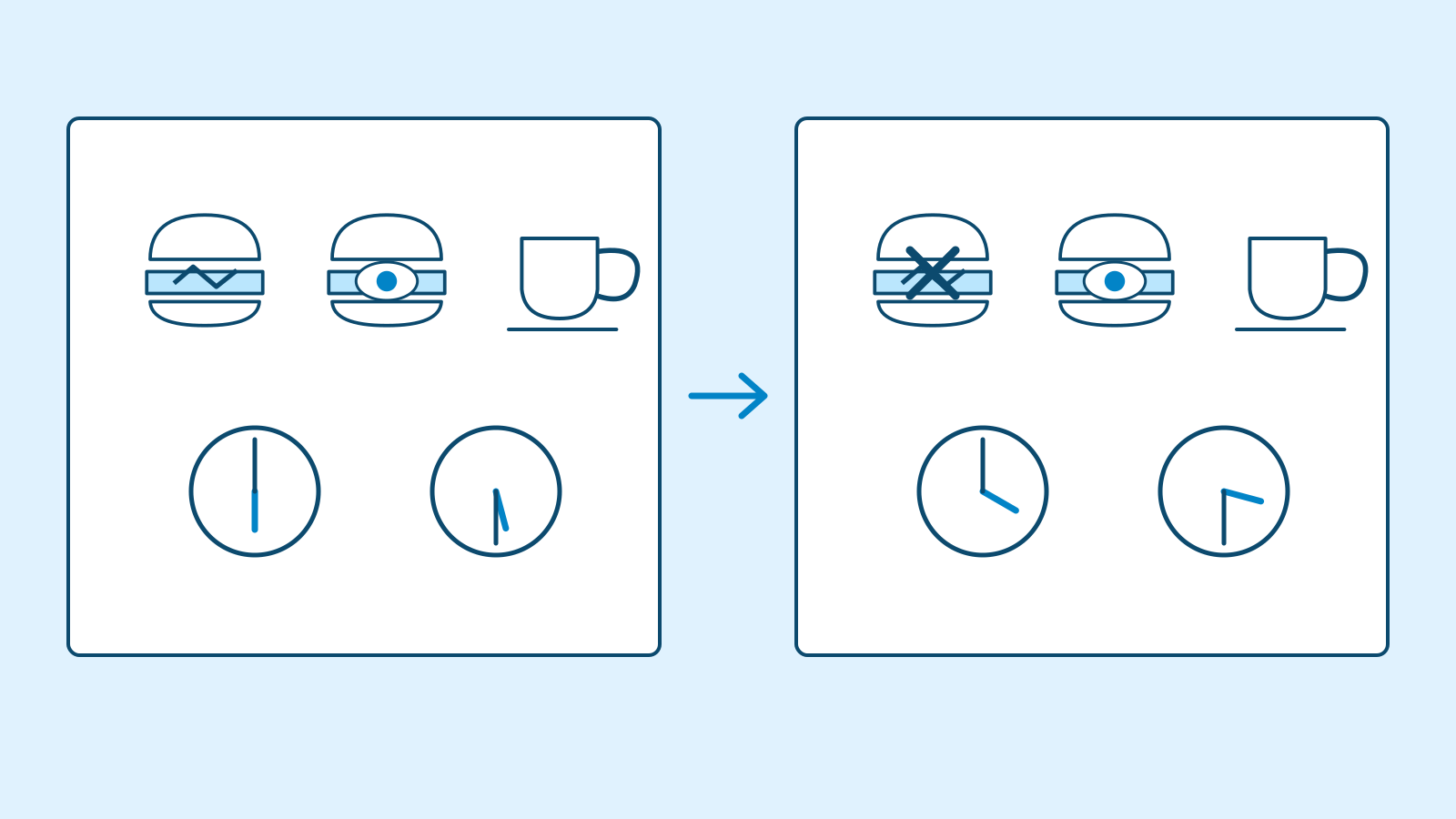
Illustration: on November 4 only, chicken is unavailable, closing moves from 18:00 to 16:00 and last order from 17:30 to 15:30 · AI Ping The date restriction matters. “Close early on Wednesday and stop selling chicken” could be applied too broadly. Ask for complete revised outputs and an old/new table, while preserving unaffected dates and prices. A new chat would need the earlier sources and drafts as well.
The actual response retained the noon opening, changed closing and last-order times, and limited chicken unavailability to November 4. Q1 still cannot collect at 11:30. Because Q2 supplies no date, the answer distinguishes the unavailable date from other dates that require a stock check.
Check what stayed unchanged too: coffee remains KRW 3,000, egg KRW 6,500, and the other weekdays keep regular hours. The model also listed other drafts to review. That list does not mean it edited a map listing, a printed notice or a staff script; tools were disabled.
Save a version label that names the period and changes, such as “Nov 2–6 notice, C1/C2 applied.” Both original and revised responses are retained in the worked-results pack. The diagram shows source checking and a new request, not automatic publication.
Example prompt The owner confirmed these new fictional changes. Revise the same notice and Q1-Q3 replies, show old/new conditions with evidence C1/C2, and say what other drafts need review. Do not change unaffected dates or prices. Korean then English. evidence_id,date,fact C1,2026-11-04,Special hours12:00-16:00; last order15:30. Replaces P2 only for this date. C2,2026-11-04,Chicken sandwich unavailable for this date only. Egg and coffee prices unchanged.
Worked example & explanation Recorded follow-up in the original conversation. Inspect the changes and the conditions preserved.
Example responseA teaching example of a workflow in an external AI tool. Results vary with the request and context.
English
Drafts only. Nothing has been published or sent.
1. Revised customer notice (November 2–6)
Little Grove Sandwiches: Notice for Monday, November 2 to Friday, November 6, 2026
- Hours: Mon–Fri 11:00–18:00, last order 17:30.
- Change on Wednesday, November 4: We open at 12:00 and close at 16:00. Last order is 15:30.
- Menu on November 4: The chicken sandwich is unavailable on this one day only. The egg sandwich and coffee remain available.
- Prices: Ordinary prices apply throughout.
- Egg sandwich KRW 6,500
- Chicken sandwich KRW 7,500 (except November 4)
- Coffee KRW 3,000
- Pickup reservations: Please enquire by phone. A reservation is confirmed only after staff check stock and confirm with you. An enquiry alone is not a confirmed order.
- Delivery: Delivery availability has not been confirmed, so we make no delivery promise in this notice.
2. Revised customer replies
- Q1: On November 4 we open at 12:00, so an 11:30 pickup is not possible. That day we are open 12:00–16:00, with last order at 15:30. The chicken sandwich is unavailable that day, while the egg sandwich and coffee are available. Please phone us and staff will check stock before confirming.
- Q2: The chicken sandwich is unavailable on November 4, so 20 cannot be reserved for that day. For other dates we can't confirm right now. Please phone us with your date and time. Staff will check stock, and the reservation is made only once we confirm it to you.
- Q3: (Unchanged) We have not confirmed any free-coffee offer with a sandwich. Coffee is KRW 3,000, and no bundle discount has been confirmed either.
3. Old vs. new conditions
Item Old New Evidence Nov 4 hours 12:00–18:00 12:00–16:00 C1 (replaces P2 for this date only) Nov 4 last order 17:30 15:30 C1 Nov 4 chicken sandwich Availability confirmed only after stock check Unavailable (this date only) C2 Nov 4 egg and coffee prices KRW 6,500 / 3,000 Unchanged C2, M1, M3 Nov 2, 3, 5, 6 hours, prices, chicken Ordinary hours and prices Unchanged G2, P1, M2 Nov 4 opening time 12:00 Unchanged C1 4. Review table rows that change
Promise / statement Evidence IDs Note Nov 4 opens 12:00, closes 16:00, last order 15:30 C1 P2 is superseded for this date. G2 and P1 stay valid for the other dates Nov 4 chicken unavailable C2 One day only. Egg and coffee prices unchanged Chicken KRW 7,500 (except Nov 4) M2, C2 Planned production of 20 is still not stock and is not used Q1 reply C1, C2, G3 11:30 is still before opening (12:00). Closing is now earlier Q2 reply C2, G3, M2 The enquiry gives no date, so the reply separates Nov 4 from other dates Q3 reply M3 Unchanged All other rows (G1, G2, G3, P1, M1, M3) are unchanged. No other dates or prices were altered.
5. Other drafts that need review
The baseline calculation table from my earlier answer (S1–S5) is historical and unaffected. I can't see any drafts outside this conversation, so if any of the following exist, re-check their November 4 content:
- Anything stating Nov 4 hours as 12:00–18:00 with last order 17:30: shop signage, social or map listings, phone scripts
- Anything assuming chicken sandwich sales or reservations on Nov 4: menu boards, staff handoff notes
- Any enquiry or note about a pickup after 16:00 on Nov 4, or one including chicken: staff should check whether a reservation was already confirmed and tell that customer about the change
- Schedules or prep plans that reused the ordinary hours (G2) or the old exception (P2) for Nov 4
Prepare a reusable request without carrying over old exceptions
For another week, replace the period, current prices, dated exceptions and enquiry list. Do not carry a November 4 restriction into the next week. A fresh conversation helps expose accidental reuse, provided you supply all facts it needs. Restate the instructions that should continue to apply.
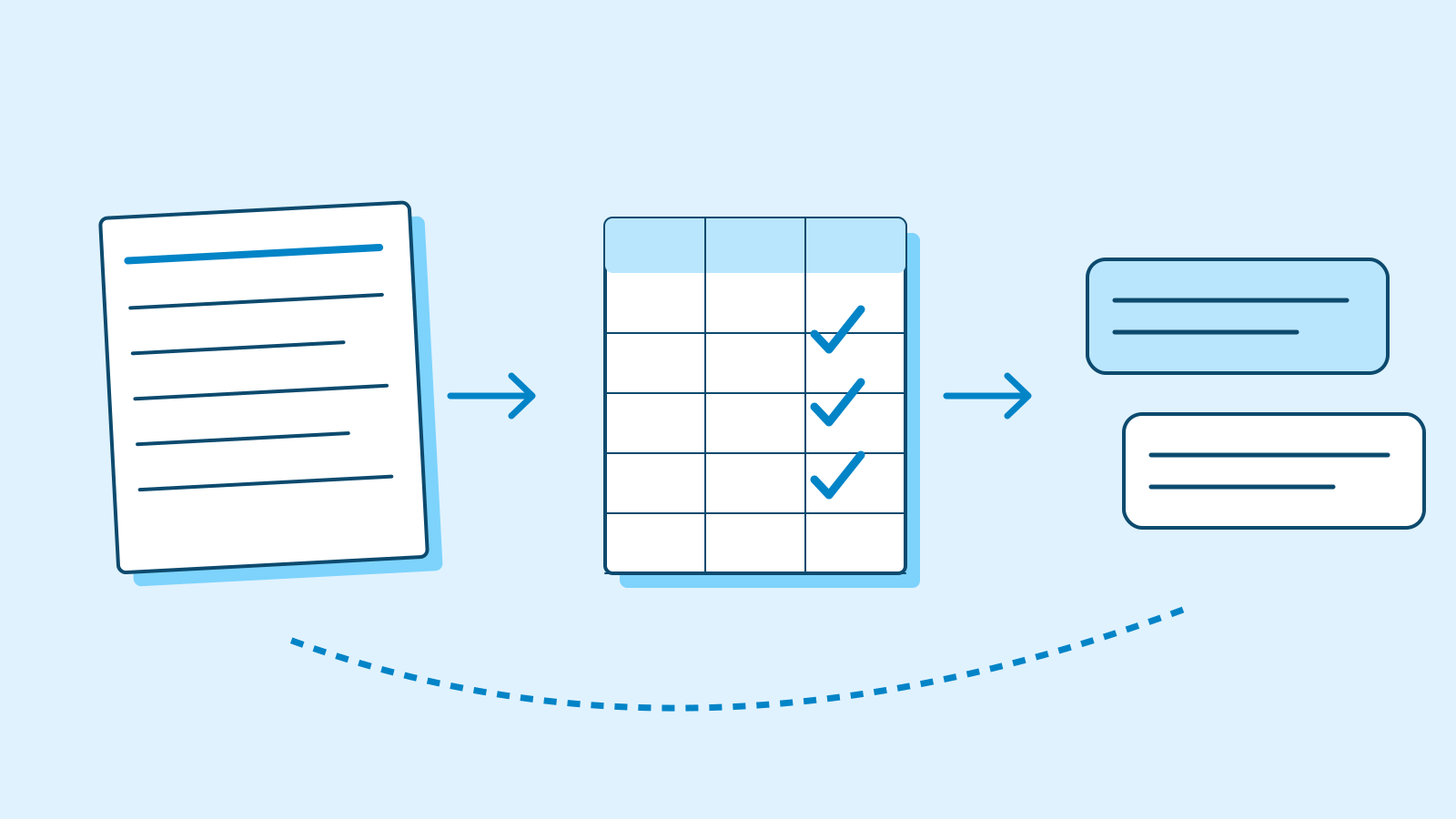
Illustration: Check the AI draft against evidence, then request a revision with new data · AI Ping If you include last week’s notice as a style example, label it as such and identify the new table as the factual source. Do not assume cross-chat memory. An honest request for clarification is useful: the fresh run asked whether “Egg” in the new data meant an egg sandwich, which the editor then confirmed.
For the sales report, request observations separately from explanations. A correct total does not support a causal statement about advertising or a closure. AI can calculate accurately and still add an unsupported story. The next recorded run did exactly that, and a focused follow-up corrected it.
This is AI-use training: locate the sentence that exceeds the evidence, explain the missing comparison and ask for a revised result. It is not a promise that the notice will increase sales. You may apply the same process by reading the fresh case and its solution rather than running a tool.
3 / 4
Check & explain
Think about what you would ask AI, then read the explanation. Written submissions and external AI use are optional.
This is a learning check, not a test you must pass. Use the explanations to understand the ideas.
Q1M2 says planned chicken production is 20 and Q2 asks to reserve 20. AI writes “Your 20 sandwiches are reserved.” What follow-up should you send?
Write your thoughts (optional)
Your writing is not sent anywhere. It disappears when you leave or reload this page, so copy anything you want to keep.
Read the answer and explanation
Ask it to stop treating planned production as stock, request the date and time, and retain staff stock-check and confirmation requirements. Twenty is a fictional planned quantity, not current availability or a confirmed order. Check both the notice and the Q2 reply.
This is your own review, not an automatic score.
Q2After C1/C2, a draft says the shop closes at 16:00 and sells no chicken throughout Nov 2–6. What should your correction preserve?
Write your thoughts (optional)
Your writing is not sent anywhere. It disappears when you leave or reload this page, so copy anything you want to keep.
Read the answer and explanation
Restrict the changes to November 4 and preserve regular hours and availability conditions on other dates. On that date hours are 12:00–16:00, last order 15:30; egg stays KRW 6,500 and coffee KRW 3,000. These are fictional training values; verify both the change table and replies.
This is your own review, not an automatic score.
Q3AI calculates S1–S5 and reports “profit KRW 767,000.” Why does it need correction despite correct arithmetic?
Write your thoughts (optional)
Your writing is not sent anywhere. It disappears when you leave or reload this page, so copy anything you want to keep.
Read the answer and explanation
The fictional KRW 767,000 is gross KRW 780,000 minus refunds KRW 13,000, our defined net-sales measure. No costs were supplied, so it is not profit. Ask AI to restore “net sales” and state the gross-minus-refunds definition.
This is your own review, not an automatic score.
Q4Use the four fresh rows. How do total net and net per open day differ from baseline, and how would you correct “promotion proved effective”?
Write your thoughts (optional)
Your writing is not sent anywhere. It disappears when you leave or reload this page, so copy anything you want to keep.
Read the answer and explanation
Fictional new-week net is KRW 623,000, down KRW 144,000 from KRW 767,000; per open day it is KRW 155,750, up KRW 2,350 from KRW 153,400. Ask AI to separate the observations from causes and remove the promotion-effect claim. Different open-day counts and prices mean these data cannot isolate each influence, as the recorded correction explains.
This is your own review, not an automatic score.
Common mistakes
- Treating planned production as available stock and allowing AI to confirm reservations.
- Carrying dated exceptions forward or treating customer questions as confirmed business facts.
- Assuming a revised draft also updates listings, publishes a notice or sends replies.
- Accepting a causal explanation just because the arithmetic is correct.
Your learning record
Completion is optional. Mark this lesson when you feel ready, or move to the next lesson without marking it.
Completion is saved in this browser.
4 / 4
Apply to your work
Consider how new material changes the workflow and checking criteria. Trying an external AI tool is optional.
Try it: use a new week and correct the AI’s explanation
The new week is November 9–13. Regular hours are 11:00–18:00, last order 17:30, with full closure on November 11. Egg sandwiches become KRW 7,000 on November 9; chicken stays KRW 7,500 subject to stock and coffee KRW 3,000. Pickup still requires staff confirmation. There is no free coffee, and delivery remains unknown.
NQ1 asks whether egg still costs KRW 6,500; NQ2 asks for a noon pickup on the closure date. This fresh conversation was not given the old price table, so the customer’s remembered price remains unverified. State the confirmed new price and date. Do not reuse the November 4 chicken restriction.
The four sales rows cover November 9, 10, 12 and 13: receipts 18, 22, 24, 26; gross KRW 126,000, 154,000, 168,000, 182,000; only November 12 has a refund of KRW 7,000. Net is KRW 623,000, or KRW 155,750 per open day. Compared with the baseline, total net is KRW 144,000 lower while net per open day is KRW 2,350 higher.
The actual fresh answer calculated correctly but attributed the lower total to one fewer open day, before later saying the cause was unknown. We challenged that contradictory causal sentence. META-S confirmed that “Egg” meant egg sandwich and that the five and four days were open days within the fictional case. It did not establish a cause.
The follow-up asked for observations and limits separately, keeping the verified calculations and public notice. The model removed the causal claim. Its unedited revised response is below. The fresh-data pack excludes answers; the worked-results pack includes both original and revised responses, calculations and editorial notes. Check the closure, effective price date and absence of a claimed promotional effect before revealing the solution.
Fresh data: source rows for four open days Row Date Receipts Gross KRW Refund KRW NS1 2026-11-09 18 126000 0 NS2 2026-11-10 22 154000 0 NS3 2026-11-12 24 168000 7000 NS4 2026-11-13 26 182000 0 Example prompt All business details, messages and amounts are fictional teaching data. Use only these sources, preserve evidence IDs in a separate review sheet, and do not publish or send anything. Do not treat daily production as stock or a customer question as a confirmed order. Separate ordinary hours from dated exceptions. Never invent discounts, reviews, delivery promises or measured promotional impact. NEW WEEK: use these fresh sources; do not carry forward November4-only exceptions. Produce a complete notice and replies to NQ1/NQ2. Compare new sales with the supplied baseline using total net and net per open day, without attributing changes to AI promotion. Korean then English. [new facts] evidence_id,fact N1,2026-11-09 through 2026-11-13; regular Mon-Fri11:00-18:00 last order17:30. N2,2026-11-11 fully closed for maintenance. N3,Egg price KRW7000 effective2026-11-09; chicken KRW7500 and coffee KRW3000 unchanged. Chicken is available subject to stock. N4,Pickup still requires staff confirmation; no free coffee; delivery unknown. [new questions] enquiry_id,question NQ1,Is the egg sandwich still KRW6500? NQ2,Can I pick up at noon on November11? [new sales] source_id,date,receipts,gross_krw,refund_krw NS1,2026-11-09,18,126000,0 NS2,2026-11-10,22,154000,0 NS3,2026-11-12,24,168000,7000 NS4,2026-11-13,26,182000,0 [baseline] source_id,date,receipts,gross_krw,refund_krw S1,2026-10-26,20,130000,0 S2,2026-10-27,24,156000,0 S3,2026-10-28,22,143000,0 S4,2026-10-29,26,169000,13000 S5,2026-10-30,28,182000,0 [Follow-up actually sent in Korean; editorial English translation] META-S confirms that Egg means egg sandwich and that the five baseline days and four new days are open days in this fictional dataset. Remove the unsupported claim that fewer open days caused lower total net sales. Separate observations from limits: these data cannot isolate closure, price and customer-mix effects. Recheck and preserve totals 623000/767000 and per-day values 155750/153400. Keep the notice prices and closure date. State what changed and why.
Worked example & explanation The actual final response after challenging the fresh run, reproduced in English. Full originals and the first response’s error are in the download.
Example responseA teaching example of a workflow in an external AI tool. Results vary with the request and context.
Opening notice: Nov 9–13 (unchanged)
- Regular hours (Mon–Fri): 11:00–18:00, last order 17:30
- Dated exception: Wed, Nov 11: fully closed for maintenance
- Prices (effective Nov 9): Egg sandwich KRW 7,000 / Chicken KRW 7,500 (unchanged; available subject to stock) / Coffee KRW 3,000 (unchanged)
- Pickup requires staff confirmation. An enquiry alone is not a confirmed order.
- No free coffee is offered. Delivery availability has not been confirmed, so we are not announcing it.
Replies (unchanged)
- NQ1: Thanks for asking. From Nov 9 the egg sandwich is KRW 7,000. Chicken (KRW 7,500) and coffee (KRW 3,000) are unchanged.
- NQ2: Thanks for asking. We are fully closed on Nov 11 for maintenance, so noon pickup isn't possible. We're open Nov 9, 10, 12 and 13 from 11:00 to 18:00 (last order 17:30). Pickup requires staff confirmation, and an enquiry alone is not a confirmed order.
Sales comparison (fictional teaching data)
Net = gross − refund. The 4 new-week days (Nov 9, 10, 12, 13) and the 5 baseline days (Oct 26–30) are all actual open days.
New week Baseline Open days 4 5 Receipts 90 120 Total net KRW 623,000 KRW 767,000 Net per open day KRW 155,750 KRW 153,400 Receipts per open day 22.5 24.0 Daily net: new 126,000 / 154,000 / 161,000 / 182,000. Baseline 130,000 / 156,000 / 143,000 / 156,000 / 182,000. Recheck: 126,000+154,000+161,000+182,000 = 623,000, ÷4 = 155,750. 130,000+156,000+143,000+156,000+182,000 = 767,000, ÷5 = 153,400.
Observed facts
- Total net for the new week is KRW 144,000 (about 18.8%) lower than the baseline.
- Net per open day is KRW 2,350 (about 1.5%) higher in the new week.
- Receipts are lower in the new week, both in total and per open day.
Limits
- The weeks have 4 and 5 open days, so totals are not directly comparable, and the per-day gap is small.
- These sources cannot separate the effects of the closure, the egg sandwich price change (applied across the whole new week from Nov 9) or customer mix. The cause of the difference is unknown.
- Each period is one short week, and there is no per-item sales data.
- This comparison does not show an effect of AI promotion and is not interpreted as one.
Write a note (optional)
Use this only if you want to record a prompt or your understanding. This is a notebook, not a connected AI assistant.
Your writing is not sent anywhere. It disappears when you leave or reload this page, so copy anything you want to keep.
References
- Edit your Business Profile — Google Business Profile Help
- Set special hours — Google Business Profile Help
- Upload files to Claude — Anthropic Support