AI drafts, people finish: a blog workflow
A blog workflow where AI handles the outline and first draft, and people handle the plan, the fact-checking, the real experience and the final check.
About 12 min readingAs of Oct 2026
Lesson guide · goals & preparation
By the end of this guide
- Write a planning memo — reader, search question, key message, material, experience — and turn it into an outline you then fix yourself.
- Get section-by-section drafts from material you paste in, and catch sentences that material doesn't support.
- Check numbers, links, first-hand stories, AI disclosure and ad disclosure before you publish.
Who this is for
- Marketers who have to post on the company blog regularly
- Anyone wondering whether an AI-written post is fine to publish as it is
What you need
- Any chat assistant (free versions work)
- Material for the post: internal data, notes on what you actually did, the originals you'll quote
- A persona from "Define and test three customer personas" makes it easier to pick your reader.
This reading lesson explains how to use external AI tools. Read from theory to the workflow, examples and explanations, or use the contents to jump to a section.
1 / 4
Theory
Understand what to ask AI to do, how to ask, and the ideas behind the workflow.
Start with a planning memo
Ask an assistant to "write a blog post" and you get generic advice you've read before. Decide first who will read it, what they'll have searched for, the one thing you want to say, and what material and experience you'll use.
People write this memo. First-hand experience and real examples in particular are what give a post its value, and AI can't supply them for you. This guide uses the 10-minute reading-log app company from the earlier guides.
The app, survey and team diary are all invented editorial practice material. Do not publish them as firsthand experience. Use real records you can substantiate or write an explanation without an experience claim. Worked-example boxes are editorial solutions.
Planning memo (example: the 10-minute reading-log app) Item What to write Example Reader Who will read it Professionals in their 30s who struggle to find time before work Search question What they'd type into a search box What should I do for a 10-minute reading session before work? Key message The one sentence to remember A practice session: two minutes choosing, six reading and two taking notes Material The originals the post rests on The editor's routine notes; free-trial survey (92 of 200 put off reading for lack of time) Our own experience What you actually did and saw Notes from three people in marketing who tried the routine for four weeks Leave out Promises you can't back up Any sentence that promises a measured improvement, such as faster reading Check it
- If you can't write the key message in one sentence, you're not ready to write. Rework the memo first.
- If the experience row is empty, the post is unlikely to be more than a summary of what others have written.
2 / 4
Step-by-step use
Learn what to prepare, how to request help and how to revise the result through examples and explanations.
Get an outline first, then fix it yourself
A full draft up front is hard to fix. Get an outline at heading level first, sort out the order, the gaps and any point with no material behind it, and only then move on to the body.
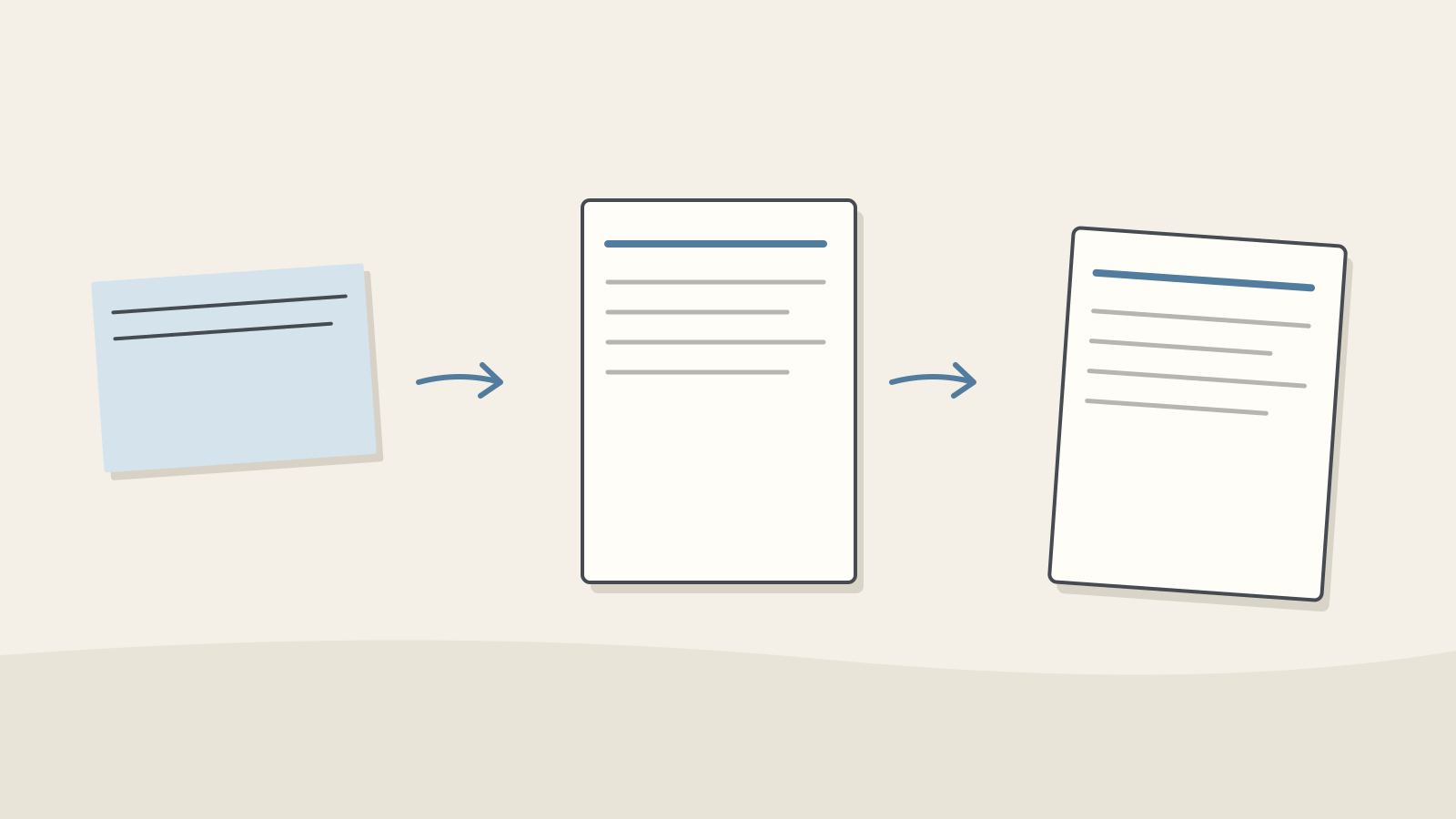
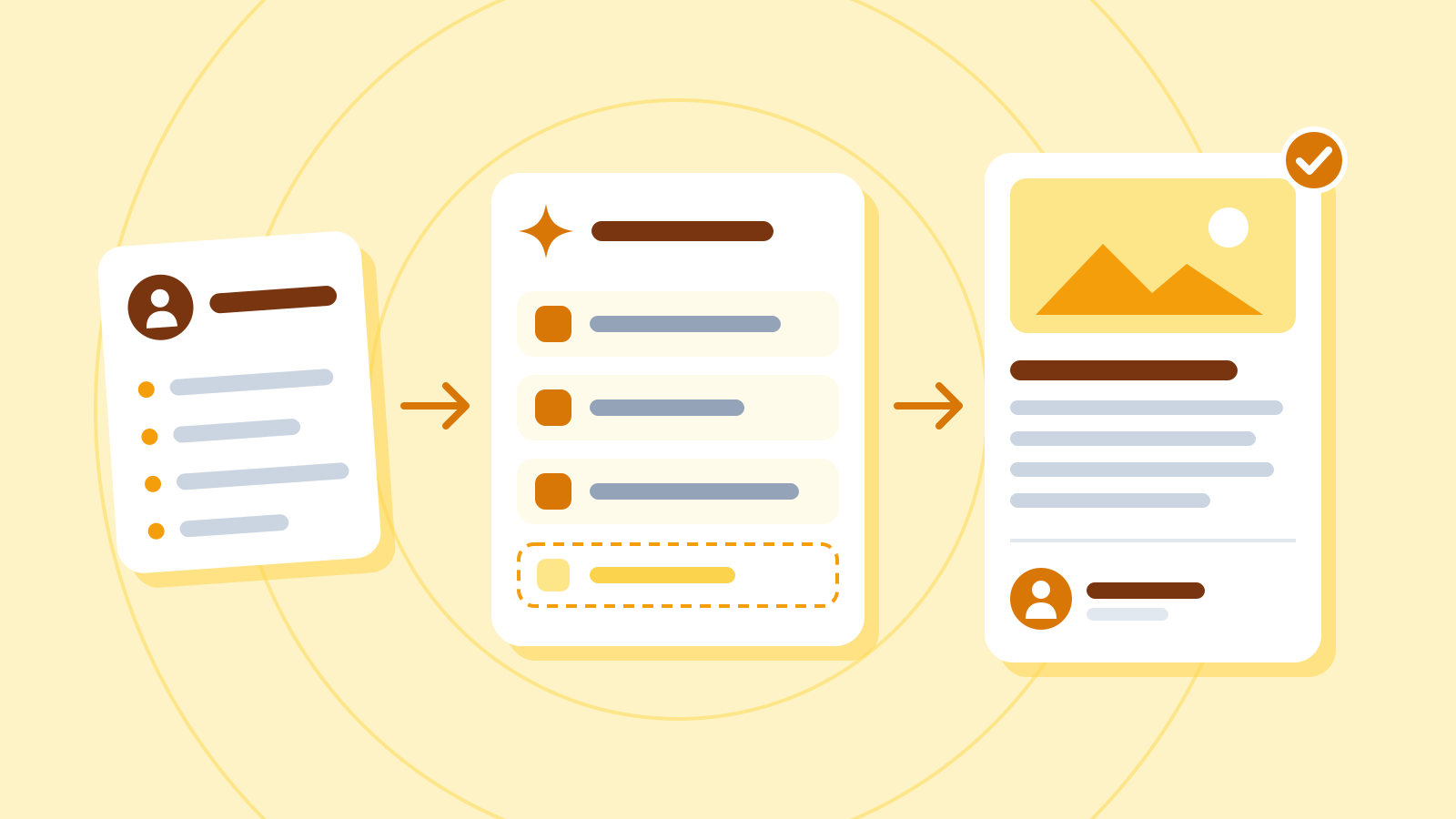
Figure: A planning note leads to an outline and then one draft paragraph · AI Ping Example prompt Make an outline only from this fictional material: four headings with one sentence each. Do not present it as real experience. Reader: someone starting with short reading sessions. Question: how to use ten minutes. Notes: two minutes choosing, six reading, two taking notes. Invented survey: 92 of 200 selected lack of time. Invented diary: three people over 20 weekdays in four weeks.
Worked example & explanation 1. Starting small — the fictional survey condition
2. Choose, read, note — the editorial two/six/two-minute exercise
3. Reading a diary accurately — distinguish weekdays from calendar weeks
4. Adjusting the plan — choose material and a note to keep
Check it
- Check that every heading has material behind it in the memo. Heading 4, "Adjusting the plan", proposes choosing reading material and a note to keep. Do not add improvements in reading speed or completed-book totals that the notes do not support.
- Fix the order and headings yourself, then paste the corrected outline into your next prompt.
Draft one section at a time from your material
Don't ask for the whole body at once. Ask for one section at a time, written only from material you paste in. The narrower the scope, the easier it is to check against your material.
Set the length by what's comfortable to read. Google says it has no preferred word count for search.
Example prompt Describe this fictional editorial plan in one short paragraph, without promising outcomes. Choose a book and starting page for two minutes; read for six; spend two noting a sentence or question. If unfinished, record the stopping point. This is not a real usage diary.
Worked example & explanation For this practice plan, spend two minutes choosing a book and starting page, six reading and two noting a sentence or question. If the selected passage is unfinished, record where you stopped.
Check it
- Count the length yourself. The example answer has 32 words when split at spaces.
- Check the numbers too: two minutes choosing + six reading + two taking notes = ten minutes. Compare the answer with the source to confirm all three durations and the instruction to record your place when the passage is unfinished.
Split the work between AI and people
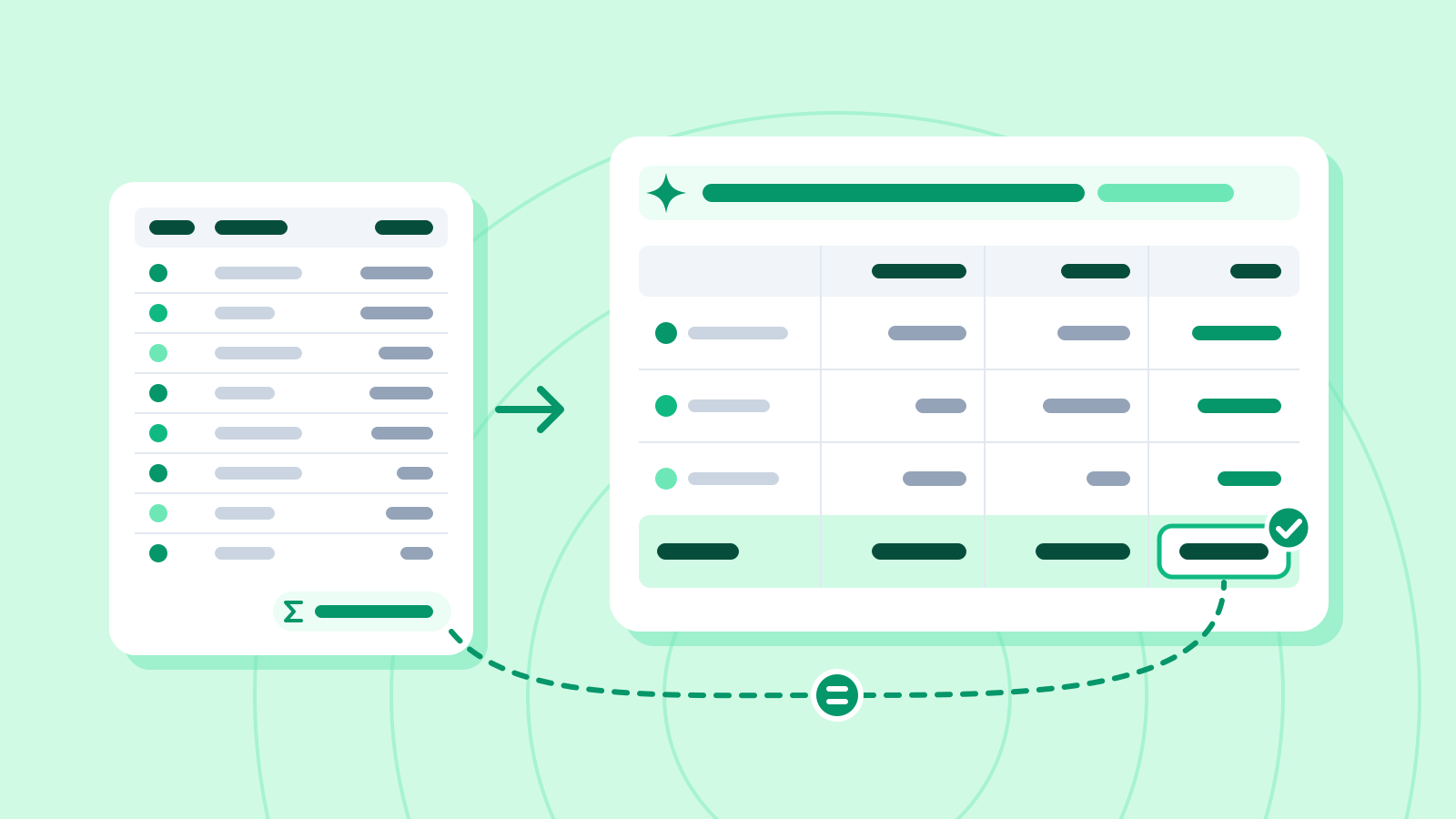
AI writes fast, but it produces plausible sentences, not guaranteed facts. Google's guidance is that people should fact-check AI-generated content before it goes live — including titles, the summary shown in search results and image alt text.
You can ask the assistant to find sentences that don't match your material. Deciding whether its findings are right is still your job.
Who does what Task Hand to AI Do yourself Fact-checking Flag sentences that don't match your material Check numbers, quotes and links against the originals yourself Experience and examples Turn your notes into readable sentences Supply what you actually did and the real examples Brand voice Match the tone of a past post you paste in Read it aloud and fix whatever sounds off Title and summary Suggest several options Pick one that matches the post without exaggerating Images List the images needed and draft alt text Check sources, usage rights and that each alt text matches its image Example prompt Compare the draft with the fictional diary. List unsupported statements, the issue and a revision; do not present the data as real research. Draft: Three teammates tried the plan for four weeks. Two read every day. Everyone finished ten books in a month. All three said taking notes was easy. Fictional diary: three people, 20 weekdays; two attended all 20 and one attended 14; two said a set time reduced postponement; one found choosing a sentence to note difficult.
Worked example & explanation Check weekdays versus every day, completed-book counts and the scope of the comments. This is an editorial solution.
Comparing a draft with a fictional diary Statement Issue Revision Every day for four weeks Only 20 weekdays recorded All 20 weekdays Ten books completed No completed-book count Remove Everyone found notes easy One reported difficulty Report each recorded comment with its count Check it
- Check the sentences it didn't flag against the originals too. The assistant can help you search, but you decide what's right.
Final checks before you publish
The final check is a human job. One example of scaled content abuse in Google's spam policies is using generative AI or similar tools to produce many pages that add no value for users. The problem isn't that AI helped — it's mass-producing pages that add nothing.
If readers might reasonably wonder how a post was made, it helps to say how AI was used. If your company or platform has its own labelling rules, follow them.
Pre-publish checklist Check How Numbers, quotes, links Open each original and compare; click every link and check what it says Title, summary, alt text Match the post, with nothing exaggerated or shocking Experience and evidence Includes what you actually did and your material, not just a summary of other people's posts Near-duplicate posts You haven't churned out many look-alike posts just to catch search traffic Author and AI use The real author is named and, where it helps, how AI was used Relationships and process Check applicable channel disclosure rules and describe the actual commercial relationship and writing process accurately Check it
- Reread your one-sentence key message and check that the post really answers the reader's search question.
- For judgement calls such as ad disclosure, bring in your legal or communications team.
3 / 4
Check & explain
Think about what you would ask AI, then read the explanation. Written submissions and external AI use are optional.
This is a learning check, not a test you must pass. Use the explanations to understand the ideas.
Q1The diary covers 20 weekdays but the draft says every day for four weeks. What changes?
Write your thoughts (optional)
Your writing is not sent anywhere. It disappears when you leave or reload this page, so copy anything you want to keep.
Read the answer and explanation
Retain “20 weekdays.” Including weekends would exceed the record. This is fictional practice material.
This is your own review, not an automatic score.
Q2The assistant adds an unsupported completed-book count. Can you just reduce the number?
Write your thoughts (optional)
Your writing is not sent anywhere. It disappears when you leave or reload this page, so copy anything you want to keep.
Read the answer and explanation
No. A smaller unsupported number is still unsupported. Remove it or obtain real evidence.
This is your own review, not an automatic score.
Q3A fictional example is about to be labeled your team’s real experience. How should it change?
Write your thoughts (optional)
Your writing is not sent anywhere. It disappears when you leave or reload this page, so copy anything you want to keep.
Read the answer and explanation
Label it as a fictional explanation or replace it with real records. Natural prose is not a reason to invent firsthand experience.
This is your own review, not an automatic score.
Common mistakes
- Starting with a one-line "write a blog post" and no planning memo
- Publishing AI-written experiences or numbers without checking them
- Mass-producing look-alike posts with AI to chase search traffic
Your learning record
Completion is optional. Mark this lesson when you feel ready, or move to the next lesson without marking it.
Completion is saved in this browser.
4 / 4
Apply to your work
Consider how new material changes the workflow and checking criteria. Trying an external AI tool is optional.
Try it: turn invented experience into a labeled explanation
Starting an invented diary with “We tried it ourselves” claims real experience. Label it as a fictional demonstration of summarization. A firsthand account requires real underlying records.
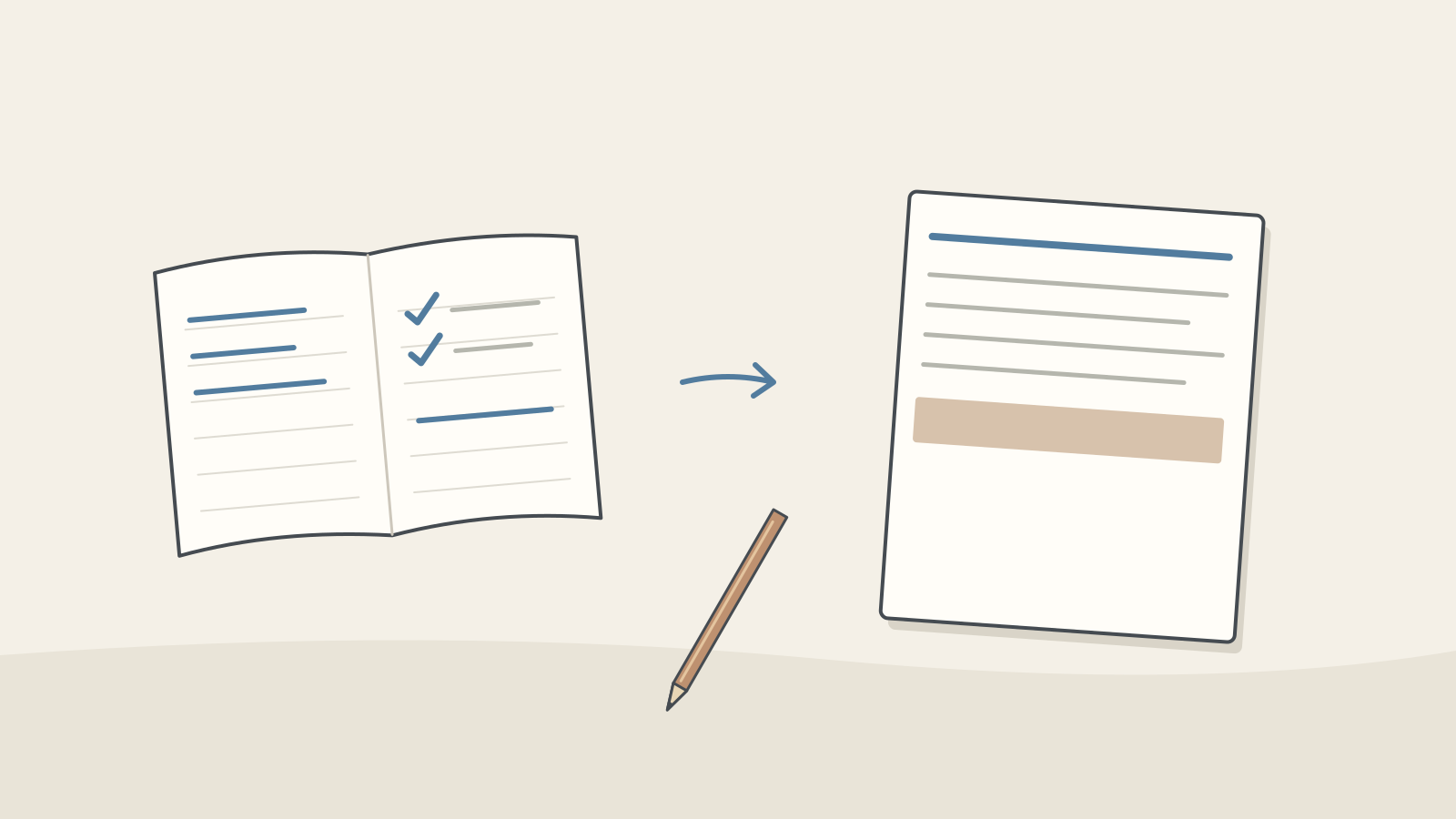
Figure: Source notes and a draft are compared with an unsupported addition marked · AI Ping Identify each paragraph’s function: reader question, evidence, example or limitation. Remove unsupported promises and merge repetitive paragraphs rather than preserving generated length for its own sake.
Keep actionable explanations and their conditions. Titles and summaries must stay within the article’s evidence. Save the draft, evidence table and revision record; do not publish fictional testimonials as real ones.
Write a note (optional)
Use this only if you want to record a prompt or your understanding. This is a notebook, not a connected AI assistant.
Your writing is not sent anywhere. It disappears when you leave or reload this page, so copy anything you want to keep.
References
- Creating helpful, reliable, people-first content — Google Search Central
- Google Search's guidance on using generative AI content on your website — Google Search Central
- Spam policies for Google web search — Google Search Central