How many boxes can you offer? Use AI to check a pickup book
Use a bakery’s order book and enquiries to brief an assistant. Reconcile confirmed quantities, apply an amendment and check a customer reply against the remaining stock.
18 min readAs of Nov 2026
Lesson guide · goals & preparation
By the end of this lesson
- Distinguish enquiries, confirmations and amendments by source line.
- Reconcile a draft reservation count and revise the customer reply.

Who this is for
- Shop owners who take bookings by message or phone and reconcile pickup quantities
What you need
- The sources and worked examples are on the page. A pencil is enough.
This lesson’s terms, in plain language
Read the short meanings here. Open a term for a fuller explanation and example.
- prompt
- The instructions you give an AI.
1 / 4
Theory
Understand what to ask AI to do, how to ask, and the ideas behind the workflow.
Read the book alongside the message
A customer asks whether four boxes of biscuits are available for morning pickup. Twelve packed boxes sit on the counter. Some already belong to customers who booked earlier. Subtracting four as soon as you read the message makes the opposite mistake: the shop might turn someone away for an order nobody placed.
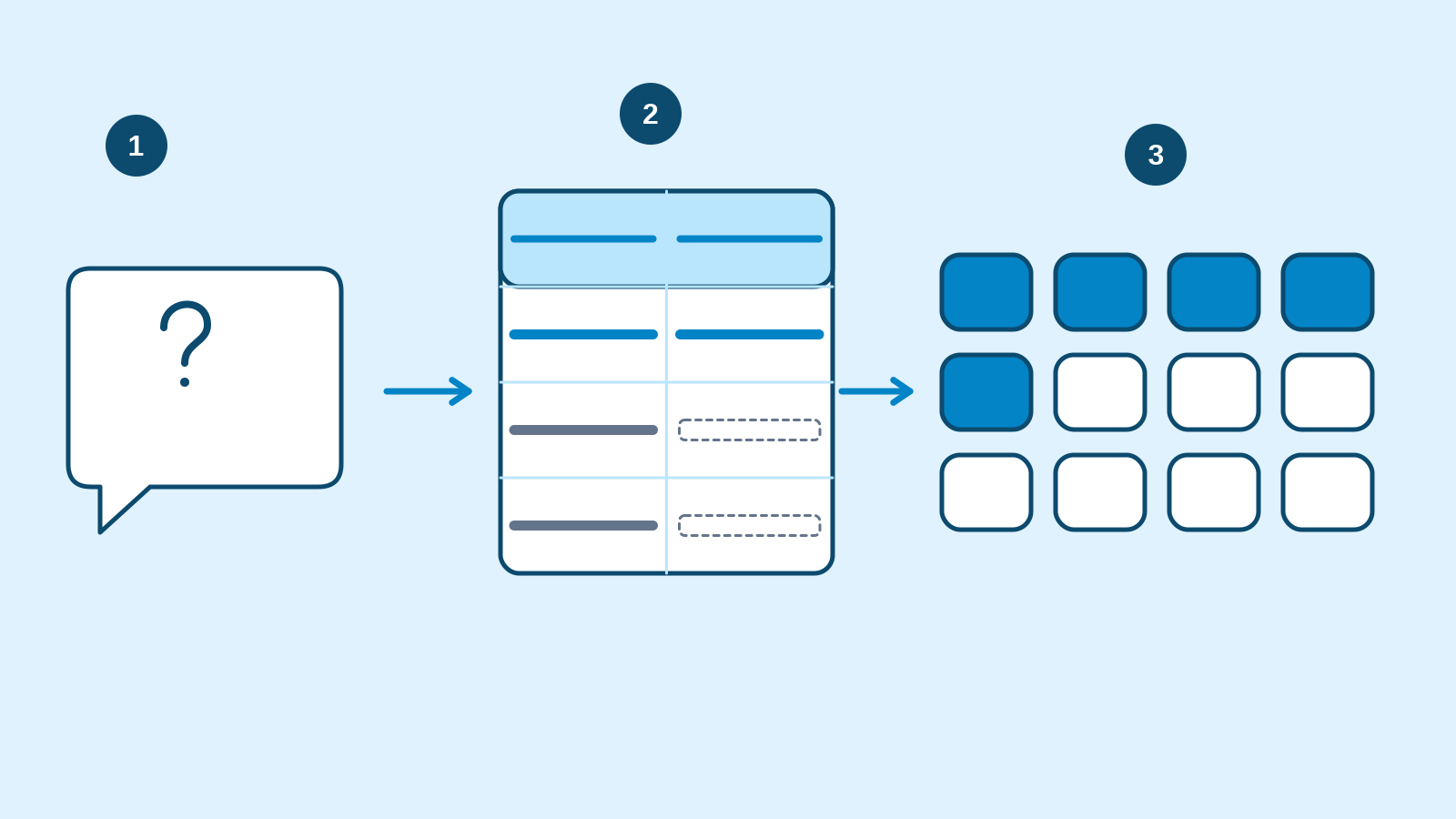
Illustration: An enquiry and a ledger beside twelve boxes, five marked as committed · AI Ping
- Keep the message asking about four boxes in the enquiry list.
- Select only A’s three and B’s two confirmed morning boxes.
- Five of twelve packed boxes are committed. The seven unmarked boxes are available.
Read every step as text
- “Can I pick up four boxes this morning?” Add all three morning lines and nine boxes are spoken for, leaving three. The subtraction 12 − 9 = 3 is fine. The nine is not, so read each line again.
- Line 1, order A, is a morning pickup marked confirmed in the book. Its three boxes are committed. One line, three boxes.
- Line 2, order B, is also morning and confirmed. Two more boxes bring the commitment to 3 + 2 = 5.
- Line 3 is a message asking whether four boxes are possible. This shop commits stock only when staff mark an order confirmed. The four are not deducted, and the line stays in the enquiry list.
- Line 4 is confirmed, but for the afternoon. Searching only for the word “confirmed” would take this box out of the morning stock. It is kept for the afternoon handover and left out of the morning sum.
- Twelve packed minus five committed leaves seven to offer at 09:00, so C can be told four boxes are possible. Checking 5 + 7 = 12 is not enough, because 9 + 3 passes too. Confirm that the five came from lines 1 and 2.
In this fictional bakery the morning pickup window runs from 10 to noon. Twelve boxes have been packed for that window, including all confirmed orders. The afternoon batch is separate. The shop allocates stock only when a staff member marks a booking confirmed in the ledger. An enquiry creates no hold. A shop that reserves stock on payment or holds it for ten minutes would give its assistant different rules.
Give the assistant three separate facts: what was packed, what staff have allocated, and what someone asked. It cannot inspect the counter. To calculate availability, subtract confirmed units in this pickup window from the packed total for the same window. Drafting a reply and accepting a booking are separate events.
Prepare four traceable source lines
A, B, C and D identify records, not people. A customer could place two orders in different windows. Give the assistant the record ID, source line, quantity, window and status. Leave names, phone numbers and unrelated conversations out. An editor checking the result can then point to a specific line instead of searching a chat history.
D is a confirmed booking for the afternoon. Filtering only by status would subtract that box from the morning batch. Filtering only by window would include C, an enquiry. Apply both tests before adding quantities. Counting eligible rows will not tell you how many boxes to set aside. A alone accounts for three boxes.
If staff use 'received' both for an enquiry and for a completed booking, leave the status unresolved and ask for the record that would settle it. Giving the assistant a list of allowed statuses helps it organise the records, but the evidence still determines which status applies.
Fictional ledger and inbox at 09:00 on Friday Line ID Pickup Boxes Record 1 A Morning 3 Ledger · confirmed 2 B Morning 2 Ledger · confirmed 3 C Morning 4 Message · availability enquiry 4 D Afternoon 1 Ledger · confirmed
2 / 4
Step by step
Learn what to prepare, how to request help and how to revise the result through examples and explanations.
Ask for an auditable calculation and a reply
Request two outputs with different readers. The internal note needs record IDs, inclusion decisions and arithmetic so a colleague can audit it. The outward reply needs the answer to C’s question and a clear next step. It need not disclose anyone else's booking.
State whether the packed total includes confirmed orders, what counts as a commitment, the pickup window, and the time of the snapshot. A correct figure at 09:00 can change before the customer replies. Specify a draft so the assistant's wording does not imply a booking has already been accepted.
Example prompt Use the four lines and the Friday morning total of 12 packed boxes, including committed stock. Only confirmed ledger entries allocate stock. List included and excluded lines, reasons and units. Draft two sentences telling C whether four boxes fit and what happens next. Leave the enquiry unconfirmed.
Worked example & explanation Editor's check · Include lines 1 and 2: 3 + 2 = 5 boxes. Line 3 is an enquiry and line 4 belongs to the afternoon. At 09:00, 12 − 5 = 7 boxes are available for morning pickup.
Sample reply · “At 9 this morning we had four boxes available for pickup before noon. If you’d like to book them, let us know and we’ll check availability again before confirming.”
Find two independent errors in a draft
Here is a deliberately faulty editorial draft: “The three morning records add up to nine boxes, leaving three. I’ll put C on the waiting list for four.” Twelve minus nine is indeed three. The mistake happened before the subtraction, when the enquiry became a commitment. A separate error created a waiting list that the sources never mentioned.
Tell the assistant which line to reclassify and which statements to remove. Keep C in the enquiry list. Exclude it only from the committed total. Retain D for the afternoon handover. A useful correction leaves a trail instead of silently dropping inconvenient rows.
Audit both membership and arithmetic. Rebuild the five committed units from A and B, then check that five plus seven reconciles to twelve. Nine plus three also equals twelve, which is why balancing the total alone would miss the first error.
Example prompt Keep line 3 in the enquiry list and exclude it from committed units. Remove the waiting-list promise. Explain all four inclusion decisions internally and keep other booking IDs out of C’s reply.
Apply a quantity amendment once
At 09:15 staff add line 5: “Amend confirmed booking B from two boxes to one in the morning window.” This replaces B’s current quantity. Keep both lines as history while counting only the current booking. Ask the assistant to show the previous quantity, new quantity and source line.
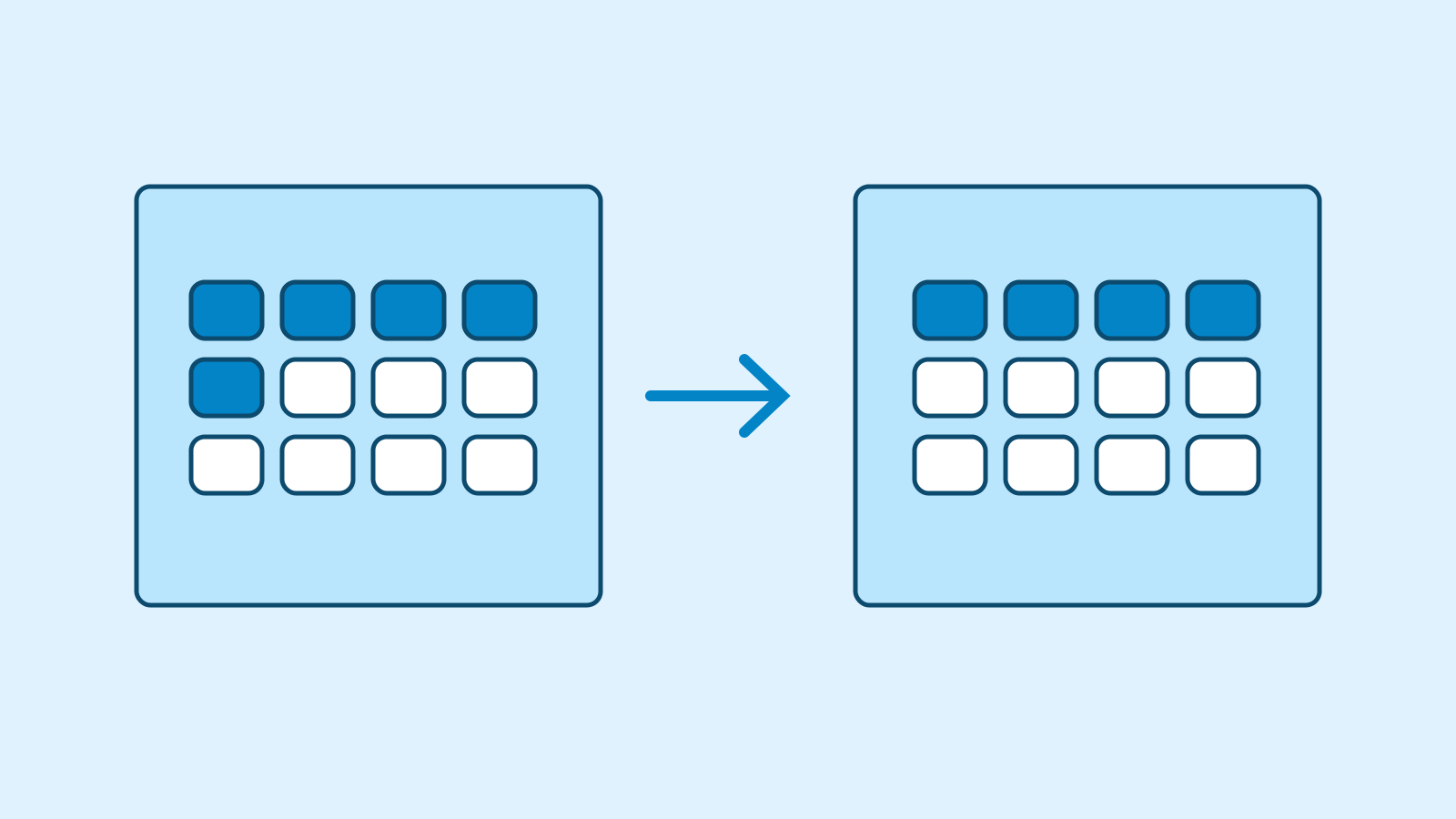
Illustration: Two twelve-slot trays show committed boxes falling from five to four · AI Ping Rebuild the book: A has three and B has one, so four are committed and eight of twelve remain. Reconcile the change separately: seven were available and one was released. C is still an enquiry and D still belongs to the afternoon.
A handover may include line 5 twice. Setting B to its final quantity of one makes the second reading harmless. Adding one box back every time the message appears would inflate stock. If the message only requested a change, keep the existing quantity until the staff confirmation arrives.
Worked example & explanation 09:15 handover · B changes from 2 to 1 on lines 2→5. Morning committed: 4. Available: 8. C remains an enquiry; no sent reply is recorded.
3 / 4
Self-check
Think about what you would ask AI, then read the explanation. Written submissions and external AI use are optional.
This is a learning check, not a test you must pass. Use the explanations to understand the ideas.
Q1The ledger has two confirmed morning rows. Should you subtract two boxes?
Write your thoughts (optional)
Your writing is not sent anywhere. It disappears when you leave or reload this page, so copy anything you want to keep.
Read the answer and explanation
A accounts for three boxes and B for two in the original book. Subtract five units. Two is a count of rows. All quantities are fictional.
This is your own review, not an automatic score.
Q2B asks to reduce the booking to one. Staff have not approved it. What is available?
Write your thoughts (optional)
Your writing is not sent anywhere. It disappears when you leave or reload this page, so copy anything you want to keep.
Read the answer and explanation
Seven boxes remain available under the fictional policy. Log the pending request and update to eight only after staff confirm it.
This is your own review, not an automatic score.
Q3Why is ten the wrong starting capacity after F cancels two boxes on Saturday?
Write your thoughts (optional)
Your writing is not sent anywhere. It disappears when you leave or reload this page, so copy anything you want to keep.
Read the answer and explanation
Eight counts all packed boxes, including any that had been assigned to F. Cancellation releases a commitment; it does not produce new stock. Eight minus E’s five leaves three in this fictional batch.
This is your own review, not an automatic score.
Common mistakes
- Adding every quantity mentioned in a message
- Counting an amendment as a second booking
- Turning availability into a booking confirmation
Your learning record
Completion is optional. Mark this lesson when you feel ready, or move to the next lesson without marking it.
Completion is saved in this browser.
4 / 4
Apply to your work
Consider how new material changes the workflow and checking criteria. Trying an external AI tool is optional.
Try it: a new morning and a request for four
Start a fresh Saturday book. Eight boxes were packed. E has five confirmed, F’s booking for two has been completely cancelled, and G asks about four. There are no other bookings. Friday’s final availability happens to equal Saturday’s starting capacity. Put the new date and batch total at the top of the request to avoid carrying the old answer forward.
Write three lines: packed, committed, available. Compare G’s requested quantity with the last line. Offering a smaller quantity is a proposal; accepting it for G is a different decision. You also lack evidence about afternoon stock.
Check the arithmetic and the promise separately. Committed plus available should equal Saturday’s capacity. Then read the reply as a customer would: does it say the order already exists? Under this shop’s rules, the ledger changes only after staff confirm the new booking. A different handover rule would need to appear in your prompt.
Check it
- Worked check · 8 − 5 = 3 available. F and G allocate zero. “We can offer up to three boxes this morning. Would three work for you?” Leave the ledger unchanged while awaiting the reply.
Write a note (optional)
Use this only if you want to record a prompt or your understanding. This is a notebook, not a connected AI assistant.
Your writing is not sent anywhere. It disappears when you leave or reload this page, so copy anything you want to keep.
References
- COUNTIFS — Google Docs Editors Help
- Create an in-cell dropdown list — Google Docs Editors Help