Two branches, two deals: reconcile sales notes and revise a quote with AI
Group calls and email by deal ID, hold an ambiguous message and revise only the quote affected by a new price sheet. Practise again with a different pair of deals.
24 min readAs of Nov 2026
Lesson guide · goals & preparation
By the end of this lesson
- Link communications to deals with an evidence trail.
- Recompute one quote while preserving the other.

Who this is for
- Sales staff preparing a draft from calls, emails and price lists
What you need
- Use the two fictional branches and identifiers supplied here.
1 / 4
Theory
Understand what to ask AI to do, how to ask, and the ideas behind the workflow.
Why one company has two deals
On Monday two branches of one customer request quotes. Later the shared mailbox says “please add two”. A company-level summary could make the messages sound like one order. Which branch asked for two more of what?
A deal ID follows one proposal. A contact name, company or email address can span several proposals. E17 is the East branch and W28 is West. Keep those IDs even if the same person reviews both quotes.
Use AI to organise notes and draft a handoff. A blank source field is easier to question than a confident total built on an unsupported match.
Read the call, email and price sheet in order
Extract deal ID, product, seats and term before looking up a price. Three seats for two months means six seat-months, not six people.
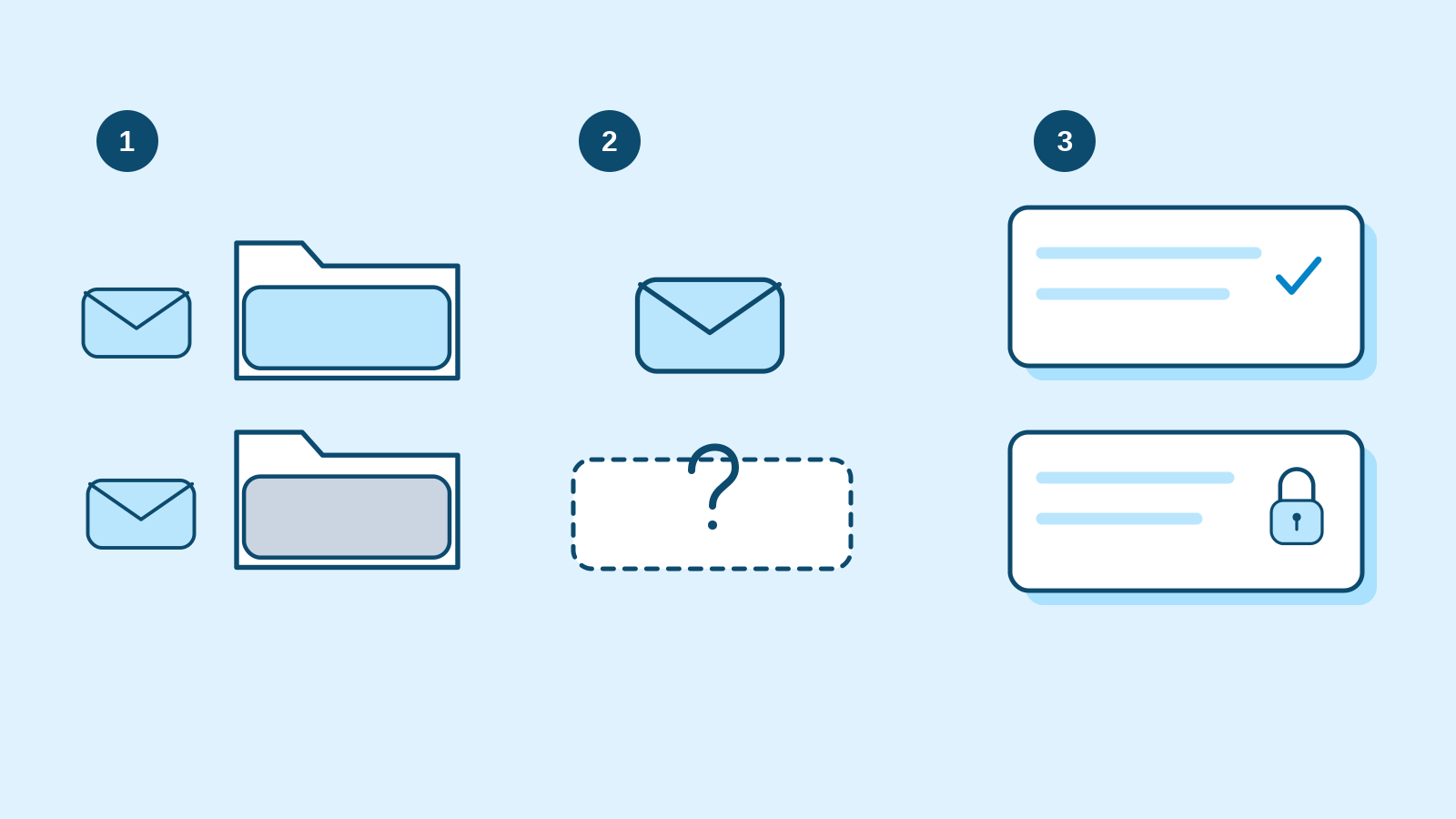
Illustration: The call and signed email enter different folders while an unsigned note remains in a dotted tray · AI Ping
- Use the IDs in M1 and M2 to separate East and West branch records.
- Hold the unidentified M3 message without increasing either quotation.
- Apply P2 to unsent E17 only. The guarantee in Q8 protects W28.
Read every step as text
- Group everything by company, apply the newest rate everywhere, and East becomes KRW 120,000 while West becomes 60,000. The multiplication is fine. The assumptions before it are wrong, so sort each record by deal ID.
- The M1 call names E17. Three seats for two months go to the East quote: six seat-months, not six people.
- The M2 email states W28, so five seats for one month belong to West. That quote already went out as Q8.
- M3 names no branch, deal or term. Arriving right after the East call proves nothing. It waits in the clarify tray with a question about which deal and which term it means.
- P1 charges KRW 10,000 per seat-month. The first draft is 3 × 2 × 10,000 = 60,000 for East and 5 × 1 × 10,000 = 50,000 for West. They stay two separate quotes.
- P2, dated Nov 23, sets KRW 12,000 for unsent quotes only. East is unsent, so its rate changes: 3 × 2 × 12,000 = 72,000. The quantity stays as M1 gave it.
- Q8 locks West’s rate through Nov 30, so West stays at KRW 50,000. East’s increase of 12,000 matches 2,000 × six seat-months. M3 remains on hold until the sender replies.
P1 gives a fictional price in Korean won for one seat for one month. Amounts exclude tax. There is no installation fee in these records. Preserve the unit when you copy a price into a calculation.
M3 contains neither a branch nor a deal ID. Its arrival time cannot tell you which deal to change. Keep the exact wording and M3 ID in a separate queue until the sender clarifies.
Fictional records for company A Record Text or terms M1 call East E17 requests Basic for 3 seats, 2 months. Draft unsent. M2 email West W28. Basic, 5 seats, 1 month. Sent quote Q8 locks the rate through Nov 30. M3 shared email “Please add two.” No branch, deal or term. P1 rates Basic KRW 10,000 per seat-month. No setup fee, tax excluded.
2 / 4
Step by step
Learn what to prepare, how to request help and how to revise the result through examples and explanations.
Request two deal rows and a holding row
A generic company summary hides the source of each quantity. Instruct the assistant to attach only explicit deal matches and return unmatched messages as rows of their own.
East starts at 3 × 2 × KRW 10,000 = KRW 60,000. West is 5 × 1 × KRW 10,000 = KRW 50,000. One is unsent while the other is a rate-locked quotation. Do not combine them into one customer order.
Draft a question that can resolve the hold. Ask which deal needs the extra quantity, what it measures and which term applies. A proposed question is not a client confirmation.
Example prompt Use M1–M3 and P1. Match explicit deal IDs only. Return product, seats, months, unit price, subtotal, status and source per deal. Preserve unmatched messages and draft a clarification question. Calculate in KRW before tax. Draft only. Source records M1 call | East E17 requests Basic for 3 seats, 2 months. Draft unsent. M2 email | West W28. Basic, 5 seats, 1 month. Sent quote Q8 locks the rate through Nov 30. M3 shared email | “Please add two.” No branch, deal or term. P1 rates | Basic KRW 10,000 per seat-month. No setup fee, tax excluded.
Which row changes when a new rate arrives?
P2 arrives Nov 23. Basic now costs KRW 12,000 per seat-month for unsent drafts. Q8 keeps its promised rate until its expiry. Give the assistant both the effective date and the quote status.
An editor-written faulty draft says: “East adds two seats, making KRW 120,000 for five seats over two months. Reprice West to KRW 60,000.” Both multiplications work. The assumptions fail: East has no claim on M3 and West is protected by Q8.
Reinstate the M1 quantity and term, apply P2 to East only and carry M3 forward as unresolved. Ask for the exact changed field on each row.
Example prompt P2 applies from Nov 23 to unsent Basic quotes only, at KRW 12,000 per seat-month. W28’s Q8 is locked through Nov 30. M3 is unanswered. Update only E17’s rate. Show old and new subtotal, evidence, unknowns and the next owner action.
Read the completed handoff
East increases by KRW 12,000. Check the difference another way: six seat-months multiplied by the KRW 2,000 rate increase gives the same figure.
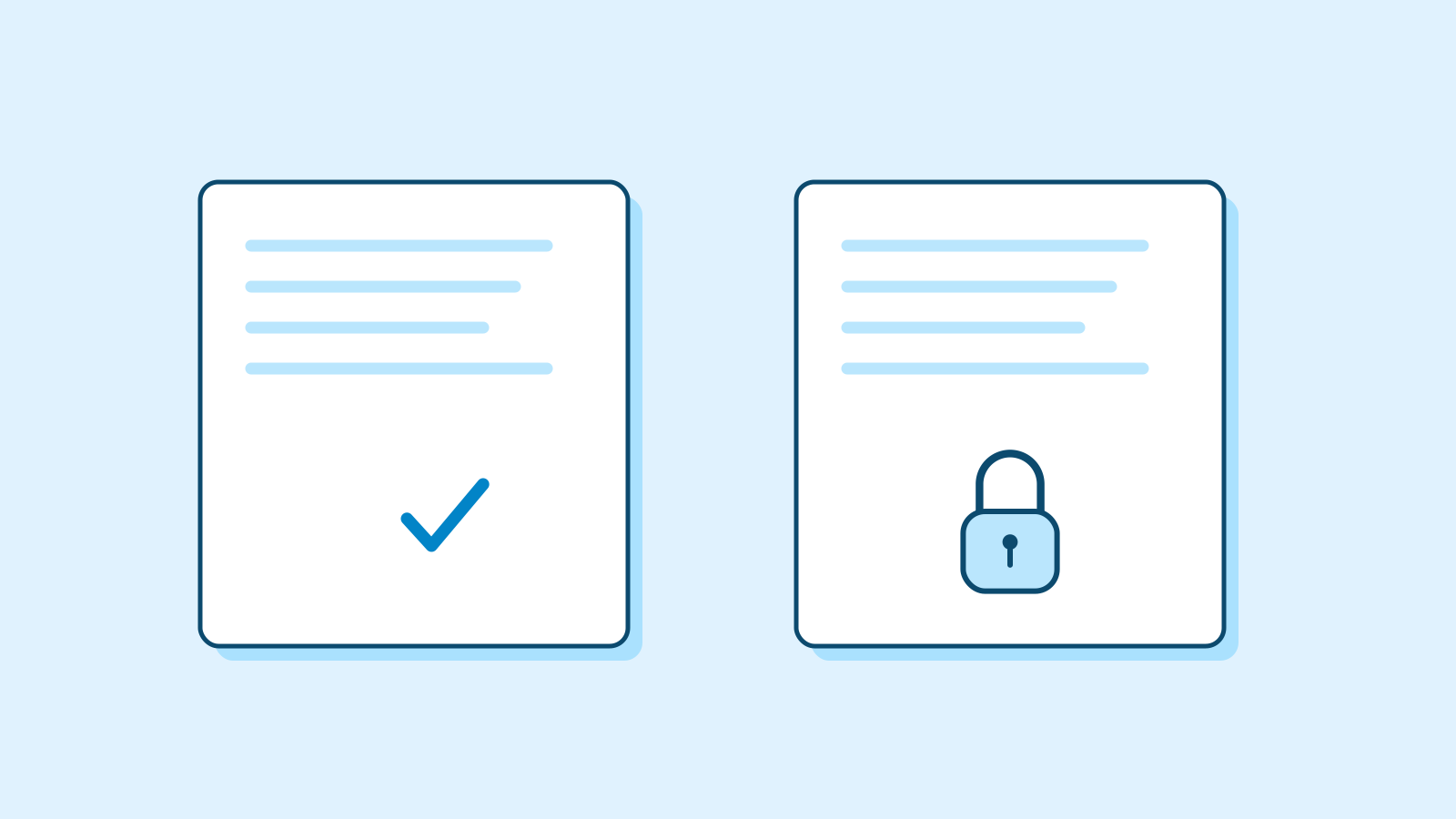
Illustration: A revised quotation beside a locked earlier quotation · AI Ping For West, explain why no field changed. Q8 keeps the KRW 50,000 subtotal through Nov 30. A conversation after that date would require checking whether the existing quote was accepted or a new quote is needed.
Leave the East draft awaiting staff review and M3 awaiting clarification. Keeping those two actions distinct makes the note usable by the next shift.
Cover the East total and reconstruct it from M1 and P2. Then hide the evidence beside West and ask why it still uses P1. You need the guarantee in Q8 to explain that choice. A correct amount without the commitment behind it is an incomplete handoff.
Nov 23 handoff · all amounts before tax Deal Before → after Next action E17 60,000 → 72,000 KRW (3×2×12,000) M1 and P2. Review draft before sending W28 50,000 → 50,000 KRW (5×1×10,000) M2 and Q8. Rate locked through Nov 30 Unassigned M3 No quantity change to either quote Ask for branch, item and term
3 / 4
Self-check
Think about what you would ask AI, then read the explanation. Written submissions and external AI use are optional.
This is a learning check, not a test you must pass. Use the explanations to understand the ideas.
Q1What would you ask after M3 arrives?
Write your thoughts (optional)
Your writing is not sent anywhere. It disappears when you leave or reload this page, so copy anything you want to keep.
Read the answer and explanation
Ask which deal, what unit and which term the increase refers to. Keep both quantities until a reply arrives.
This is your own review, not an automatic score.
Q2East shows a KRW 6,000 increase. What may be missing?
Write your thoughts (optional)
Your writing is not sent anywhere. It disappears when you leave or reload this page, so copy anything you want to keep.
Read the answer and explanation
That fictional difference accounts for three seats but just one month. Two months make the increase KRW 12,000.
This is your own review, not an automatic score.
Q3What should the new B4 and C9 handoff contain?
Write your thoughts (optional)
Your writing is not sent anywhere. It disappears when you leave or reload this page, so copy anything you want to keep.
Read the answer and explanation
Fictional B4 moves from KRW 54,000 to 66,000 from the N5 price change. C9 moves from 36,000 to 45,000 with five seats under N4 and the same N2 rate. Attach N4 to N3, clear the hold and pass both drafts for review.
This is your own review, not an automatic score.
Common mistakes
- Assigning a shared email to the latest deal
- Overwriting an active price commitment
Your learning record
Completion is optional. Mark this lesson when you feel ready, or move to the next lesson without marking it.
Completion is saved in this browser.
4 / 4
Apply to your work
Consider how new material changes the workflow and checking criteria. Trying an external AI tool is optional.
Try it: take over a different pair of deals
This time a later email identifies the deal behind an ambiguous request. Link the original message to the clarification and act only within the stated terms.
Check which field is locked: quantity or rate. Write a handoff for both deals. Explain whether each change came from repricing or from an approved quantity change before opening the final answer.
Fresh deals · Dec 3, all amounts before tax ID Material N1 North B4 unsent. Basic, 2 seats × 3 months, old rate KRW 9,000 N2 South C9 sent. 4 seats × 1 month. KRW 9,000 rate including added seats locked through Dec 10 N3 → N4 “Add one” → “Add one Basic seat to South C9 for the same month.” N5 From Dec 3 unsent quotes use KRW 11,000 per seat-month
Write a note (optional)
Use this only if you want to record a prompt or your understanding. This is a notebook, not a connected AI assistant.
Your writing is not sent anywhere. It disappears when you leave or reload this page, so copy anything you want to keep.
References
- Read sales discovery notes — AI Ping
- Evidence-based sales proposals — AI Ping