Research basics: read reviews as evidence
Use three illustrated review cards to understand observation, interpretation, themes and samples.
About 15 min readingAs of Oct 2026
Lesson guide · goals & preparation
By the end of this guide
- Separate statements from interpretations.
- Group themes with traceable IDs.
- Distinguish a sample from a population.
Who this is for
- People learning to structure this work with AI
- People who want to check a draft against evidence
What you need
- All cases, records and numbers here are fictional teaching material, not recorded model replies or research findings.
- Paper and a pen are enough. To try a prompt, use an assistant you already have and only the fictional material.
This lesson’s terms, in plain language
Read the short meanings here. Open a term for a fuller explanation and example.
- hypothesis
- An unverified idea that can be investigated through observation or a test.
- sampling bias
- Selection that leaves some people’s experiences poorly represented.
This reading lesson explains how to use external AI tools. Read from theory to the workflow, examples and explanations, or use the contents to jump to a section.
1 / 4
Theory
Understand what to ask AI to do, how to ask, and the ideas behind the workflow.
Do three comments tell the same story?
Use three fictional reviews: R1 saved a record but could not find it; R2 wants to see last week’s records; R3 cannot tell whether pressing Save completed the action.
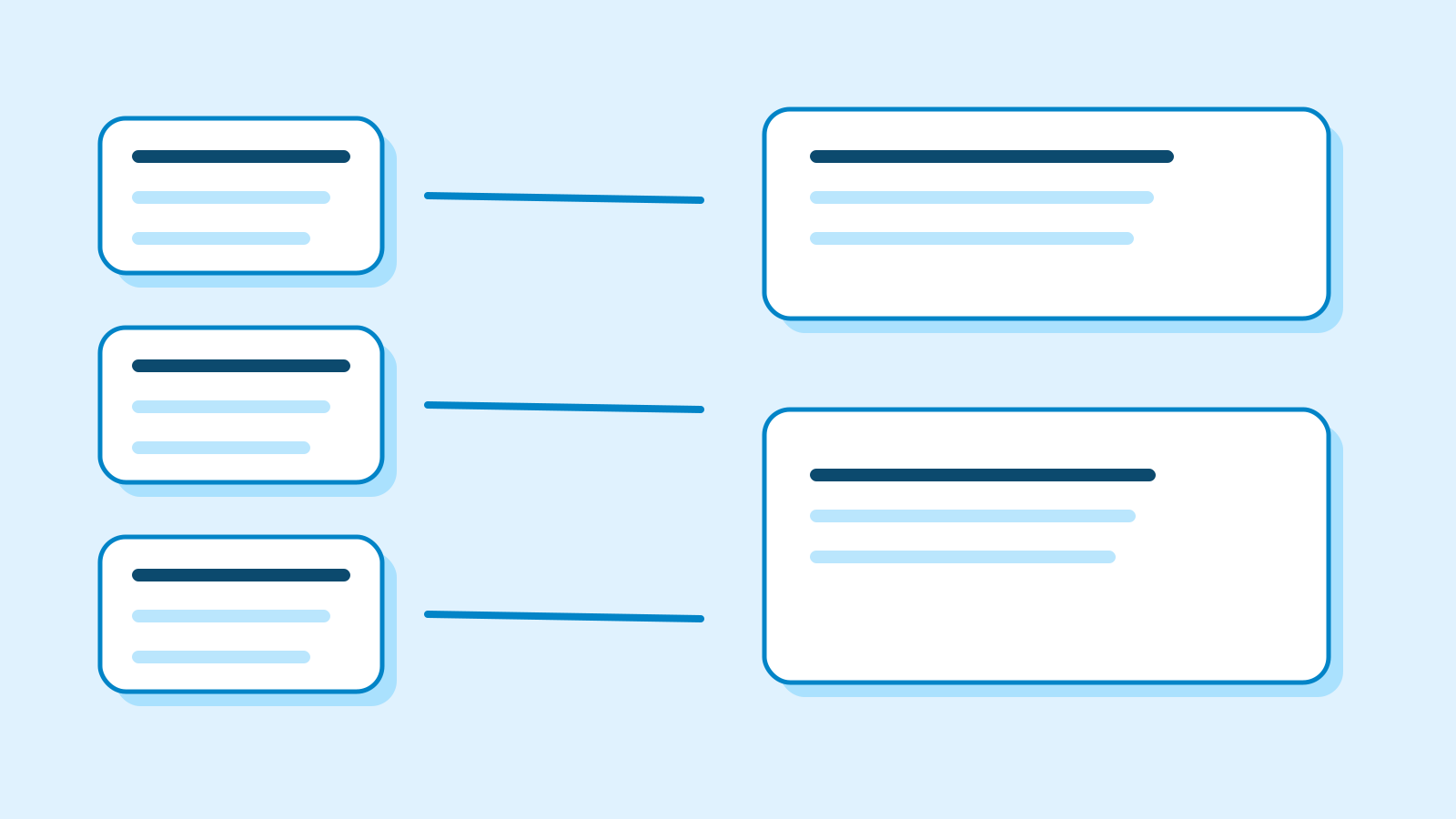
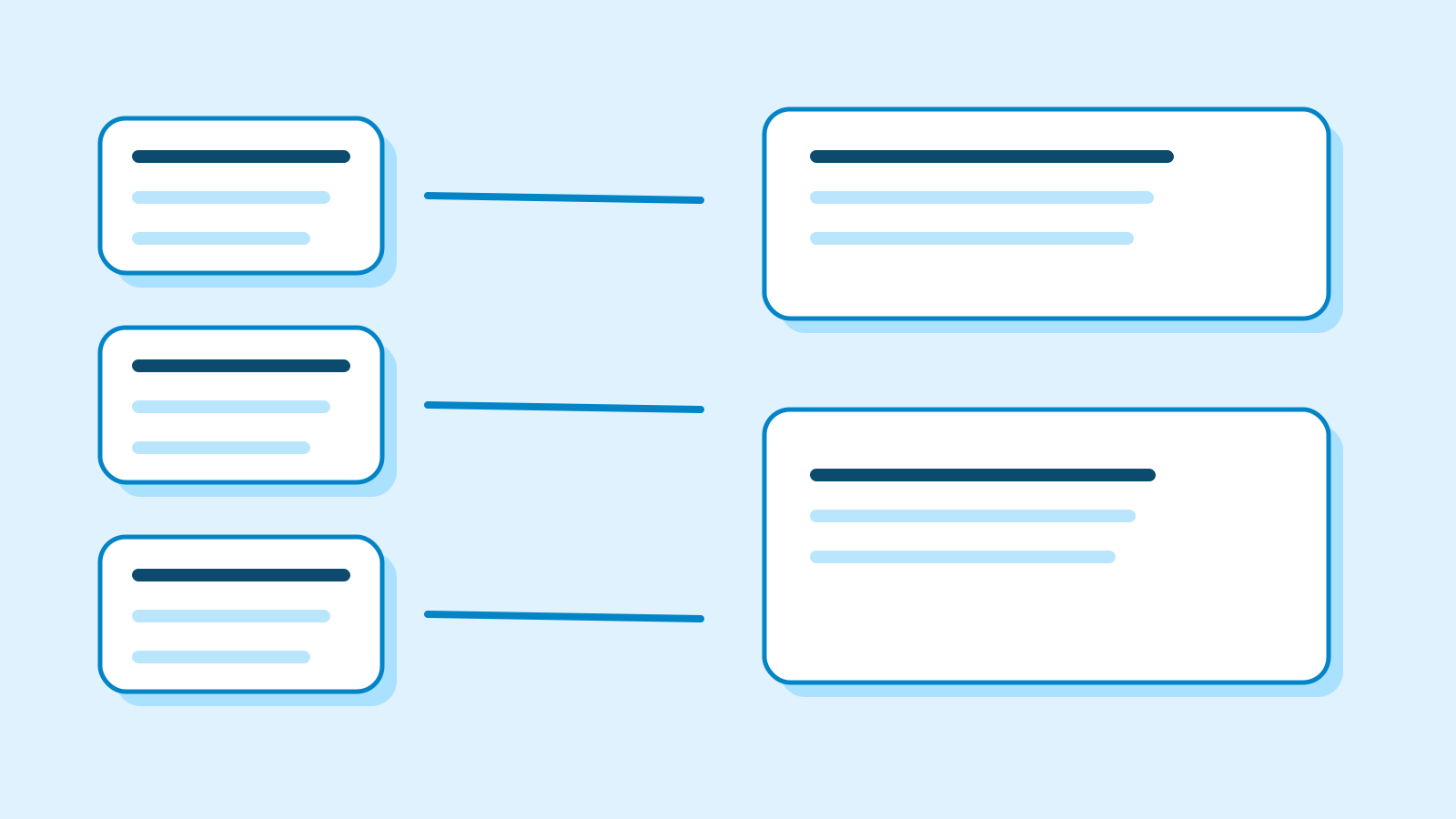
Figure: Group review cards into themes while preserving links to their source records. · AI Ping The cards represent separate observations. R1 may concern storage or retrieval. R2 concerns filtering. R3 concerns feedback. Grouping all three under “broken saving” would establish a cause the notes do not prove.
Product research investigates what people do and where they struggle. AI can help organise notes, but cannot replace observing use. Preserve record IDs, distinguish words from interpretation, and keep material that does not fit a convenient theme.
A small habit: separate observation from interpretation
“Pressed the button twice” is an observation. “The button was hard to notice” is an interpretation; other explanations remain possible. Keep observation, interpretation and next question in separate columns.
For R3, an unclear completion message is a hypothesis. Ask what appeared immediately after saving. Hypotheses are useful when their unverified status remains visible.
Preserve wording inside quotations. Label polished wording as a paraphrase and attach its source ID. Changing “could not find it” to “it disappeared” implies data loss. Do not infer anger or intent to leave from a brief complaint.
2 / 4
Step-by-step use
Learn what to prepare, how to request help and how to revise the result through examples and explanations.
Themes are provisional
You might temporarily group R1 and R2 as “finding records.” If later evidence shows R1 was a storage failure, revise the grouping. A theme describes current understanding; it is not a permanent label.

Figure: Two cards fit inside a theme; a card that does not fit remains outside. · AI Ping The card outside the second drawing’s boundary is not rubbish. It represents material that does not fit. R3 may belong under completion feedback rather than retrieval.
A record may touch multiple themes. If you place it in both, do not count it as two people. Reviews, individuals and mentions are different units. This exercise supplies three fictional records, not evidence from three recruited participants.
A theme count is not a population estimate
Two relevant comments do not establish how common a problem is across all customers. The material here is fictional, not a sample. State “these records contain this theme,” not a population percentage.
A sample is the set actually studied. Sampling bias arises when selection leaves some experiences poorly represented. Support requests can reveal possible difficulties without estimating their prevalence among all users.
Report the material analysed, its missing perspectives and unresolved causes. Expanding notes with AI or inventing interviews adds words, not participants. Plan the next observation instead of filling the gap with synthetic evidence.
3 / 4
Check & explain
Think about what you would ask AI, then read the explanation. Written submissions and external AI use are optional.
This is a learning check, not a test you must pass. Use the explanations to understand the ideas.
Q1Can “could not find it” become “data disappeared”?
Write your thoughts (optional)
Your writing is not sent anywhere. It disappears when you leave or reload this page, so copy anything you want to keep.
Read the answer and explanation
No. Storage failure and retrieval difficulty are not distinguished. Preserve the wording and investigate both moments.
This is your own review, not an automatic score.
Q2Does one review in two themes count as two people?
Write your thoughts (optional)
Your writing is not sent anywhere. It disappears when you leave or reload this page, so copy anything you want to keep.
Read the answer and explanation
No. Distinguish records from mentions and preserve the source ID to detect duplication.
This is your own review, not an automatic score.
Q3Do ten AI-invented interviews enlarge the research sample?
Write your thoughts (optional)
Your writing is not sent anywhere. It disappears when you leave or reload this page, so copy anything you want to keep.
Read the answer and explanation
No. Synthetic statements are not participant experiences. They may support practice but must not be mixed into the research evidence.
This is your own review, not an automatic score.
Common mistakes
- Do not present fictional cases or AI guesses as customer evidence.
- Do not invent deadlines, results or commitments.
- Explain your decision before polishing its presentation.
Your learning record
Completion is optional. Mark this lesson when you feel ready, or move to the next lesson without marking it.
Completion is saved in this browser.
4 / 4
Apply to your work
Consider how new material changes the workflow and checking criteria. Trying an external AI tool is optional.
Try it: an analysis you can trace back
Copy R1–R3, then add interpretation candidates and next questions. Name tentative themes and list included IDs. Leave ambiguous material unclassified when necessary, with a reason.
If using AI, request themes, preserved IDs and records that do not fit. No recorded model answer is supplied. Inspect strong labels such as data loss or customer churn against the original wording, narrowing unsupported claims.
Choose one record and explain what is known, what is not and how to investigate. “I do not know why yet” is acceptable when paired with a useful next question. Theme discovery alone does not establish product priority.
Write a note (optional)
Use this only if you want to record a prompt or your understanding. This is a notebook, not a connected AI assistant.
Your writing is not sent anywhere. It disappears when you leave or reload this page, so copy anything you want to keep.
References
- Analyse a research session — GOV.UK
- Learning about users and their needs — GOV.UK