CrowdStrike agrees to buy Zscaler in $43.9 billion all-stock deal
Edited and reviewed by AI Ping Editorial Team
Key points
- At closing, Zscaler shareholders would receive 1.135 CrowdStrike Class A shares for each Zscaler share.
- The targeted closing window runs from August 2027 through January 2028 on CrowdStrike’s fiscal calendar.
- Zscaler was already sending AI application security events into Falcon before the deal.

CrowdStrike announced an all-stock agreement to acquire Zscaler on November 23. At CrowdStrike’s November 20 closing price, Zscaler’s implied enterprise value was about $43.9 billion. After closing, the companies plan to let customers buy protection for an AI agent’s device and its connections to business applications under one Falcon Flex agreement.
The companies will operate independently until closing, targeted for the second half of CrowdStrike’s fiscal 2028. CrowdStrike’s fiscal year ends on January 31. On its calendar, that puts the target between August 2027 and January 2028.
Under the existing Falcon Flex program, a customer negotiates a spending commitment and draws down the balance as it adopts security products. The balance can also cover new releases. That gives a buyer with an approved budget a way to add tools over time and can shorten the purchasing and legal review for each addition. The deal presentation shows purchasing in both directions. A Falcon customer could add Zscaler services, and a Zscaler customer could add Falcon.

Where application and device records meet
A device under company management can still be denied access to a particular service. In the US National Institute of Standards and Technology’s description of zero trust, a company checks the requesting identity and device before allowing a session with a resource. Working from the office or using company-owned equipment does not by itself establish that permission.
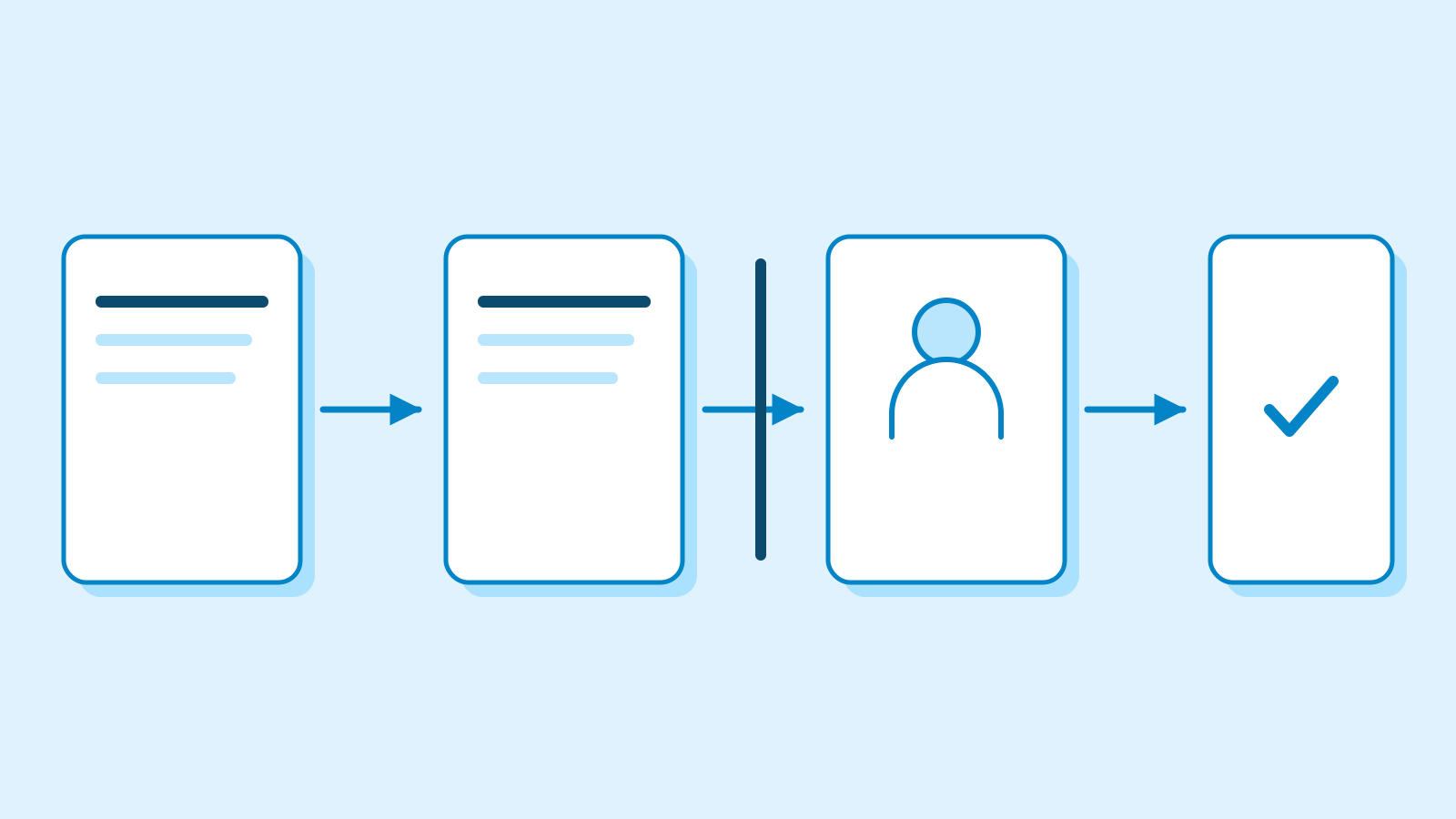
In a June 8 preview, CrowdStrike showed how the partners could adjust access after a user had signed in. A rise in identity risk detected by Falcon could prompt Zscaler to block access to a code repository or require additional authentication. A subsequent signal that the risk had subsided could restore access.
Zscaler’s September 2 account described traffic in the other direction. Internet and private application access logs, along with events from AI applications, were already flowing into Falcon Next-Gen SIEM. Analysts could examine those records alongside identity and device activity. Examples included events flagging risky chatbot prompts or violations of company policy. Zscaler separately identified an application for taking response actions from within Falcon as still in development.
In the acquisition presentation, an agent’s path extends from its device to an internet service or a private application. The companies propose combining what the device sensor sees with records from the point where Zscaler checks the connection. They identify about 8,000 Zscaler customers outside Falcon’s customer base as potential buyers.
Both companies also published results for periods ending October 31. For CrowdStrike, it was the third quarter of fiscal 2027, when annual recurring revenue reached $6.26 billion. Zscaler was reporting its first quarter of the same fiscal year. It recorded $3.882 billion in annual recurring revenue and $949.3 million in quarterly revenue. The first measure puts recurring business on an annual basis. The second measures revenue recognized over those three months. The companies expect combined ARR to exceed $10 billion at closing.
The November 22 merger agreement sets the exchange ratio at 1.135 shares of CrowdStrike Class A common stock for each ordinary Zscaler share. Holders receive cash for fractional shares. After closing, existing CrowdStrike and Zscaler shareholders would own an estimated 84.1% and 15.9%, respectively.

Both boards approved the agreement unanimously. Under its terms, a CrowdStrike merger subsidiary would merge into Zscaler, which would survive as CrowdStrike’s wholly owned subsidiary. That step still requires Zscaler shareholder approval, applicable regulatory clearances and satisfaction of the other closing conditions. The agreement also provides for Zscaler CEO Jay Chaudhry to take a seat on CrowdStrike’s board at closing.
Sources
- 양사 공동 인수 발표 · Joint acquisition announcement — CrowdStrike · Zscaler
- 11월 22일 합병 계약과 주식 교환 조건 · Merger agreement and exchange terms — CrowdStrike · SEC Form 8-K
- 인수 설명회 자료 · Acquisition investor presentation — CrowdStrike · Zscaler
- 팰컨 플렉스 계약 방식 · Falcon Flex subscription program — CrowdStrike
- 6월 신원 위험 신호 연동 예고 · June identity and access preview — CrowdStrike
- 9월 보안 관제 연동 발표 · September integration announcement — Zscaler
- 2027회계연도 3분기 실적 · Third-quarter fiscal 2027 results — CrowdStrike
- 2027회계연도 1분기 실적 · First-quarter fiscal 2027 results — Zscaler
- 제로 트러스트의 접근 단위 · Zero Trust Architecture (SP 800-207) — NIST