ChatGPT gains GIF creation as OpenAI releases Images 2.6
Edited and reviewed by AI Ping Editorial Team
3-line summary
- Images 2.6 reaches ChatGPT and Codex, with GIF creation rolling out in ChatGPT.
- The API adds markup-guided edits, GIF and SVG output, and complexity controls.
- Flare and Sunburst share token rates; SVG also bills for vector authoring.

OpenAI introduced Images 2.6 on November 4, adding looping GIF creation to ChatGPT and two image models to its API. The company announced global availability across ChatGPT and Codex subscription tiers on web, desktop and mobile. Developers get Flare for fast iteration and Sunburst for detailed visual work.
ChatGPT’s release notes describe GIF creation as rolling out. Users can request a loop, animate an uploaded sketch, adjust playback speed and share the result. Saved reference images arrive in the same update: a named photo can be reused in later conversations without another upload. OpenAI illustrates this with a dog photo saved under a name, then recalled with an @ mention for a watercolor portrait.
OpenAI says image generation is 50% faster than before, with Flare producing an image in as little as six seconds at low quality. Sunburst emphasizes detail and consistency through successive edits at medium or high quality. Those are company claims, with the six-second figure tied to a particular setting. Both models accept text and images, support editing and transparent backgrounds, and list audio and video as unsupported modalities.
Marking an edit and choosing the deliverable
A new complexity control governs planning before rendering, separately from the quality setting for visual detail. Both API models default to high complexity, with low and medium also available. The documentation warns that more planning can add latency and unwanted changes.
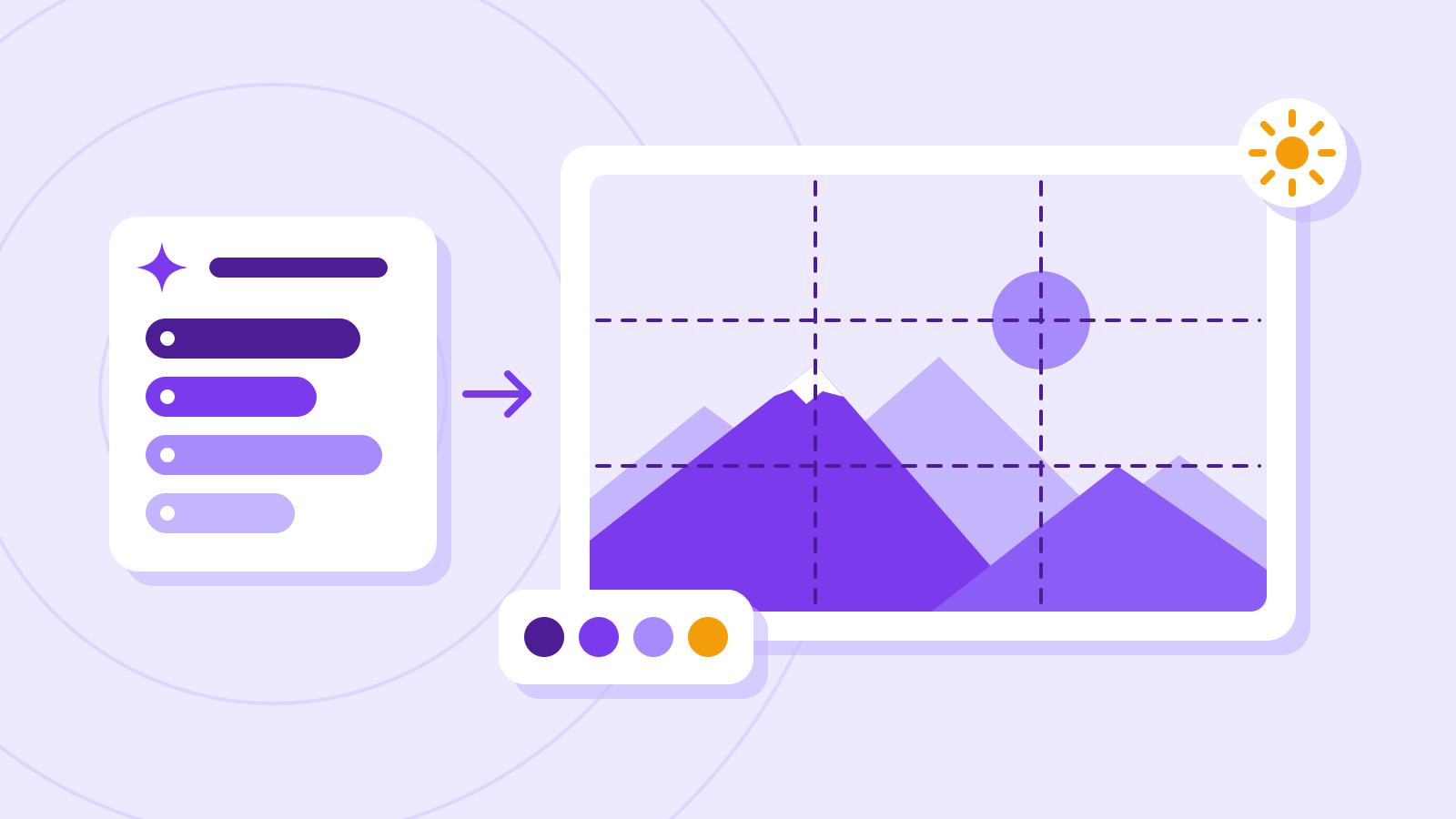
Markup-guided editing lets developers identify an object with a circle on a transparent PNG overlay matching the original’s dimensions. The overlay applies to the first input image. Its prompting guide says areas requiring pixel-identical preservation can be retained by compositing an approved edit into the original.

API GIF generation controls frame count and timing. The defaults—nine frames at 200 milliseconds—produce a 1.8-second cycle. Frame dimensions and the number of animations share a total pixel budget. GIF output is exclusive to generation requests.
SVG output provides editable paths, shapes and colors. The API first creates a reference image, then uses it to author the vector document. The resulting SVG is static, excluding scripts, external resources and embedded raster images. It is generated one image at a time. The edit endpoint does not return SVGs.

Flare and Sunburst share the published API rates: $5 per million text-input tokens, $8 per million image-input tokens and $30 per million image-output tokens. Cached inputs are listed separately at $1.25 for text and $2 for images. These are token prices, rather than a fixed charge per picture. The generation guide notes that models can consume different token counts at the same quality setting. SVG billing includes the reference image and the authoring model’s tokens. The model cards also tie request and token limits to an organization’s API usage tier, which increases with use and spending; the applicable limits are listed for each organization.
The system card adds GIF safeguards for harmful movement or meaning that emerges across frames. Some categories receive broader restrictions than in still images. OpenAI evaluated adversarial GIFs designed to challenge those safeguards; that sample does not measure the frequency of harmful requests or outputs in normal use.
A separate still-image evaluation used 3,077 challenging requests. After moderation, Flare’s unblocked unsafe-output rate moved from 1.49% to 2.14%, while Sunburst’s moved from 1.92% to 1.72%. OpenAI says neither overall difference was statistically significant. For GIFs, the company states that motion-related violations remain difficult to detect and some may escape the safeguards.
Sources
- Introducing Images 2.6 — November 4, 2026 — OpenAI
- ChatGPT release notes — GIF creation and saved reference images — OpenAI Help Center
- GPT-Image-2.6 Flare model — OpenAI API Docs
- GPT-Image-2.6 Sunburst model — OpenAI API Docs
- Image prompting — complexity, markup and preservation — OpenAI API Docs
- Image generation — GIF, SVG, limits and billing — OpenAI API Docs
- Pricing — image generation models — OpenAI API Docs
- ChatGPT Images 2.6 System Card — safety evaluations — OpenAI Deployment Safety Hub