Ant releases Ling-3.2-air with a 61% score on a workflow automation test
Edited and reviewed by AI Ping Editorial Team
Key points
- The score gives credit for individual objectives and zeros out a task when the model breaks a rule.
- On a separate document test, 16% of the model’s answers met every grading criterion.
- The 13 downloadable weight files total about 129.3 GB.

On November 23, Ant Group’s inclusionAI team released the weights for Ling-3.2-air. Ant reported a score of 61% on AutomationBench-AA, a test of how well models carry out work across business apps. Its predecessor, Ling-3.0-flash-VL, scored 15.7% on the same measure.
Artificial Analysis calculates the 61% by averaging the share of objectives met on each task. A guardrail violation cancels all credit for that assignment. The evaluator tracks fully completed assignments separately. Zapier’s simulated business environment covers 657 tasks across six functions, including HR, finance, sales and support.
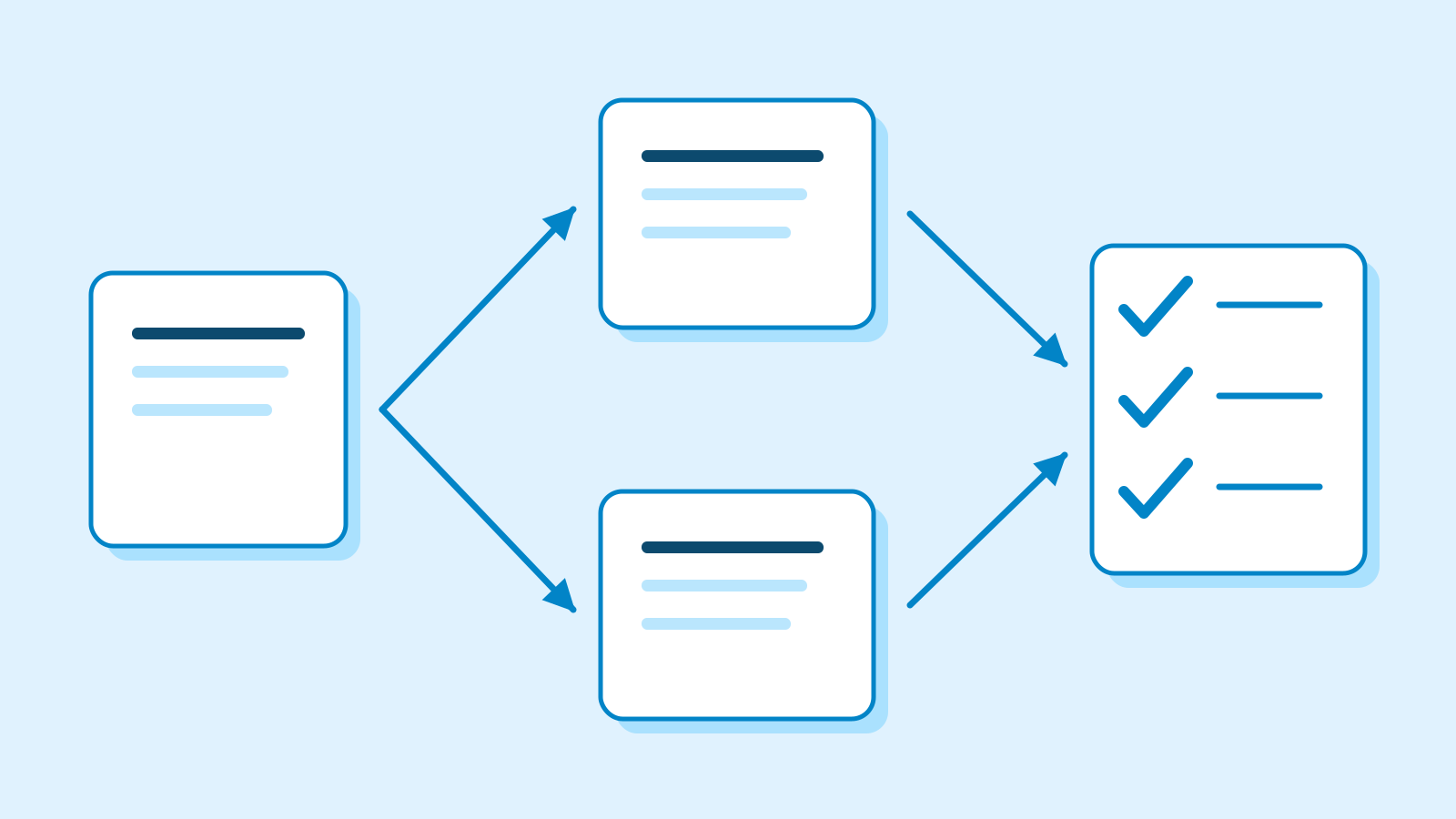
Zapier gives each model the same starting records in a simulated business. The inbox contains past conversations, spreadsheets can have stale rows, and several customers can have similar names. At the end of a run, the grader checks which record changed and who received a message. A model’s declaration of success earns no credit on its own.
One published example asks for text reminders about tomorrow’s interviews. Two candidates should each get the time and type of their interview. A third declined texts, and a fourth has a cancellation recorded on the schedule. Sending either of those two a reminder forfeits the credit earned for correctly notifying the others.
In another example from the researchers’ paper, a Zoom meeting conflicts with a Google Calendar event. The deciding rule is in a spreadsheet. The assignment extends beyond identifying which meeting takes priority. The model must mark the other event for rescheduling and leave a Slack update that identifies both meetings.

A stricter test for document answers
Ant also reported an increase from 8.4% to 16% on the all-pass measure for GDP.pdf, a test of reasoning over professional documents. Here, Artificial Analysis runs five independent attempts per task. An attempt passes only if the answer meets every criterion for that task. A second metric tracks the criteria met along the way, including on answers that fell short of a full pass. Across the 100 tasks, the evaluator supplies text extracted from the PDFs and supplies page images to models that accept visual input.
The GDP.pdf researchers sourced questions from practitioners in ten fields, using documents such as leases, benefits booklets and building plans. An amendment can supersede the original wording, and a footnote can qualify a table entry. The team retained a question only if at least two multimodal models made a substantive mistake, such as overlooking decisive evidence.
What 5.5 billion active parameters means for the download
The MIT-licensed model has 124 billion parameters. It takes text and images as input and returns text. About 5.5 billion parameters participate in the computation for each token. Its configuration routes each token to eight of 512 available expert modules. Different tokens can call on different modules in the same model.
A download includes the weights for all the modules the model can select. Hugging Face lists 13 weight files. The first twelve are about 10.6 to 10.7 GB each and the last is about 1.6 GB. Their sizes add up to 129.3 GB, excluding the tokenizer, the file index and other supporting files. That is the size on disk.

Ant’s serving guide gives a hardware example for a context window of 262,144 tokens using SGLang. It specifies four 141 GB-class H200 or H20-3e accelerators for that setup. For H100 or H800 cards with 80 GB each, the team recommends splitting the model across eight cards.
Sources
- Ling-3.2-air release and AutomationBench-AA results — Ant Ling
- Ling-3.2-air model card and serving configurations — inclusionAI
- AutomationBench-AA scoring and example tasks — Artificial Analysis
- AutomationBench leaderboard and test environment — Zapier
- AutomationBench research paper, including the calendar conflict task — Zapier · arXiv
- GDP.pdf: Benchmarking Grounded Multimodal Reasoning over Professional PDF Documents — Surge AI · arXiv
- GDP.pdf evaluation and all-pass methodology — Artificial Analysis
- Ling-3.2-air model specifications — Artificial Analysis
- Ling-3.2-air configuration — inclusionAI · Hugging Face
- Ling-3.2-air downloadable files — inclusionAI · Hugging Face