Liquid AI’s d1.2 reads invoice fields and answers questions about audio
Edited and reviewed by AI Ping Editorial Team
3-line summary
- Liquid AI released d1.2 and d1.2-ultra through its hosted API.
- The models can extract invoice amounts and dates with their source locations and answer questions about recordings.
- Prices are $0.02 and $0.042 per million input tokens. The Ultra model led an independent decision index with 75 points.

Liquid AI released d1.2 and d1.2-ultra through its own API on November 16. Both decision models can read amounts and dates from invoices and answer questions about recordings. A document-processing application can get the position of an extracted value alongside the value itself. A support tool can ask about a recording or send the question as audio.
The two models use the same API and retain the prices of their respective predecessors. Liquid charges $0.02 per million input tokens for d1.2 and $0.042 for d1.2-ultra. When an application asks for the issuer, the amount and the due date together, Liquid counts the shared invoice once and adds the text of each question. The charge comes from that input.
An invoice amount with a place to check it
In Liquid's invoice example, the response assigns different types to the issuer, the amount and the date. A date answer includes the date in a standard year-month-day format and the text as it appeared in the invoice. The application can use the standard date to sort bills while retaining the printed version for the person checking them.
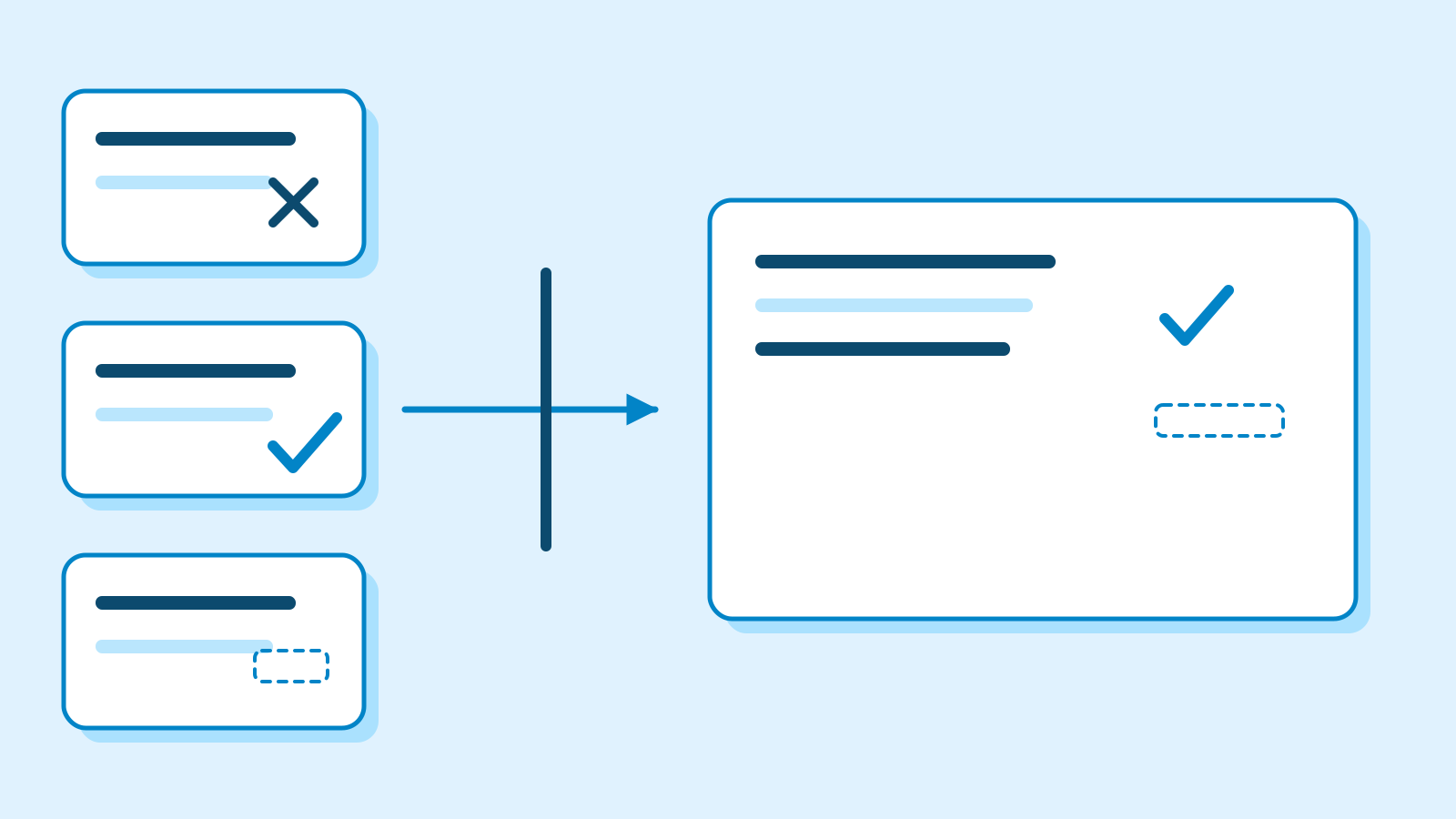
The sample invoice has no value for value-added tax. The example returns the bill total and leaves the tax field empty. A found flag tells the application whether the model identified the requested value, and the position gives a reviewer somewhere to start checking the document. The application still decides which records go to a reviewer before they enter the ledger.

The same release extends the API to other kinds of answers. It can return the locations of several relevant passages within one document or the coordinates of boxes around objects in a photo. A support message that raises a billing issue and a delivery issue can receive both labels. Each option has its own probability in the response, according to Liquid's documentation.
Audio can be the recording or the question
The company illustrates audio input with two tasks: identifying the spoken language in a recording and detecting a sound in the background. Users can also supply a spoken question. In Liquid's audio tests, the models received a short list of possible answers or a yes-or-no question. That is the setting for the company's results on language identification and environmental sounds.

A separate answer type estimates a count from a picture and returns a range around the estimate. Liquid's documentation describes the range as the model's 10th and 90th percentiles. In the company's photo-counting test, an estimate could differ from the reference by one and still count as right. An inventory system that needs an exact total would be measuring a different outcome.
Liquid used its own test sets drawn from public datasets to measure the five new answer types. On the receipt-value test, d1.2 scored 96% and d1.2-ultra scored 98%. The company counted finding the value when present and reporting it missing when absent as correct. The two models tied on a separate test of locating an object in a picture.
What the independent score measures
Artificial Analysis ranked d1.2-ultra first out of 24 with a Decision Index v2.1 score of 75. It gave d1.2 a score of 69. The index combines tasks such as document decisions, tool selection and knowledge questions. A wrong answer given with more confidence loses more points, so scores can differ even when two models have the same share of correct answers.
Artificial Analysis measured 150 milliseconds per task for d1.2 and 218 for d1.2-ultra. Its test workload translates to $63 and $133 per million tasks, respectively. Those figures reflect the benchmark's mix of inputs. An invoice pipeline's bill depends on how much it sends, including images and questions. The models are available from Liquid at launch. Its announcement lists OpenRouter and Vercel as upcoming distribution channels and gives no date for either.
Sources
- d1.2: State-of-the-Art Omnimodal Decision Models — Liquid AI
- Decision Models – Liquid AI Docs — Liquid AI
- Pricing – Hosted API — Liquid AI
- Artificial Analysis Decision Index v2.1 — Artificial Analysis
- d1.2-ultra: Release, Decision Index Score, Performance & Price — Artificial Analysis
- d1.2: 출시, Decision Index 점수, 성능 및 가격 — Artificial Analysis