How to read an AI recommendation: criteria and evidence
Compare three fictional venues to understand requirements, preferences and unknowns. Follow the arithmetic and see why new evidence can change a decision.
About 20 min readingAs of Oct 2026
Lesson guide · goals & preparation
By the end of this guide
- Separate requirements from preferences.
- Compare costs using the same units and duration.
- Explain a provisional decision when information is missing.
Who this is for
- You want to understand the reasoning behind a recommendation.
- You want an accessible introduction to comparisons with numbers and constraints.
What you need
- Read the foundation lessons on evidence and prerequisites first.
- All values are fictional. No purchase, booking or AI execution is needed.
This reading lesson explains how to use external AI tools. Read from theory to the workflow, examples and explanations, or use the contents to jump to a section.
1 / 4
Theory
Understand what to ask AI to do, how to ask, and the ideas behind the workflow.
Best according to whose criteria?
One venue is cheap, one is nearby, and another looks attractive. Asking for 'the best' without criteria delegates your priorities as well as the comparison. Different groups can reasonably choose different venues from the same table.
A requirement must hold for this task; a preference is desirable but negotiable. Our fictional group needs eight seats for two hours and a total room budget of at most KRW 60,000. These are invented teaching values, not market prices or spending advice. Travel time is a preference and has not been measured.
A six-seat room cannot meet an eight-person requirement just by earning high marks for decor and price. Check requirements first, then compare preferences among viable options. You do not need statistics to understand this sequence.
Compare the same fields in the same units
A and B quote hourly rates; C quotes a two-hour package. Compare the full two-hour cost: A is 20,000 × 2 = 40,000 won and B is 28,000 × 2 = 56,000 won. C's 50,000-won package must not be multiplied again.
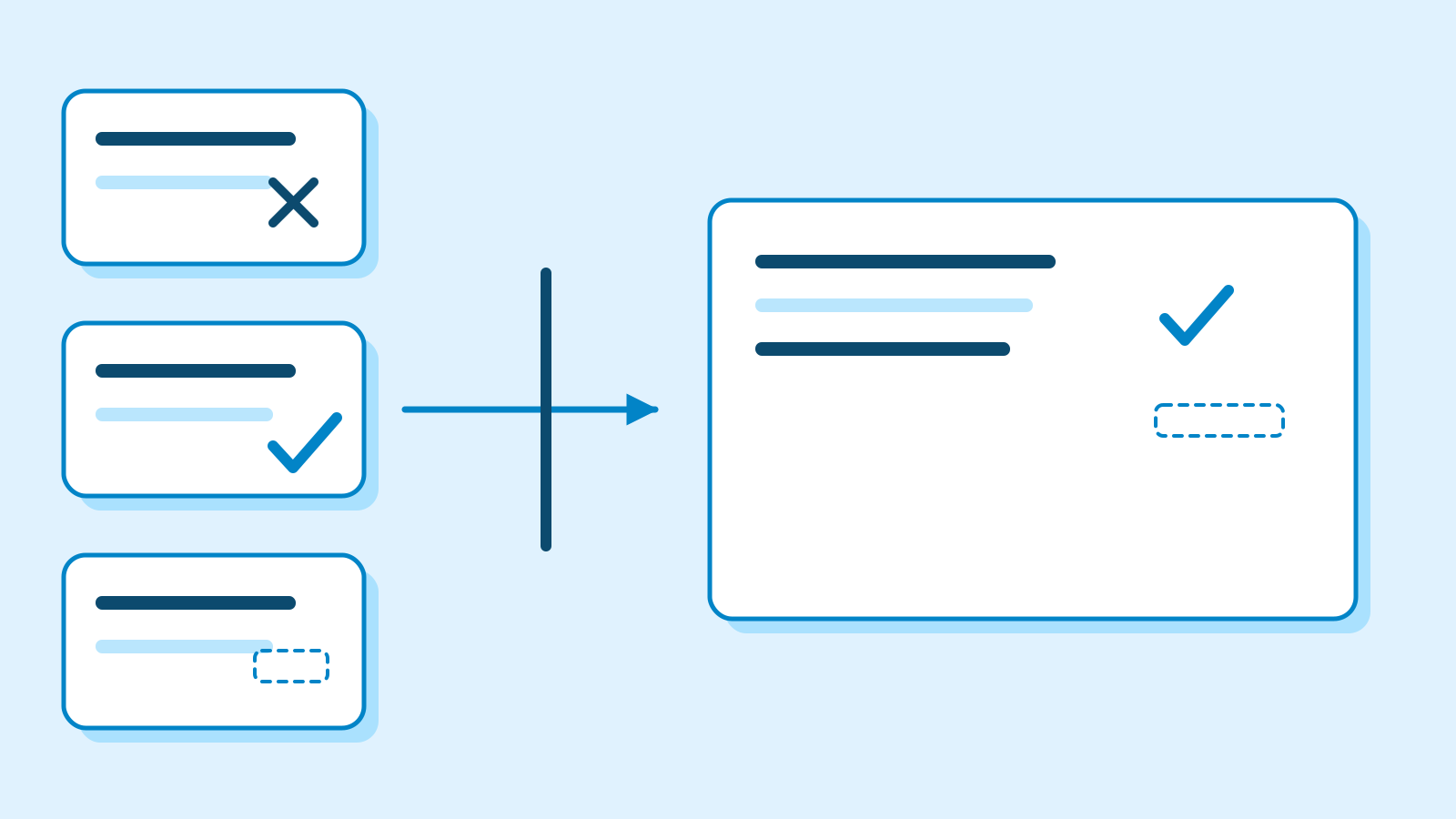
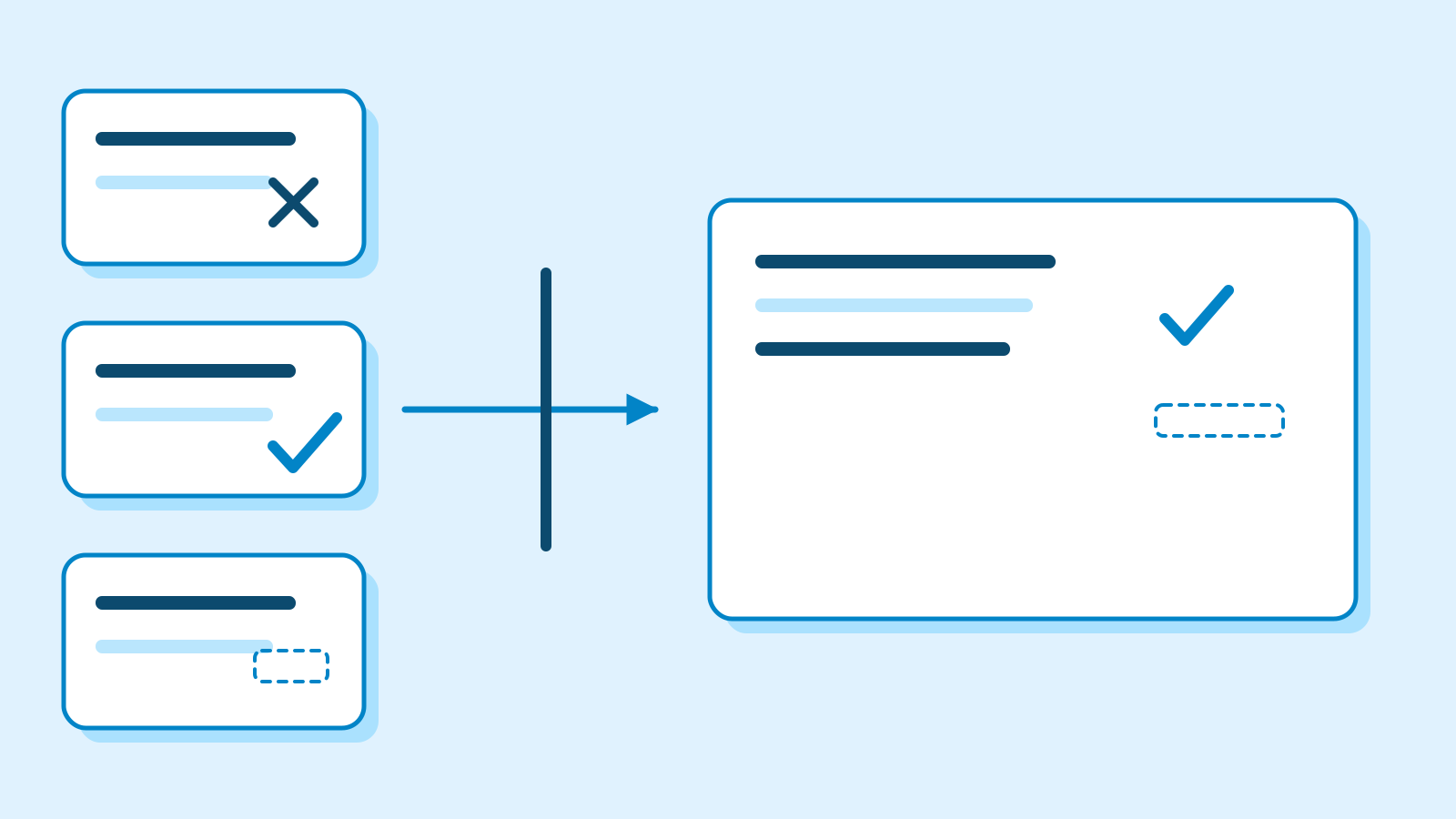
Figure: check requirements before comparing preferences · AI Ping Our seat counts mean usable seats: six, ten and eight. In a real comparison, verify the definition; maximum occupancy and seated capacity are not interchangeable. Do not infer a usable-seat count from attractive photographs.
C's cleaning fee is unknown, not zero. You can still state what is supported and what depends on a further check. A neat complete table is a reason to inspect whether missing numbers were invented, not a reason to trust them.
Fictional venue data — not actual providers or quotations Option Room rate Seats Additional fees A KRW 20,000 per hour 6 None B KRW 28,000 per hour 10 None C KRW 50,000 for two hours 8 Cleaning fee unconfirmed
2 / 4
Step-by-step use
Learn what to prepare, how to request help and how to revise the result through examples and explanations.
Worked comparison: exclude A, retain B, clarify C
A costs 40,000 won but lacks two required seats, so it fails. B costs 56,000 won and seats ten, satisfying both stated requirements. This only evaluates the supplied worksheet; it does not establish availability on a real date.
C has 10,000 won of headroom: 60,000 minus its 50,000-won base price. It remains viable if its additional fee is at most 10,000 won. We found a decision boundary rather than guessing the missing fee.
An editorial conclusion is: 'B meets the requirements on the supplied evidence. Clarify C's fee before comparing again.' That is narrower than 'B is best in every way', because travel and booking availability were not assessed. Read the scope of the conclusion as well as its recommendation.
Editorial solution separating calculation and judgment Option Two-hour cost Judgment and reason A 20,000 × 2 = KRW 40,000 Exclude: two seats short B 28,000 × 2 = KRW 56,000 Meets the supplied requirements C KRW 50,000 + unknown cleaning fee Pending: confirm additional fee is at most KRW 10,000 Ask where scores and reasons came from
Scores such as 95, 90 and 85 can look precise without explaining a judgment. Before asking how many points A loses, remember that seats are a requirement. A high overall score cannot create the missing seats.
Preference weights reflect someone's priorities. Travel time might matter greatly, but this worksheet contains none. A claim that B is more accessible would need additional evidence such as origins, routes and relevant access requirements.
Begin with three plain statements: which options meet the requirements, which are excluded and why, and which questions remain. This structure also helps with draft messages, work tools and schedule proposals. Confidence or ranking is not supporting evidence.
Reapply the same criteria when evidence changes
Suppose new evidence confirms a 15,000-won cleaning fee for C. Its total becomes 65,000 won, exceeding the budget by 5,000. 'Pending' was a correct description before the information arrived; now C fails the budget requirement.

Figure: add the confirmed fee and apply the same budget limit again · AI Ping If attendance changes from eight to six, A becomes eligible again. That is a change in requirements, not an arithmetic correction. Record the reason so someone reading both decisions can understand the difference.
An optional assistant request can change only the fee while keeping attendance, duration and budget fixed. Inspect those unchanged fields as well as the new total. Following the worked arithmetic here is enough to learn the principle.
3 / 4
Check & explain
Think about what you would ask AI, then read the explanation. Written submissions and external AI use are optional.
This is a learning check, not a test you must pass. Use the explanations to understand the ideas.
Q1Eight seats are required. A is cheapest but has six. A. It passes because of the price. B. It fails the seat requirement.
Write your thoughts (optional)
Your writing is not sent anywhere. It disappears when you leave or reload this page, so copy anything you want to keep.
Read the answer and explanation
B. Its price is within budget, but it lacks two required seats. Other advantages do not remove that failure.
This is your own review, not an automatic score.
Q2C's base price is 50,000 won; cleaning is unknown. A. Confirm a total of 50,000. B. Check whether cleaning is at most 10,000.
Write your thoughts (optional)
Your writing is not sent anywhere. It disappears when you leave or reload this page, so copy anything you want to keep.
Read the answer and explanation
B. The 60,000-won budget leaves 10,000 after the base price. Unknown does not mean free. All prices and the budget are invented practice values.
This is your own review, not an automatic score.
Q3The duration becomes three hours. C only quotes 50,000 for two hours. A. Its price must be 75,000. B. Check the rule for a third hour.
Write your thoughts (optional)
Your writing is not sent anywhere. It disappears when you leave or reload this page, so copy anything you want to keep.
Read the answer and explanation
B. The source does not say the package scales proportionally. Confirm extension pricing or other packages before stating a three-hour total.
This is your own review, not an automatic score.
Common mistakes
- Comparing hourly and package rates as bare numbers.
- Letting a high score override a failed requirement.
- Treating an unknown fee as zero.
Your learning record
Completion is optional. Mark this lesson when you feel ready, or move to the next lesson without marking it.
Completion is saved in this browser.
4 / 4
Apply to your work
Consider how new material changes the workflow and checking criteria. Trying an external AI tool is optional.
Try it: choose the reason that the evidence supports
Compare 'A is cheapest, so it must be best' with 'A is cheap but lacks seats for our eight-person requirement'. The latter preserves both the advantage and the disqualifying condition. You can check this understanding without searching for or booking a venue.
For optional extra practice, change the fictional duration to three hours. A and B have hourly rates, but C's two-hour package does not establish its three-hour price. Learn when arithmetic is possible and when a missing pricing rule prevents it.
You can now extend these ideas in a role course: units in office work, metrics in marketing, or selection criteria in planning. The developer course requires programming familiarity; choose another track if that is not your background. Return to these explanations whenever needed.
Write a note (optional)
Use this only if you want to record a prompt or your understanding. This is a notebook, not a connected AI assistant.
Your writing is not sent anywhere. It disappears when you leave or reload this page, so copy anything you want to keep.
References
- Prompting best practices — Anthropic
- Reduce hallucinations — Anthropic